
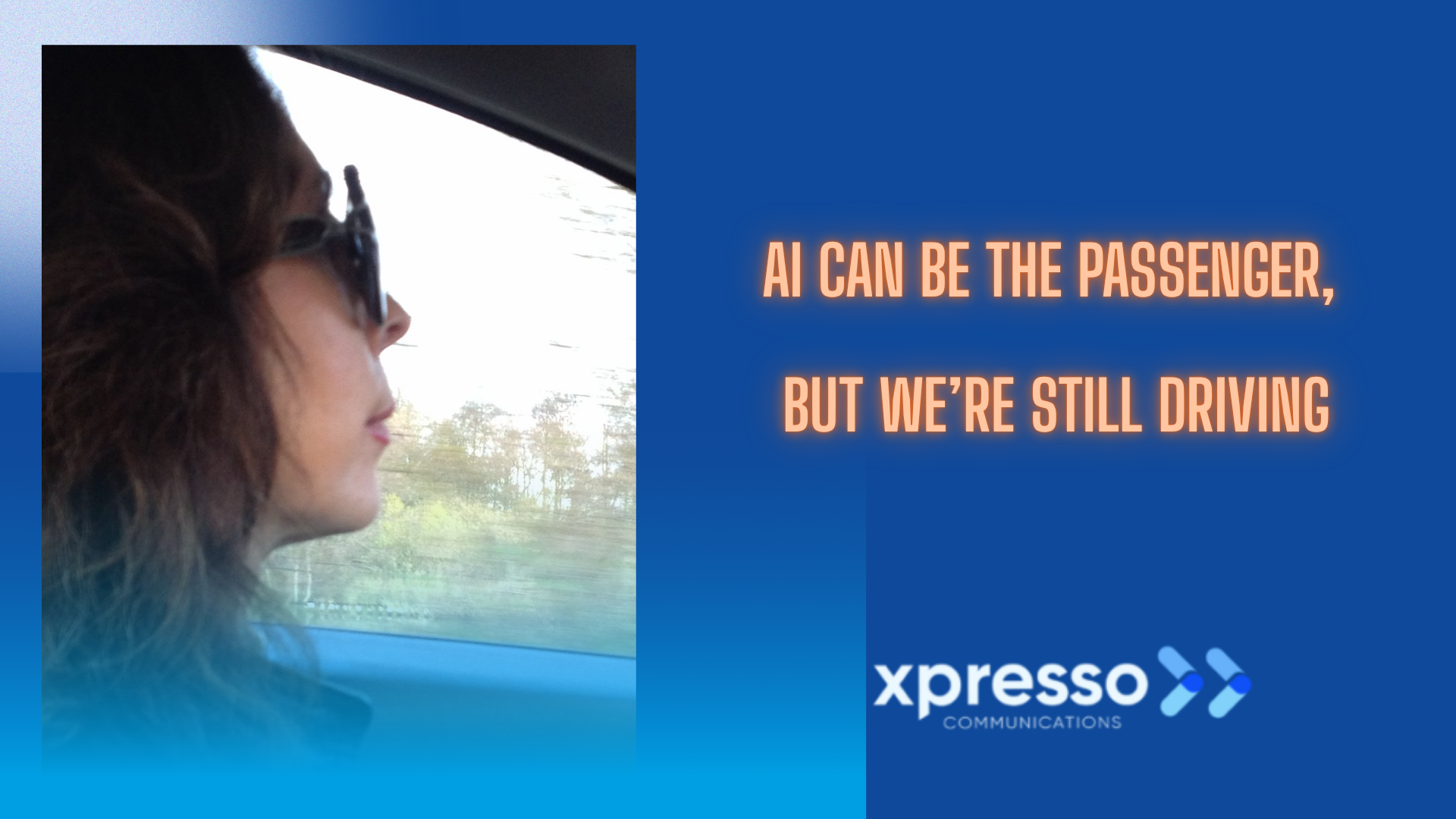

AI might give us speed, but humans still determine the direction
IBC2026 revealed an interesting discrepancy. AI was difficult to miss across the show floor, with numerous technology vendors promoting AI-driven capabilities for broadcast and media workflows. Yet surprisingly few visitors seemed to be actively asking for AI features.
So what does that tell us about the broadcast industry? Are broadcasters ignoring AI, approaching it with caution, or are they already moving towards highly automated workflows where AI is simply becoming part of the infrastructure rather than something they explicitly ask for?
And that made us turn the question towards our own industry: communications.
Are we resisting AI, or simply deciding who should be behind the wheel?
Questioning the role of a technology does not mean rejecting it. Every major technological shift asks us to reconsider where technology adds value, where human expertise remains essential and where the two work best together. With Gen AI, perhaps the most important decision is not whether we use it, but how much of the creative process we choose to hand over to it.
At Xpresso Communications, we certainly do not believe the choice is technology or no technology and reckon that the use of Gen AI can bring the efficiency you might need. The more interesting question is what role we, as humans, choose to give AI within the creative process.
For us, content creation starts with human conceptualisation. Before the press release, article, marketing campaign, case study, white paper or LinkedIn post comes the idea: understanding what the real story is, why a technology or feature matters, what makes it different and how to make complexity intelligible and approachable. Sometimes the idea emerges from an unexpected detail, a metaphor or a connection between apparently unrelated concepts. This is where we believe human creativity remains unique.
AI can be an extraordinarily useful companion on that journey. It can accelerate research, identify repetition, running a spelling check and refine copy. In other words, it can help us get somewhere faster. But speed and direction are two different things.
It can even provide some entertainment along the way. Hearing ChatGPT speak English with a Dutch accent can be funny, but it also reminds us how complex and energy-consuming switching between languages can be for a polyglot brain. Sometimes AI simply helps us find the word our brain has temporarily filed in the wrong linguistic drawer.
Perhaps the driving metaphor comes naturally to us. The Xpresso team has always had something with cars, from a passion for repairing trucks to racing them. We know that technology can improve performance, efficiency and speed, but somebody still needs to know where they are going.
The same applies to communications. Producing grammatically correct sentences is not enough. We need to understand what deserves to be said, where the story is and how to make it distinctive. AI can help us travel faster, but conceptualisation, judgement and creation determine the direction.
So perhaps the question is not whether Gen AI is capable of creating, but whether we want to give it that role. We prefer to keep humans behind the wheel and use AI to research and accelerate the journey.
That is not Luddism. It is conscious adoption of technology.
AI is very welcome to come along for the ride. But at Xpresso Communications, we’re still driving.