How Bridge Technologies’ approach to broadcast monitoring reveals a fundamental truth about data, technology and intelligent decision-making
INTRO
We have become extraordinarily good at collecting data. Every digital interaction, production workflow, connected device and software application generates information, often in quantities that would have been unimaginable just a decade ago. Yet somewhere along the way, we have begun to confuse the availability of information with the possession of knowledge, and the ability to analyse it with the intelligence required to understand it. As artificial intelligence accelerates this tendency, a recent article by Bridge Technologies offers a timely reminder: more data does not necessarily produce better answers. Sometimes, it simply produces more sophisticated ways of getting things wrong.
The Illusion of Intelligence
There is something almost reassuring about numbers. They appear objective, precise and free from interpretation. A dashboard filled with measurements suggests control. A detailed report suggests understanding. An AI-generated analysis, complete with correlations and predictions, suggests intelligence. But none of these guarantees that the underlying information is accurate, relevant or even meaningful.
Bridge Technologies illustrates this distinction through an entertaining analogy involving a software engineer asked to implement a sorting algorithm during a job interview.
The technically proficient candidate immediately starts writing code. The more insightful candidate asks where the data came from, how it was collected, whether it contains errors and, crucially, what problem the sorting exercise is supposed to solve. The distinction is fundamental.
Processing data efficiently is not the same as understanding its significance. And processing unreliable data more quickly does not make the resulting conclusions any more trustworthy. In fact, the sophistication of the processing can make the problem worse, giving questionable information an appearance of credibility it does not deserve.
From Data Collection to Data Understanding
In broadcast engineering, this is not an abstract philosophical concern.
Modern IP production and distribution infrastructures generate enormous quantities of technical information. Packet timing, PTP synchronisation, audio loudness, video integrity, network redundancy and countless other parameters must be continuously measured to maintain reliable operations.
Yet the value of monitoring does not lie in how many measurements a system can collect. It lies in understanding which measurements matter, how they relate to one another and how they can help engineers identify problems before those problems affect production.
This is where Bridge Technologies’ approach becomes particularly interesting.
Rather than treating monitoring as a process of accumulating technical metrics, the company has spent more than two decades developing tools that translate complex measurements into meaningful operational intelligence.
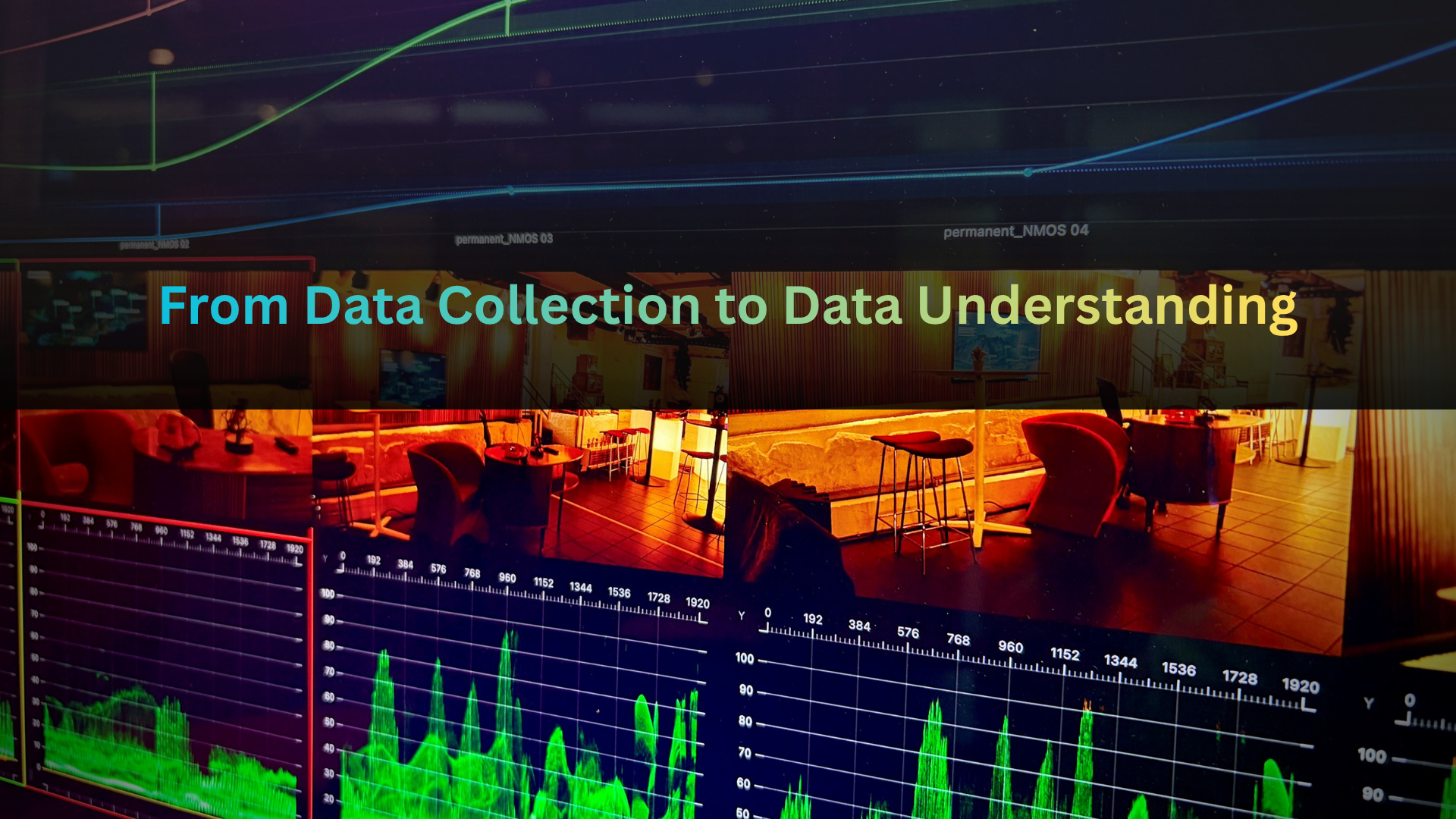
The VB440 production probe, for example, presents technical information through familiar, intuitive instruments such as waveform monitors, audio loudness meters and synchronisation analysis tools. Its VB330 distribution probe similarly uses innovative visualisation techniques, including the patented Mediawindow, to make complex transport stream behaviour easier to interpret.
The underlying principle is simple: data becomes valuable when it is presented in a form that enables the right person to make the right decision at the right moment. And that requires considerably more than collecting it.
The AI Paradox: More Processing Power, Same Fundamental Problem
Artificial intelligence adds another dimension to this discussion.
AI can identify patterns across datasets too large for humans to analyse manually. It can reveal correlations, support predictive maintenance, accelerate troubleshooting and potentially transform the way complex infrastructures are managed. But the effectiveness of these capabilities depends on the quality and relevance of the information being analysed.
An algorithm cannot reliably compensate for measurements that were incorrectly captured, poorly calibrated or stripped of their operational context. Nor does identifying a correlation automatically establish an explanation.
This is particularly important as AI-generated information increasingly becomes the input for further automated analysis. Errors, assumptions and distortions can propagate through successive processing stages, creating an illusion of increasingly sophisticated intelligence while moving further away from the original facts.
The familiar principle of garbage in, garbage out has therefore acquired renewed significance. And perhaps an additional dimension: the more sophisticated the technology processing unreliable information, the harder it may become to recognise the original problem.
The Value of Knowing What You Are Measuring
What we find particularly compelling about Bridge Technologies’ argument is its emphasis on intentional data collection.
Accurate measurements do not happen by accident. They depend on understanding the technology being monitored, the conditions under which information is generated and the operational significance of individual parameters.
In other words, meaningful data begins with expertise. This is also why access to original measurement data matters. Bridge makes monitoring information available through APIs, allowing third-party applications and AI-based systems to incorporate it into their own analytical environments. Such openness creates opportunities for innovation without sacrificing the importance of a trustworthy foundation.
The same principle extends well beyond broadcast engineering. In business intelligence, scientific research, marketing analytics and communications, the temptation to collect and report ever more information is considerable. We measure impressions, clicks, engagement, reach, conversions and countless other indicators. We build dashboards, generate reports and increasingly ask AI to interpret the results.
But how often do we question whether those measurements actually represent what we want to or can understand? A million impressions do not necessarily indicate influence. Thousands of interactions do not automatically demonstrate engagement. And an impressive collection of performance indicators does not guarantee that an organisation is making better decisions.
The problem is rarely a shortage of data. It is often a shortage of context, critical interpretation and clarity about what the data is supposed to tell us.
Intelligence Is Not a Volume Metric
At Xpresso Communications, we see a direct parallel between the principles of effective broadcast monitoring and those of meaningful technology communication.
Our work frequently involves translating complex engineering innovations into narratives that are technically accurate, accessible and relevant to different audiences. That process begins not with generating more content, but with understanding the technology, questioning assumptions, identifying what genuinely matters and determining why it should matter to someone else.
AI can accelerate research but it cannot replace the responsibility to verify facts, understand context and distinguish technical substance from persuasive presentation.
The same applies to data. More measurements may provide greater visibility, but visibility alone is not understanding. More analysis may reveal additional patterns, but patterns alone are not explanations. And more information, however efficiently processed, is not necessarily more intelligence.
The Takeaway
Bridge Technologies’ reflections on data integrity extend well beyond broadcast monitoring. They challenge an increasingly widespread assumption that collecting more information and applying more sophisticated analytical tools will inevitably produce better decisions.
The real competitive advantage lies elsewhere: in knowing what to measure, ensuring that the information is accurate, understanding its context and presenting it in a way that supports meaningful action.
As AI becomes more deeply embedded in our professional lives, these principles will become more important, not less. Because intelligence is not defined by the quantity of information we process, but by the quality of the understanding we derive from it.
And sometimes, the smartest thing we can do with data is to question it before we use it.