
Overview: Liberty University needed a production operation capable of delivering over 1,700 annual events – including more than 300 sports broadcasts – while providing students with hands-on experience on professional-grade broadcast technology.
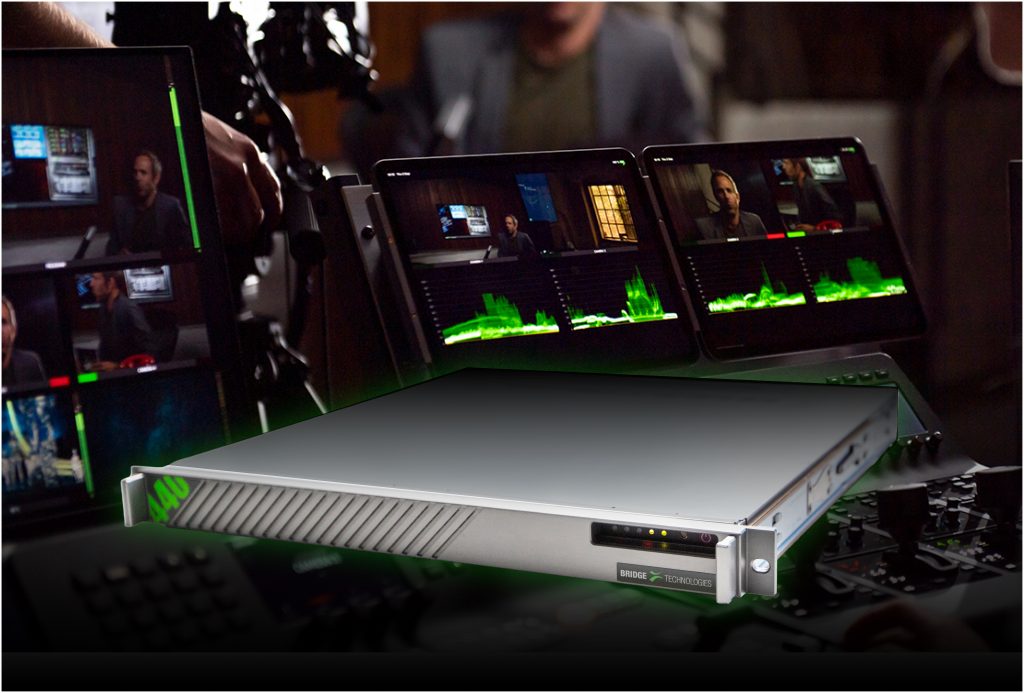 Solution: Bridge Technologies’ VB440 production probe, integrated via SDI-to-IP routing into Liberty’s existing infrastructure, delivers a multi-user, browser-accessible toolset combining camera shading, audio monitoring, network analysis, and AV sync within a single appliance.
Results: A single VB440 serves the entire production team across five control rooms and a mobile unit, enabled remote workflows, supported a multi-generational engineering team, and led to a second VB440 deployment in a fully IP environment.
Customer Profile
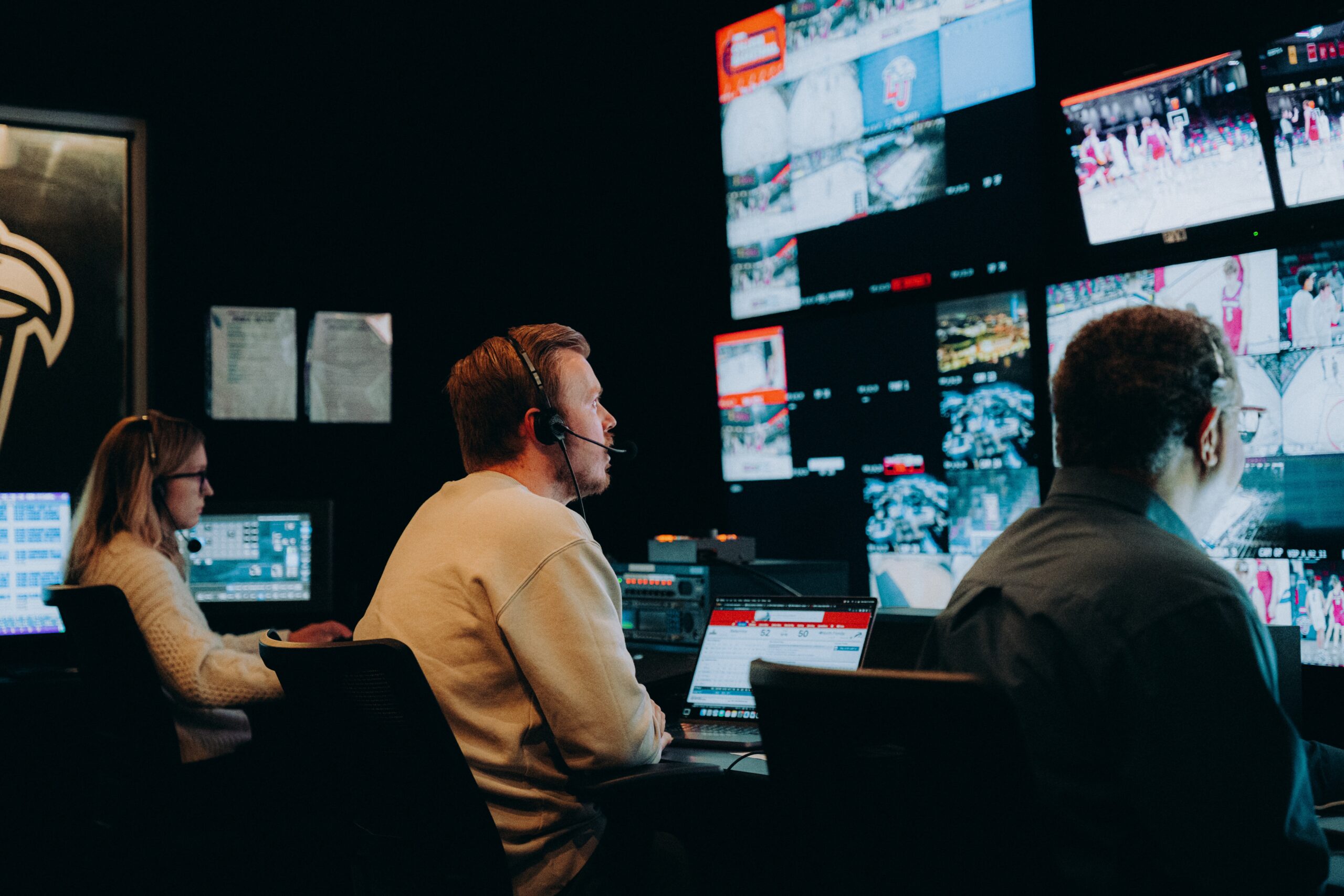
Liberty University operates one of the most demanding collegiate broadcast environments in the United States. Its Broadcast & Events team delivers over 1,700 events annually, including more than 300 sports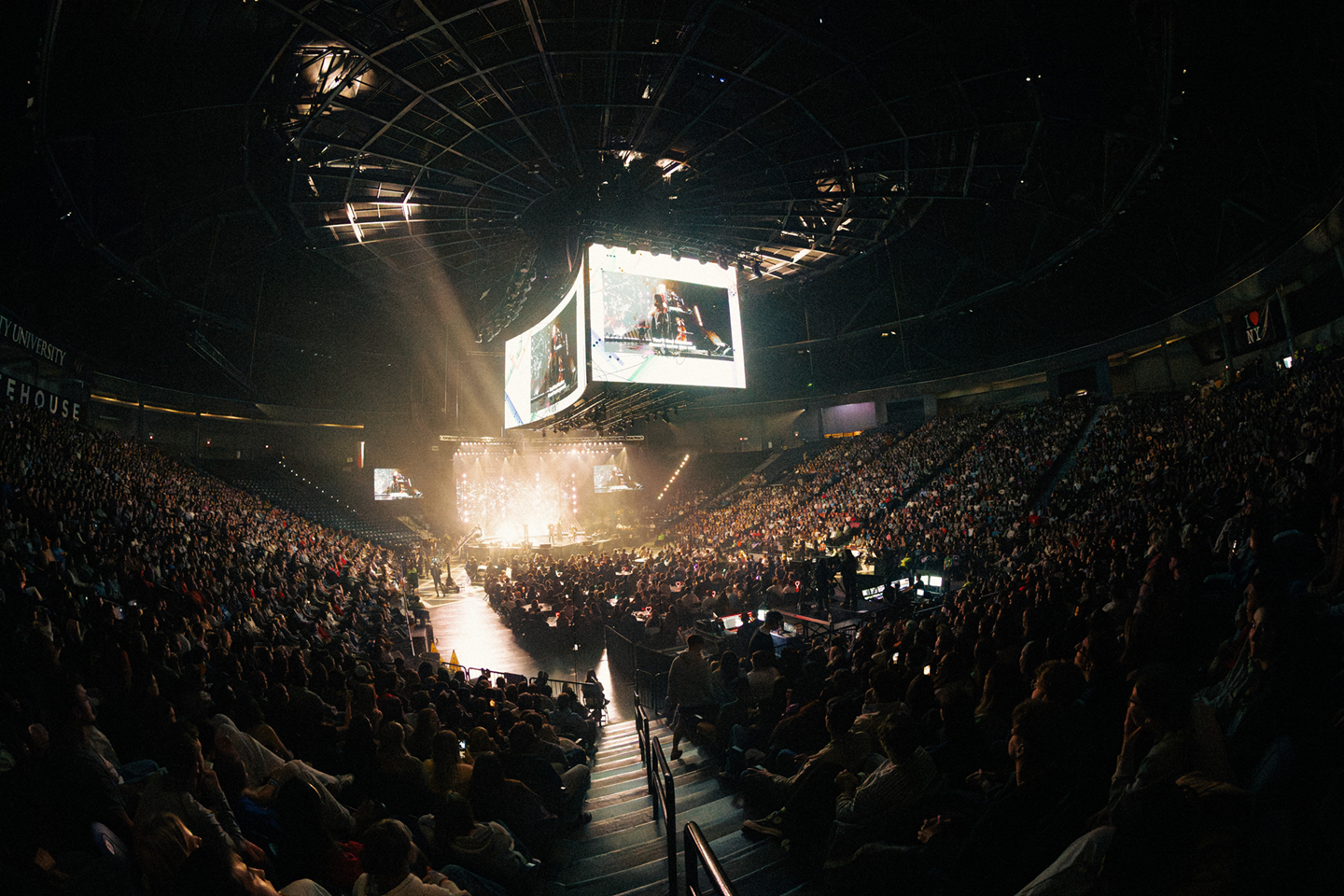 broadcasts, nearly 500 live events across all genres, and approximately 100 studio show recordings each year. Facilities span five physical control rooms, a mobile unit, and three studios dedicated to sports programming – including the weekly show ‘Flames Central’, which airs on ESPN+.
Critically, these facilities serve a dual purpose. They produce professional-grade content for broadcast partners and fans. But they also serve as working classrooms, with students rotating through production roles and gaining hands-on experience on the same technology they will encounter in their careers.
Overview of Need
Liberty’s infrastructure was built around multiple SDI routers connected via fibre optics across campus. The operation was already highly effective, though the university had the foresight to recognise that the broader industry was moving toward IP. The challenge was how to transition without disrupting live production schedules or abandoning existing capital investment.
The core requirement was a tool that would enhance current SDI workflows while providing a path toward IP. It needed to support multiple simultaneous users – camera painters, audio engineers, network technicians, and producers – without requiring separate devices or servers for each function. And it needed to be accessible remotely, enabling engineers and technical managers to monitor and adjust routing configurations from anywhere.
Perhaps most uniquely, the solution needed to be intuitive enough for students to learn on, while powerful enough for experienced broadcast engineers to rely on for live production.
Solution
Following a demonstration at NAB, Liberty selected Bridge Technologies’ VB440 production probe. The decision was driven by the VB440’s ability to operate in hybrid environments: using SDI-to-IP routing, it integrated directly into Liberty’s existing SDI infrastructure without requiring a wholesale replacement.
The VB440 was embedded into LIRA, Liberty’s in-house orchestration platform, serving as a critical component for routing control and signal monitoring. Engineers and technical managers now log in via any web browser – from campus, home, or remote locations – to view or adjust configurations, supported by real-time data from the probe.
The system integrator for the wider Liberty installation was Digital Video Group (DVG), a Mid-Atlantic systems integrator who brings extensive experience in consultation, design, installation and implementation of holistic production setups, for both traditional broadcast and emerging Pro-AV use cases. They connected Liberty with Bridge Technologies and oversaw the integration of the VB440 into the broader campus infrastructure. Bridge’s US Business Partner 2110 Solutions and the wider Bridge technical team provided ongoing support alongside DVG to ensure seamless deployment.
Technical Deep Dive
The VB440 delivers a comprehensive production toolset within a single 1RU appliance. Key capabilities leveraged by Liberty include:
- Full video scopes: Waveform, vectorscope, and histogram for camera shading and colour grading, accessible simultaneously by multiple users.
- Advanced audio monitoring: Support for up to 64 channels per flow across unlimited flows, with LUFS and Gonio meters, stereo downmix and single channel isolation listening.
- Network analysis: Packet capture (PCAP) for deep inspection of ST 2110 streams; PTP timing analysis to verify synchronisation across the IP domain; ST 2022-7 redundancy monitoring to confirm seamless switchover between redundant paths; packet loss and jitter detection, and event logging for post-event forensic analysis.
- AV sync tools: Ensuring perfect alignment not just between audio and video in a single channel, but – if Liberty should ever need to build in multiple redundant flows of the same capture across SRT or satellite – also ensuring validation between those separate sources.
- Multi-user browser access: Up to eight simultaneous users, in real-time, from any location, through any HTML5 browser.
The VB440’s ability to serve camera painters, audio engineers, remote QC staff, and network technicians simultaneously from a single appliance eliminated the need for separate dedicated devices – reducing hardware costs, rack space, and operational complexity.
Additional Elements: Training the Next Generation
Liberty’s use case extends beyond conventional broadcast operations. Because the university intended to use the VB440 not only as a functional piece of broadcast equipment, but as a teaching tool, its interface design becomes a pedagogical consideration. Students rotating through production roles need to understand not just what a metric indicates, but how it is derived.
 Elements such as the entirely customisable canvas interface for scopes were therefore important, allowing students to experiment with different workflows. In addition, Bridge’s dynamic explanatory hovercards were a crucial teaching tool. These cards are displayed when a user hovers over any metric, showing exactly what the measurement indicates, the formula used to calculate it, and the data sources it draws from. This means a student can move from “the waveform scope shows illegal levels” to understanding why those levels are illegal and how the scope arrived at that conclusion.
For Liberty, this feature bridges the gap between operational training and engineering education. Students learn not just to use the tools, but to understand the underlying principles – making them better prepared for careers in broadcast engineering than graduates who have only learned button-pushing workflows.
Looking to the Future
Liberty has already committed to a second VB440, this time deployed in a fully IP production environment leveraging ST 2110 and NMOS routing. The new facility will use iPads as quality control stations, with every function of the probe accessible via touchscreen, all connected back to the wider campus infrastructure through LIRA.
Beyond Liberty, the success of this deployment provides a compelling use case for applications outside conventional broadcast. Educational institutions, houses of worship, corporate event spaces, and any organisation operating at the intersection of professional AV and broadcast production can benefit from the same hybrid flexibility, multi-user access, and intuitive design that Liberty has proven effective.
Stakeholder Quotes
Simen Frostad, Chairman, Bridge Technologies: “Liberty represents exactly the kind of forward-thinking operation we built the VB440 for. They weren’t looking to rip out what worked. They wanted a tool that would enhance their current workflows, give them a bridge to IP, and serve a diverse team of experienced engineers and students alike. The fact that they’re now deploying a second unit in a fully IP environment tells you everything about how well that approach has worked”.
Michael Phillip Gerringer, Chief Technologist, Broadcast Engineering, Liberty University: “The VB440 has transformed our production process. Instead of buying multiple devices or servers, we use a single tool that supports several users performing different tasks simultaneously. And for our students, the ability to use products like the VB440 is invaluable – they don’t just learn to push buttons, they learn why the buttons do what they do. That’s the difference between training and education”.
Alex Martin, CEO, Digital Video Group: “Liberty’s scale and ambition required a monitoring solution that could handle hybrid SDI-IP workflows without compromising on depth or usability. Bridge’s VB440 delivered exactly that. Our role was to ensure seamless integration into Liberty’s broader infrastructure, and Joe LoGrasso, CEO of 2110 Solutions alongside Bridge Technologies technical team made that collaboration straightforward. The result is a facility that serves both live production and broadcast education at the highest level”.
Download the final PDF