Press Releases, Articles and Blogs

  Partnership will enhance AI-Driven Recruitment Solutions   Press Release Utrecht, The Netherlands — 19 November 2024 In2Dialog, a multi-award-winning Read more
In2dialog-award-winner-ai-het-recruitment-pressrelease-xpressocommunications
  Best Tool and AI application for advanced reports   Press Release Utrecht, The Netherlands — 13 November 2024 In2Dialog Read more
satellite-satnews-brodgetechnologies-hybrid-networks-xpressocommunications
  Article published by SATNews  By Simen K. Frostad, Chairman at Bridge Technologies   In Greek legend, a Chimera is a Read more
ibc-2024-bridge-technologies-engineers
Walking the walk and talking the talk Difficult to believe that two weeks have passed already since the end of Read more
in2dailog-ubeeo-integration-ats-recruitment-hr
  Partnership will bring In2Dialog’s tools to the corporate HR market     Press Release Utrecht, The Netherlands — 2nd October, Read more
new-recruitment-standard-video-analytics-semantic-jobinterview-in2dialog
In2Dialog explains how its tools optimise the job interview process while delivering unbiased data for optimal recruitment.     https://www.youtube.com/watch?v=rfPPm4wL96E Read more
Bridge-technologies-joins-ravenna-press-release-xpressocommunications-writing
      Press Release 23 September 2024 In the wake of a highly successful IBC show in Amsterdam, Lawo, Read more
    New integration will revolutionise colour production workflows   Press Release OSLO, Norway — 6 September 2024 Bridge Technologies Read more
bridge-technologies-partners-pixotope-norway-broadcast-pressrelease-xpressocommunications-ibc2024
      Collaboration will result in future VB440 integration     Press Release OSLO, Norway —  5 September 2024 Read more
Bridge-Technologies-20-years-IBC-2024
They’ll be making IBC 2024 a party to remember   Looking back and looking forward 20 years ago, four young Read more
ibc2-24-proton-flex
        Flexible mini cam delivers practically unlimited creative potential     Press Release Garbsen, Germany — 2nd Read more
for over 260,000 archival audio carriers dating back to the 1950s     Vienna, Austria — 26 August 2024 The Read more
bridgetechnologies-vb278-satellite-ibc2024-technology
  adds satellite monitoring capabilities to existing probes    Press Release   OSLO, Norway — 26 August 2024 As part Read more
bridge-technologies-ibc2024-vb258-upgrade-terrestrial-cable
        for their existing VB120 and VB220 network monitoring probes    Press Release   OSLO, Norway — Read more
proton-rian-ibcshow-ibc2024-proton-camera-innovations-germany-press-release-xpressocommunications
        New mini-cam for outdoor production and sport    Press Release Garbsen, Germany — 19 August 2024 Read more
This is a sample post created to test the basic formatting features of the WordPress CMS. Subheading Level 2 You Read more

Bridge Technologies-sustainability-article-Digital-studio-India-Xpressocommunications-content-writing
Bridge Technologies was interviewed by Digital Studio India How are you adapting to green technology? As a Norwegian company, the Read more
This is a sample post created to test the basic formatting features of the WordPress CMS. Subheading Level 2 You Read more
Proton-cam-smallest-word-camera-ibcshow-2024
      Company will highlight its wide range of potential applications    Press Release Garbsen, Germany — 23 July Read more
start-up-recruitment-ai-tech-in2dialog-analytics-interviews-job-investors
      in its AI-driven technology revolutionising recruitment   Press Release Utrecht, The Netherlands — 16 July 2024   Read more
BridgeTechnologies-microbursting-analytics-microbitrate-ibc2024-innovation
    Unique Analytics to identify bursty network behaviour in IP broadcast transmissions   Press Release  OSLO, Norway — 1st Read more
in2dialog-breaking-black-box-recruitment-tech-analytics-blog
  for an overarching improvement In this month’s blog we explore how breaking into the recruitment black box can improve Read more
          will showcase major archive transfer technology project in the Middle East Press Release  Vienna, Austria Read more
Bridge-Technologies-integration-zabbix-pressrelease-xpressocommunications
  Adds value to real-time transmission monitoring    Press Release OSLO, Norway — 11 June 2024   Bridge Technologies – Read more
VB440-Canvas-New-BridgeTechnologies-production-ibc2024
      New GUI grants unprecedented production workflow flexibility and efficiency  Press Release OSLO, Norway — 4 May 2024 Read more
StreamOverview-vb330-bridgetechnologies-new-ott-monitoring-analytics-alarms-engineers
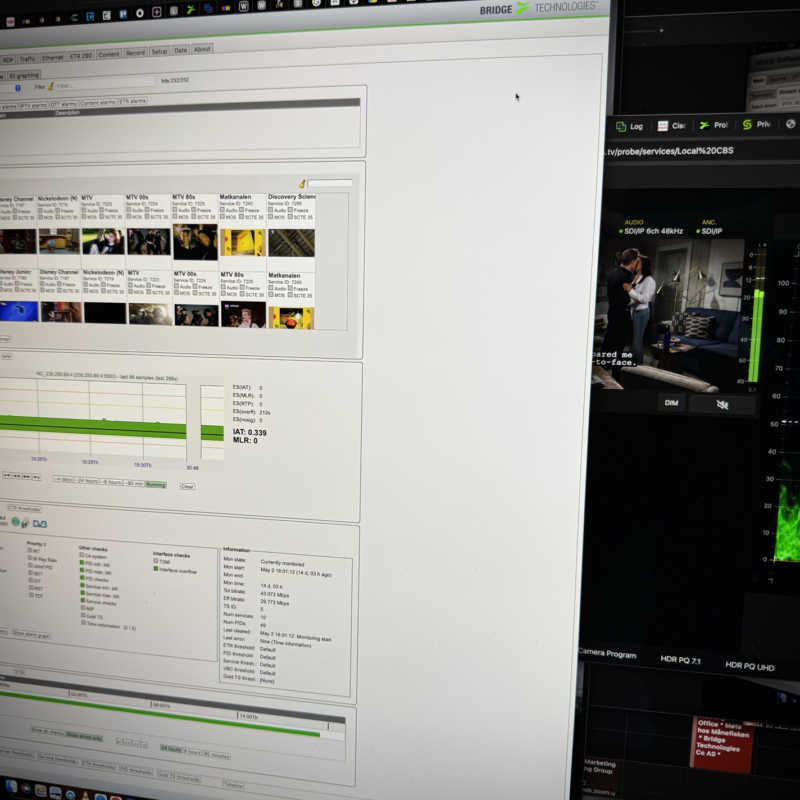
      Single page diagnostics overview gives first-line engineers instant insight    Press Release OSLO, Norway — 27 May Read more
Bridge-Technologies-essence-of-monitoring-iabm-content-writing-ghostwriting-xpresso-communications
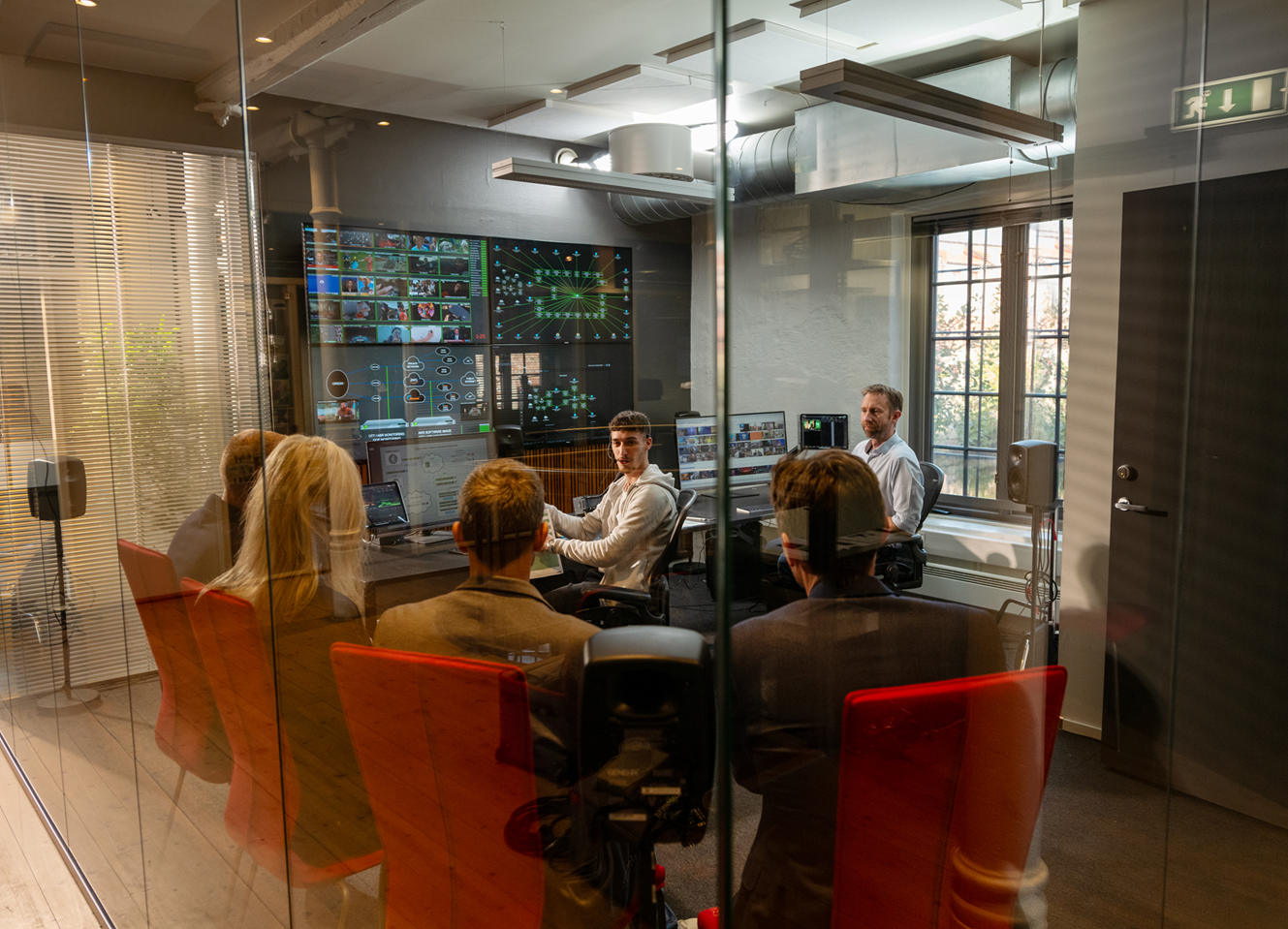
Monitoring doesn’t just help avoid mistakes, it also informs active improvement There is a human instinct to distil things down Read more
SDAM-monitoring-audio-VB440-BridgeTechnologies-innovation-pressrelease-xpressocommunications
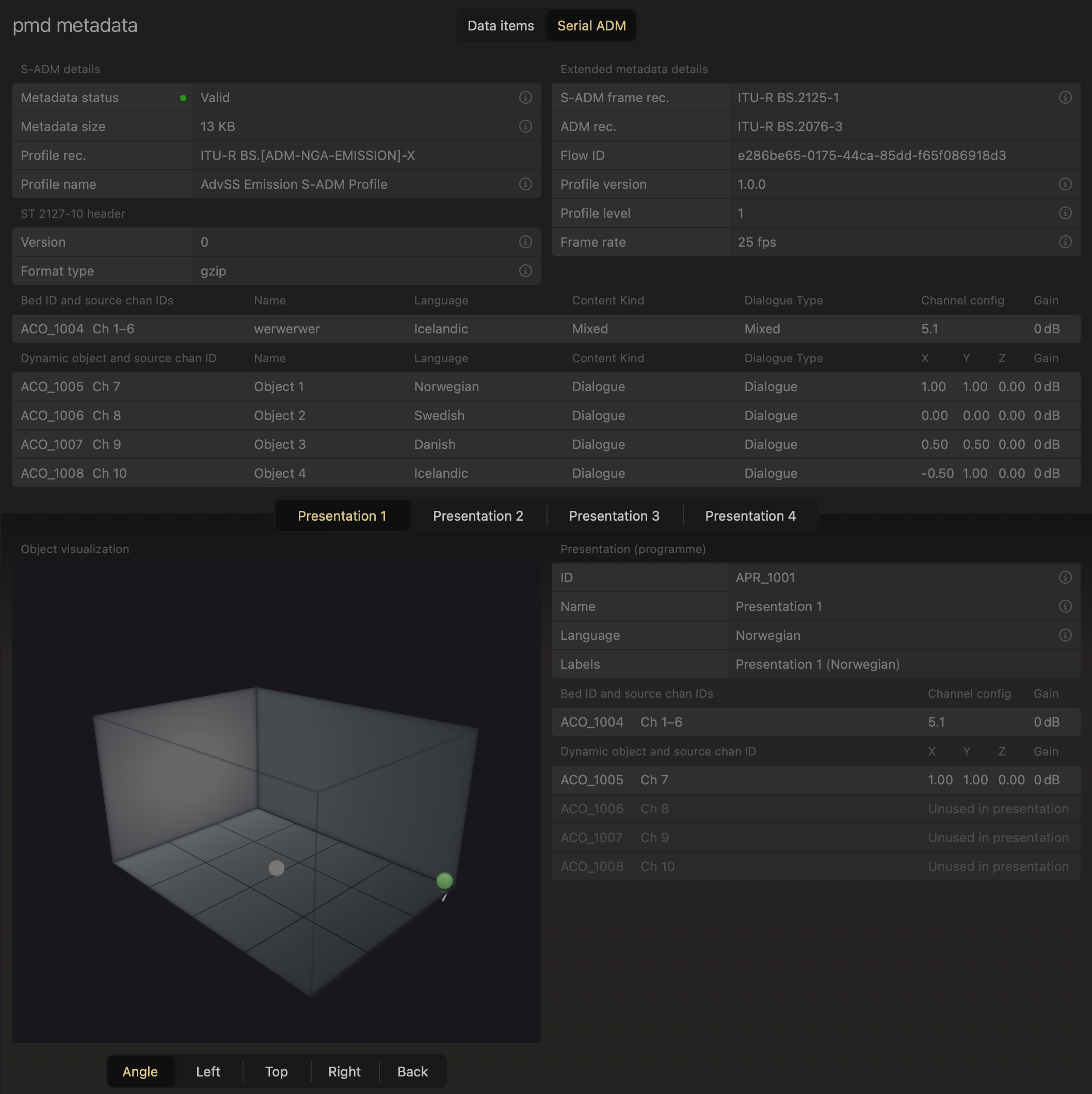
    Addition of ST 2110-31 and -41 extends immersive audio potential in live production    Press Release OSLO, Norway Read more
Bridge-Technologies-article-ghostwriting-xpressocommunications-sustainability
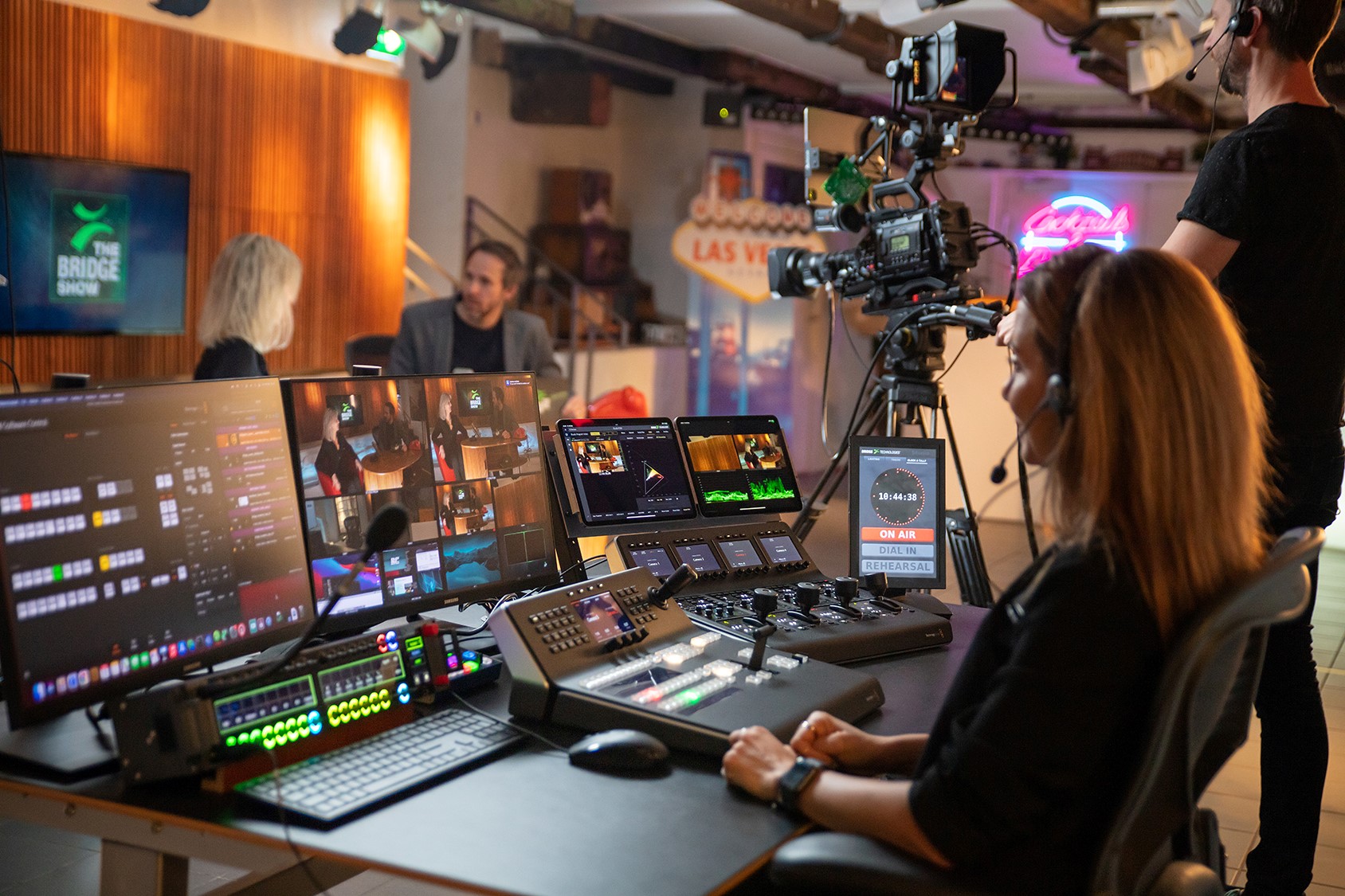
  From necessity to sustainability: the genesis of the Bridge Show Article published by The Flint Necessity is the mother Read more
Proton-Cam-smallest-world-camera-sports-broadcast-nab-2024
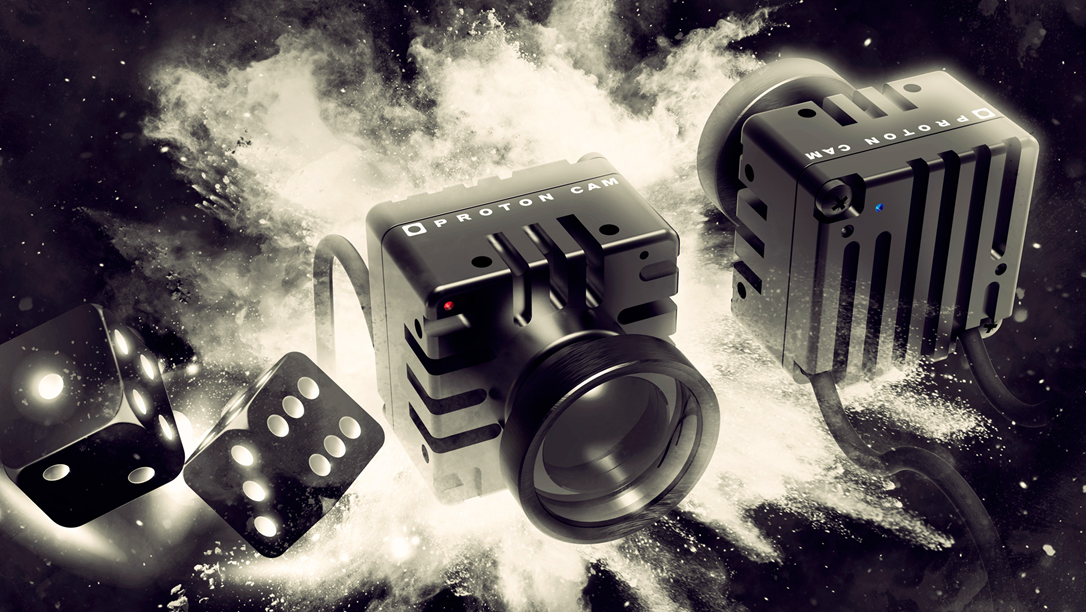
It delivers exceptional image quality for sports, broadcast and live events       Garbsen, Germany — 4 April, 2024 Read more
glasgow-svg-europe-women-connection-
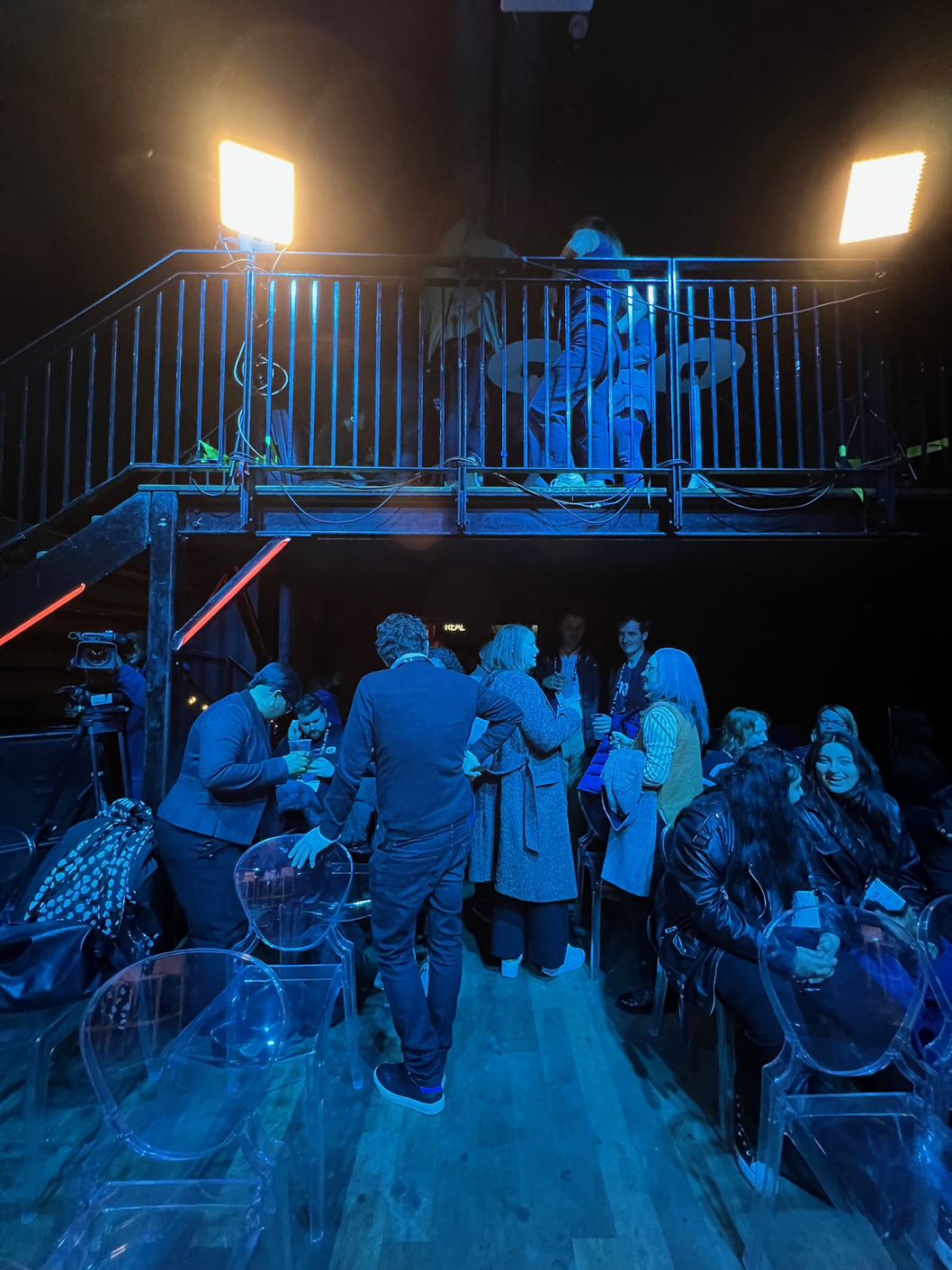
Community as a cornerstone of the Broadcast industry Last week we sent our very own Gry Synnøve to attend the SVG Europe Read more
Bridgetechnologies-PTS-PCR-checks-monitoring-NAB2024
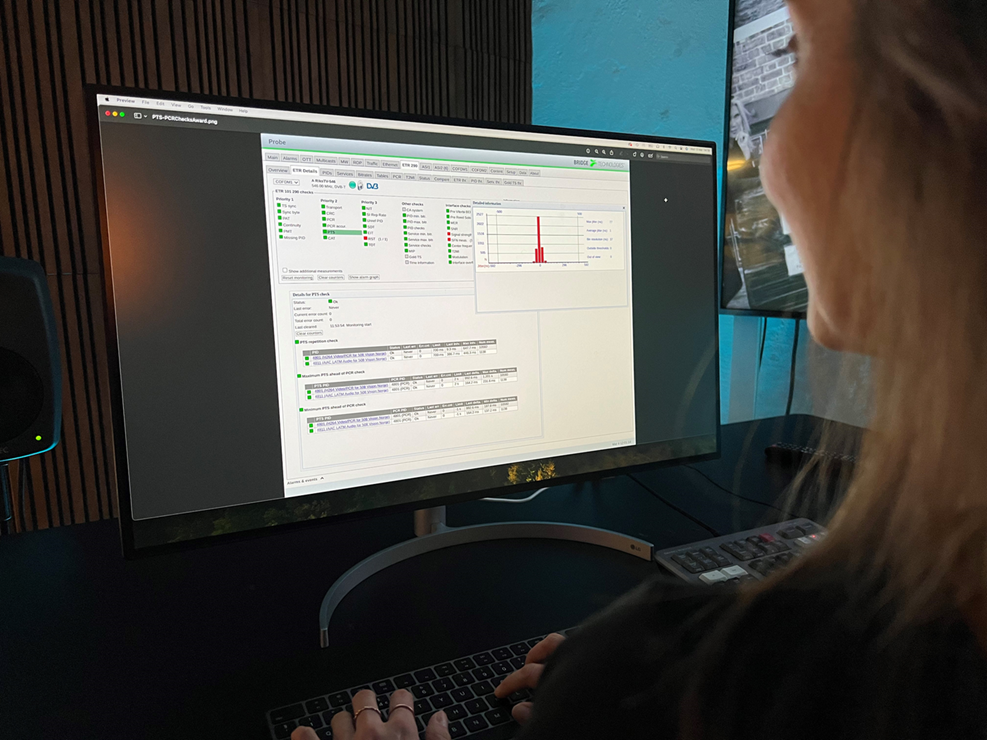
      New functionality facilitates far more nuanced sync detection   Press Release    OSLO, Norway — 19 March Read more
  Moves The System Beyond DIY Studio To Full, Any-Context, Automated Production Facility   Press Release Veenendaal, The Netherlands _10 Read more
why-ip-sports-make-match-heaven
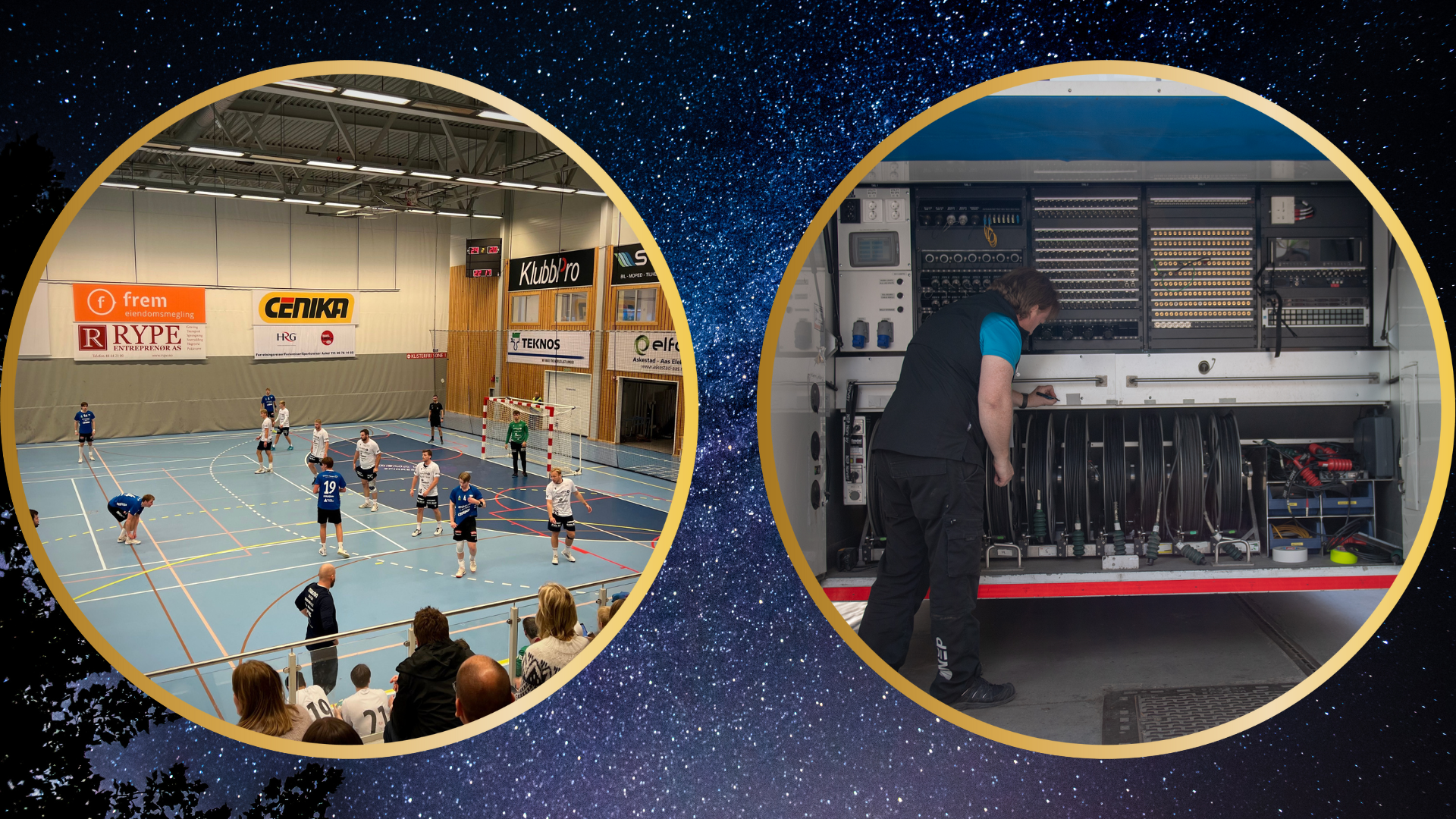
        Last week, Bridge Technologies completed its membership application to join SVG (the Sports Video Group) to Read more
Simen-k-frostad-chairman-bridge-technologies-test-monitor-advanced-television-interview
Test & Monitor: Look Closely Advanced Television interviewed Simen K. Frostad, Chairman of Bridge Technologies Q. Have lockdown-enforced working practices required Read more
mediawindow-bridgetechnologies-networks
What’s your learning style? In the field of education, increasing focus has been paid to the concept of ‘learner types’. Read more
BridgeTechnologies-IBC2023-insights-awards
Bridge Technologies Growth for us is good for all Reporting on IBC each year is becoming a bit of a Read more
PressRelease-Bridge-Technologies-new-audio-panel-vb440-IBC2023
    Unlimited channel monitoring with single channel isolation over unlimited flows   Press Release OSLO, Norway — 9 August Read more
Suastainability-article-ghostwriting-bridgetechnologies-xpressocommunications
There’s nothing sus about our approach to sustainability Did you know that in 2022, four out of every five cars Read more
Bridge-Technologies-business-partners-awards-business-telecommuninations-technology
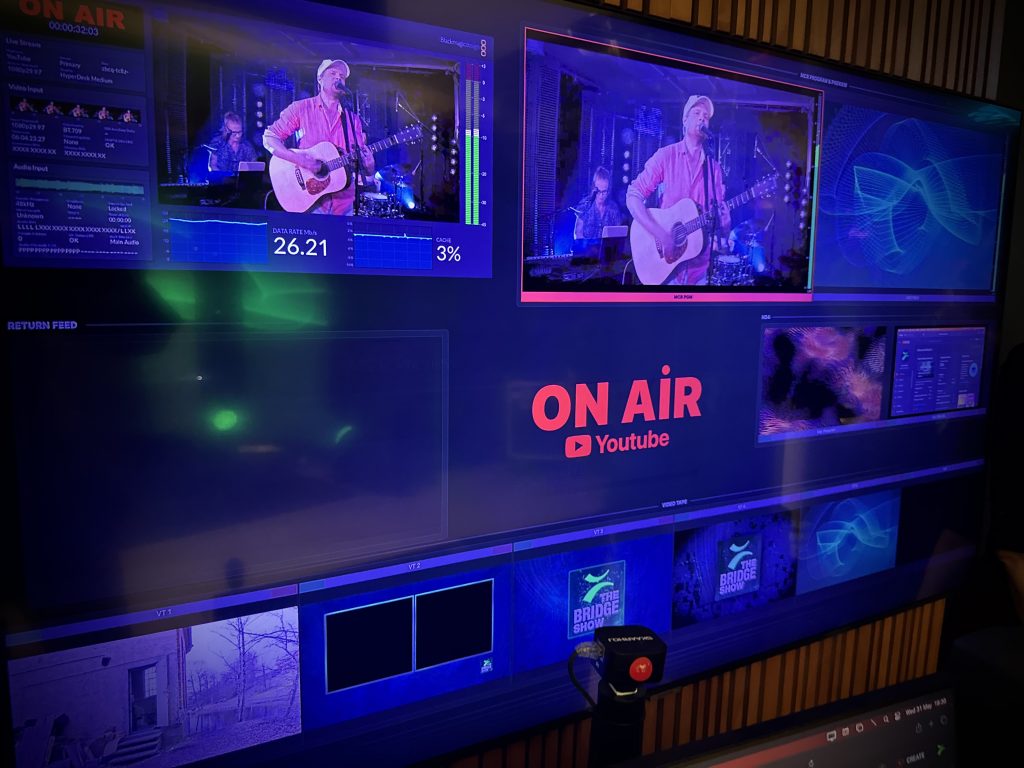
Recognising success with real intent  The annual Bridge Awards  have come and gone. Usually, in our post-awards blog, we engage a Read more
vb330-page-website-launch-ott-monitoring-analysis
The new VB330 website Website design has evolved a long way. Technology and design have mutually informed each other, bringing Read more

How is the future looking like for women in Telecommunications in 10 years’ time? Fiorenza Mella, Maria Tyrrell and Dr Read more
award-simen-frostad-tim-langridge-eric-trabb-fiorenza-mella
Blog On our first day at the NABShow, during our Bridge Show interview with the always-engaging Stan Moote, CTO of Read more
Bridge-technologies-team-lasvegas-nabshow
The Magic of Las Vegas  David Copperfield. Sigfried and Roy. Penn and Teller. There’s no doubt, Las Vegas is the Read more
VB330-bridgetechnologies-visual-recording-alerts-advertising-SCTE104-35
    Upgrade expands commercial monitoring ability of the VB330     OSLO, Norway — 27 March 2023 Furthering the Read more
ott-technology-bridgetechnologies-probes-monitoring
Technological stability in a volatile OTT market An Over the Top reaction to OTT changes? (We’re sorry, it’s practically copywriting Read more
simen-k-frostad-article-japan-broadcast
How do you tend your garden? article by Simen K. Frostad, Chairman of Bridge Technologies   It’s interesting that we Read more
All-mobile-Video-case-study-vb440
All Mobile Video case study    Challenge  To help All Mobile Video maintain the status of the OB van ‘Eclipse’ Read more
top-5-successful-marketing-companies-to-watch-2023
A World-class Agency Specializing in broadcast and Technology-driven Markets CIOTIMES interviewed Fiorenza Mella   As a specialist in B2B communications Read more


Partnership will enhance AI-Driven Recruitment Solutions


Press Release

Utrecht, The Netherlands — 19 November 2024

In2Dialog, a multi-award-winning startup transforming the recruitment process with AI-driven tools, is pleased to announce its new integration with Carerix, a leading Smart Recruitment Technology system. This partnership brings the powerful interview and candidate evaluation capabilities of In2Dialog directly into the Carerix ecosystem, not only extending the streamlining and efficiency derived from Carerix’s platform to the interviewing process, but also increasing the depth of insight generated and the resulting quality of matches achieved.


With this integration, Carerix users can now seamlessly access In2Dialog’s advanced AI technology, which measures and assesses candidates during interviews. The tools, which include interview recording, AI-generated transcripts, thematic and syntactic analysis, and post-interview reporting, offer recruiters a detailed insight into candidates while saving valuable time – often as much as half an hour per interview. These capabilities will allow users to make quicker, more informed hiring decisions while ensuring higher-quality matches between candidates and roles.


As a supplier of smart recruitment technology for agency and corporate recruitment teams, Carerix can integrate seamlessly with In2Dialog, creating an ATS which is packed with powerful functionalities that can be adapted and tailored to the needs of a wide variety of recruitment contexts. By fitting effortlessly into existing workflows, recruitment teams can use the tools that best align with their organisation’s unique needs, making the recruitment process more adaptable and efficient.

From staffing agencies managing high volumes of candidates to corporate HR teams seeking deeper insights into potential hires, recruiters value the extensive end-to-end functionalities provided by Carerix. As a result of this extensive reach, this new partnership will now mean that In2Dialog’s powerful candidate evaluation tools – which include validated psychometric dimensions and time-saving interview assistance tools – will now be available to a much wider range of users.

The focus of the integration is on enabling teams to measure candidate skills, motivations, and personality traits in real-time, all without needing to switch between different platforms. As a result, they can reduce the time spent on administrative tasks and focus on the human side of hiring – building relationships and making better decisions faster.  The net result is the ability to source, evaluate, and place the best candidates, more quickly and more effectively.


In2Dialog CEO Diddo van Zand commented on the integration, saying: “Our partnership with Carerix marks a significant step in delivering our AI-powered recruitment tools to a wider market. Carerix’s commitment to flexibility, combined with our advanced candidate evaluation tools, will provide recruitment teams with a powerful solution to streamline their hiring processes across various sectors.”


Hans de Groot, CEO of Carerix, added: “We are excited to add In2Dialog’s intelligent tools to our advanced platform. The ability to integrate these AI-driven insights into our system aligns with our mission to provide flexible, industry-leading recruitment solutions.”


The In2Dialog and Carerix integration is now available and aims to help recruiters across industries improve efficiency, reduce time-to-hire, and deliver a better candidate experience.

More information about In2Dialog and its products is available at https://in2dialog.com/ or by phone at +31 853036330.


# # #


About In2Dialog

 In2Dialog is a multi-award-winning startup which develops AI-augmented tools to streamline and improve recruitment. Drawing from industry experience spanning the fields of recruitment, psychology and data science, In2Dialog delivers conversation analysis solutions that enable customers to analyse interviews and retrieve key information using artificial intelligence. The result is a more efficient, more accurate, more objective approach to interviewing, delivering better matches with less fuss, while fostering greater management oversight and continuous improvement for your business.


In2Dialog-SaaS-platform-HR


Best Tool and AI application for advanced reports


Press Release

Utrecht, The Netherlands — 13 November 2024

In2Dialog are proud to announce that they have been the recipient of two recent industry awards: the 2024 RecruitmentTech Award for Best Tool and the 2024 Benelux Award for Best AI application in Recruitment. These recent prizes further evidence the growing recognition being achieved by the Dutch-based company, as it moves from its position as innovative start-up to becoming a major participant within the HR and Recruitment industry.


Both awards particularly praised the time-saving aspects of the In2Dialog platform that generates deeper insight into candidates and their qualities to make more effective, more efficient and higher quality matches. The tool, which includes interview recording, AI-generated transcripts, mathematic and syntactic analysis, and post-interview reporting, offers recruiters a detailed insight into candidates while saving valuable time – often as much as half an hour per interview.


The RecruitmentTech award is decided through a combination of both public vote (50%) and Jury Report, thus highlighting that the product is not only innovative within the industry, but meets the real and practical needs of the market in an accessible and easy-to-use way. Particularly important to the public-based vote was the ability to integrate In2Dialog with all major ATS providers, meaning that users can benefit from all of its functionalities without making any changes to their existing workflows. In their assessment of the innovative solution the jury stated: “[In2Dialog] is a very nice tool, beautifully simple. It takes away administrative and tedious work from recruiters… It is a tool that supports the recruiter in many ways. In terms of look and feel, it also looks very user-friendly. The tool is really complete. It is not only good for the assessment of the candidate, but also for learning as recruiters”.


Indeed, it is this ‘learning’ dimension which particularly sets the In2Dialog platform apart and caught the eye of the awards team. Not only does In2Dialog measure and report on dimensions of the candidate’s performance in the interview, but it also delivers reports on the interviewers themselves. This allows managers to monitor performance across their interviewing team, benchmarking best practices and ensuring that the team is aligned. Through this, recruitment firms can engage in a process of continuous improvement without the need for dedicated training or oversight.


The Benelux award focused particularly on the AI dimension of the In2Dialog tool which, combined with an advanced language model, creates post-interview transcripts and reports.  Not only can the reports outline aspects such as competencies, motivations and cultural fit, but through thematic analysis can be customised to focus on the aspects and qualities most important to the client. Furthermore, the use of automated syntactic analysis allows In2Dialog to generate psychometric insight which reveals aspects of the candidate’s personality and style, including aspects such as vivacity, mirroring, complexity, variety, fluency, and rate-of-speech. The AI implementation was also noted by the RecruitmentTech judges, who said: “There has been very good use made of AI for the design of the tool… [it’s] really well implemented, without loose ends. All in all, a great deal of added value”.


Commenting on their double win, CTO Roderick Bronzwaer said: “It is a great honour. It adds value to the journey we’ve been on as a start-up. Optimising recruitment processes with AI is becoming a popular focus for tech developers, so winning an award in this area is particularly pleasing since it’s a competitive field. The awards team recognised that In2Dialog has been relatively unique in focusing on AI in relation to the interviewing component of recruitment, and this has set us apart”.


Continuing with this theme, Diddo Van Zand – Founder and CEO of In2Dialog – said: “The key has been to deploy AI in a way which augments but never replaces the human dimension of interviews. By automating note-taking, we give interviewers the ability to focus on their candidates more deeply, forming the connections which are at the heart of effective recruitment. Moreover, by making reporting more consistent and objective across interviewing teams, we make it easier to communicate the suitability of candidates to external clients, stakeholders and managers. This makes the process fairer and more transparent, and leads to better placements. It is these qualities that set In2Dialog apart, and we are proud that they have been recognised formally in these two awards”.


More information about In2Dialog and its products is available at https://in2dialog.com/ or by phone at +31 853036330.

# # # 

About In2Dialog

 In2Dialog is a multi-award winning Utrecht-based start-up which develops AI-augmented tools to streamline and improve recruitment. Drawing from industry experience spanning the fields of recruitment, psychology and data science, In2Dialog delivers conversation analysis solutions that enable customers to analyse interviews and retrieve key information using artificial intelligence. The result is a more efficient, more accurate, more objective approach to interviewing, delivering better matches with less fuss, while fostering greater management oversight and continuous improvement for your business.


Article published by SATNews 

By Simen K. Frostad, Chairman at Bridge Technologies


In Greek legend, a Chimera is a fire-breathing monster with the head of a lion, a goat’s head protruding from somewhere in the middle, and a serpent emerging from behind. Powerful and terrifying, the Chimera takes the strongest of three animals and combines them to create the ultimate beast of battle.

But in modern speech, the term Chimera has come to mean something wonderful promised for the future, but never likely to be fulfilled. After all, not only is a lion-goat-dragon biologically unlikely, but – if it did exist – the reality is that a three-headed beast pulling in different directions would most likely result in chaos rather than collaboration. Like many hybrids, they are designed to leverage the best of a set of attributes, but all too often result in compromise and incoherence.

But does that hold true in broadcast? Can a hybrid network deliver all the benefits it promises, or is it a mere myth?

Next-gen broadcast, by whatever means necessary…

Bridge Technologies – a Norwegian broadcast monitoring and analytics company – believe that far from a myth, hybrid networks are a necessity, especially in a developing IP broadcast environment. As pioneers of ‘the IP revolution’ for two decades, they foresaw long ago that IP would become fundamental in the broadcast space. But two things were readily apparent, even back then: the transition to IP would not be simple, nor would it be universal. There would be a range of contexts, and circumstances which meant that IP wouldn’t be ideal for everyone: either because broadcasters needed time to make transitions in a staggered switchover, or because they needed to service customer bases with diverse needs and varying levels of logistical access or infrastructure provision.

In both cases, hybrid systems would be a necessity, with satellite often the key lynchpin. But to operate effectively, they would need to be monitored appropriately.


Making it work. Together

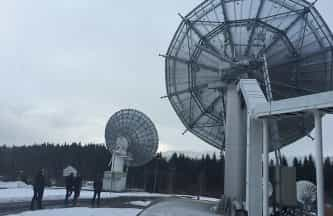
For this reason, Bridge Technologies developed a monitoring and analytics incorporating probes capable of monitoring every type of broadcast network; terrestrial, cable, satellite, IP, OTT – all with the aim of offering insight into every aspect of a broadcast operation, end-to-end, across multiple network types, formats and standards, and all from a single point of access, anywhere in the world.

For systems incorporating satellite contribution and/or direct-to-home distribution, the release of the new VB278 – an upgrade module that can be added to the existing VB120 and VB220 monitoring probe lines – further cements the centrality of Bridge’s monitoring technologies in hybrid setups.


A little box of (satellite) tricks

Supporting DVB-S, DVB-S2 and DVB-S2X modulation standards, the VB278 works as an addition to the base VB120 and VB220 units, which themselves accommodate a range of network standards, including IP unicasts and multicasts, OTT/ABR streams, and a whole range of RF formats, as well as SRT and ASI. They incorporate key monitoring features such as TR 101 290 analysis, IP multicast monitoring, HLS/M-DASH monitoring, TS recording, RF analysis and SRT relay operations – which allows received RF streams to be converted into an IP/UDP stream and made available via the SRT standard, making hard-to-access streams more available to engineers for oversight and diagnostics.

Capacity-wise, the VB120 and VB220 probes gain up to four independent RF L-band inputs per VB278 unit, with the ability to add two modules to any single chassis, thus granting up to eight independent RF inputs which can be used in round-robin operation to monitor a substantial number of transponders.

In addition to DVB-S, DVB-S2 and DVB-S2X, the VB278 supports QPSK, 8PSK and 8/16/32APSK modulation standards, along with DirecTV and AMC mode support. It also includes a range of monitoring metrics and graphs specific to satellite signal analysis, including Modulation Error Rate (MER), Signal to Noise Rate (SNR), Error Vector Magnitude (EVM), Constellation Diagrams, RS Packet Error, Trend RF graphs, Pilot detection and Energy per information bit/transmitted bit/symbol to noise power spectral density ratio. These clear, intuitive, at-a-glance metrics inform in-the-moment decision making, along with longer term, strategic planning.

Building a monitoring solution for now, and the future

In addition, the VB278 is fully future-proofed through the incorporation of an expansion port for hardware add-on functionality, which in the near-future will include a Software-Defined-Radio (SDR) plug-on block to facilitate waterfall spectrum analysis and I/Q spectrum triggered recording. These expanded functionalities will facilitate signal interference detection and intermittent fault analysis, and serve to increase the range, flexibility, functionality, versatility and capacity of their core monitoring solutions, providing for broadcasters who maintain complex, hybrid and evolving networks. When combined with Bridge’s other add-on modules, including the VB273 for redundancy and the VB258 for the monitoring of DVB-T/T2, ATSC1.0/ATSC 3.0, DVB-C, QAM-B and ISDB-T formats, broadcasters are able to create the perfect custom solution, regardless of the complexity and range of their broadcast infrastructure.

Making myth a reality

So, whilst Bridge’s suite of probes may not look quite as dramatic as a lion, a goat and a serpent, and whilst they don’t breathe fire (which is actually something of a bonus in industry-grade electronics installations…), they do at least go to prove that when it comes to broadcast, a chimeric network is far from an unachievable myth: it’s a present and crucially-important reality.

Walking the walk and talking the talk

Difficult to believe that two weeks have passed already since the end of IBC2024. Of course, it’s now that the real work begins, following up on the leads generated and the connections forged.

For us, it was a remarkably successful IBC2024. Visitors from 405 companies across 97 countries, although impressive numbers for us, only represent a part of that success. We scooped the Best in Show award for the addition of the Canvas workspace to the VB440, showcased a range of collaborations, integrations, and product extensions, and celebrated 20 years championing IP in broadcast!

Bridge-Technologies-20-years-celebrations-IBC2024

20 years: a time for reflection, a change in direction

Our birthday gave us opportunity think about our growth. For much of that time, our growth was singularly directed: making IP a mainstay in the market.

But now that we’ve achieved that, our efforts have changed direction slightly, pushing into new territory.

We can see that most clearly with the VB440. When we launched the VB440, what we were really saying was: now that you’ve accepted IP as a core component of compressed distribution, how about we show you what it can do in an uncompressed production environment?

Our focus – at first – was on communicating the idea that with a single appliance, production teams can have everything they need – be they a camera painter, an audio technician, a network engineer or a producer – from anywhere in the world, in real-time. There is truly no other product on the market that delivers this extensive range of production tools in a single box, and thus no other product on the market doing as much to reduce equipment expenditure, clutter, load weight and energy draw for remote and distributed production operations.

But the more functionality we integrate into the VB440, the harder it becomes for customers to believe that we can really do that much in a single product. It genuinely sounds like a ‘too good to be true’ situation. And that is an obstacle we need to overcome.


The psychology of marketing, and how to beat it

The central issue relates to the psychological biases that people hold regarding the idea of ‘maximum collective value’. People often inherently believe that something which specialises in a single function must perform that task more effectively than something which performs that function as part of a wider range of functions. Multi-function tools are automatically seen as useful in their broadness, but lacking in quality at the individual function level. And this can make them difficult to position in the market.

And this isn’t just us saying it, there has been genuine academic research on it: https://www.sciencedirect.com/science/article/pii/S0148296318302005

In essence, it’s the belief that ‘jack of all trades, master of none’ is an unequivocal truth.

But at Bridge, we know that isn’t the case. At all. Because we truly have become masters of production, across the board.


Dont let the market grind you down

Of course, understanding what customers want and how they act is a core part of any successful business. But if you allow it to be the governing force for your company, then you risk stifling innovation and vision in the industry. That is the unfortunate curse of being groundbreaking – people are sceptical of the unknown and unexplored.

Fortunately, we’re used to that at Bridge. Celebrating our twentieth birthday reminded us that back in the day we received more than a few sceptical looks when we described an IP-based future for broadcast. And look where we are now: as a company, and as an industry.


Changing the way we talk to change the way audiences think

And so too with the VB440: this will be our new battle front, changing the tide of opinion to prove that not only can we do more with our production probe, but – for any single function or tool – we can do it better than any individual piece of specialist equipment.

Part of this will necessitate a change in our language and the way we talk about the VB440. Rather than focusing on how broad the ability of the probe is, we want to start talking directly to individual production segments – showing each group how the VB440 caters to their production function specifically, and how it allows them to perform their job more effectively, more precisely, more quickly and more creatively than the comparable ‘specialist’ equipment on the market.


Breaking it down and joining it up

We’re also seeking to change the way our probes are viewed: not as individual products but as part of something more connected. Previously, we made quite a strong distinction between uncompressed and compressed data, treating them as two separate issues to be handled in different ways. But as networks have evolved, we don’t see any advantage to maintaining this binary distinction: compressed and uncompressed data are two sides of the same coin.

Of course, our VB330 and VB440 still maintain different functionalities according to the differing demands of production and distribution. Thus, the VB330 incorporates a range of tools that are crucial for broadcasters in delivering not only QoE excellence to audiences, but also helping them to fulfil their commercial commitments: facilitating ad-insertion monitoring and recording to provide evidence and records to stakeholders, C-Suite managers and engineers alike. Recent integrations also make it easier than ever for broadcasters to communicate network information throughout the organisation – both in emergencies and for general operational reporting/review.

But, increasingly, the two probes are converging in some areas – particularly in their monitoring of various standards (such as SRT and JPEG-XS) – so that broadcasters can treat their production and distribution as a fully joined-up operation which leverages the benefits of IP across the entire broadcast chain, end-to-end. We want to stress this idea of holistic IP broadcasting by unstressing the compressed/uncompressed binary.


Your role in helping us

Of course, to achieve this, we need our business partners on board. We’d encourage you all to think about how you’re talking about the VB440, and how much a focus on its overarching abilities might come at the expense of stressing its market-leadership in each unique area: audio, video, network engineering, and production oversight. We want on-the-ground production professionals of all types to see the VB440 as best-in-class for their specific roles, not just as a generalised tool for all.

A big part of that strategy is already coming into fruition. By highlighting partnerships and integrations at IBC2024, we evidenced the faith that specialists in individual fields view the VB440 as a crucial platform through which to achieve task-specific excellence. It highlighted the fact that not only are we developing groundbreaking tools in-house, but attracting external developers of best-in-class tools as well.


Treading the line

Of course even as we focus on the VB440 as an exceptional tool of specialisation, we still need to communicate to decision makers in charge of purchasing just how versatile the VB440 is: its role in reducing equipment expenditure, surface clutter, load weight and energy draw in OB vans and studios. We need to highlight the fact that it facilitates distributed and remote live production in a joined-up manner in a way no other product on the market is doing. In essence, we need to push the idea that the VB440 makes sense not only as a creative tool – on each and every creative level, but as a business decision too.

We need to break down customer scepticism when they ask ‘how can Bridge really be this far ahead of the industry in what they’re achieving with IP?’.

The key will be to both show and tell.

So, if you want to talk with us more about how you’re talking about Bridge’s Technologies products, we’d urge you to reach out to your head of sales soon, so that we can make sure we’re all singing from the same hymn sheet.


In2Dialog-SaaS-platform-HR


Partnership will bring In2Dialog’s tools to the corporate HR market


Press Release

Utrecht, The Netherlands — 2nd October, 2024


In2Dialog – a Dutch startup company which uses AI-driven technology to revolutionise the recruitment and interview process – today announces its successful partnership with Ubeeo,

a Rotterdam-based leading provider of corporate recruitment software. The partnership will see In2Dialog’s innovative interview tools integrated into Ubeeo’s ATS.


In2Dialog, launched in the Dutch market in 2023 and already extending into Europe as part of some of the industry’s biggest recruitment software systems, represents a tool that saves recruiters time with report writing, gives greater candidate insight during interviews, and facilitates incremental improvement to the interview process at a managerial level, with the combined result of securing better matches for recruiters and employers. Because it slots directly into a number of leading Applicant Tracking Systems, all of this benefit is gained without any disruption to existing organisational workflow, with the data generated by In2dialog automatically populating relevant parts of the applicant tracking system.


Now, Ubeeo’s own ATS will benefit from these expansions also. Ubeeo already delivers crucial tools for recruitment optimisation, incorporating a range of advanced functionalities which grant an all-round solution to recruiters, HR professionals and candidates. The In2Dialog expansion will allow Ubeeo users to extract more from each interview and share this insight with the full decision-making team through Ubeeo’s ATS.


In essence, In2Dialog records interviews – both in-person and online, generates transcripts, uses AI to analyse the content both thematically and syntactically, and then produces summaries, overviews and metrics which communicate the key themes discussed within the interview, along with a psychological evaluation of both interviewer and interviewee. Its powerful AI augmented note-taking saves users as much as half an hour per interview, eliminating the need to write post-interview reports and ensuring that interviewers can focus directly on their candidate without being distracted by note keeping. Using validated psychometric tools and language modelling, In2Dialog quantifies candidate aspects, including their interests, motivations and skills, as well as aspects of their personality and energy. It then communicates these consistently and efficiently to key decision-makers. All of this functionality will now be made available through the Ubeeo ATS.


More than this though, In2Dialog also assists in the assessment, improvement and management of the recruiters themselves, by generating interviewer style and performance reports. This thus allows managers and trainers to assess and benchmark team performance without the time-consuming process of individually overseeing and monitoring interviews in-person. In2Dialog does this by quantifying and comparing interviewing style across the interview team, generating metrics for elements such as duration of interview and rate of trait extraction, percentage of turn-taking and open questioning, subject focus breakdown and energy-match between candidate and recruiter.


Speaking of how the new integration will develop In2Dialog’s presence in the corporate HR market, founder Diddo Van Zand said: “We are pleased and proud to be working with Ubeeo, who share our values, goals and philosophy in relation to recruitment and the ways that it can be made more effective. Their established reach in the market will extend the range of users who can benefit from In2Dialog’s powerful insight – for both candidates and the interviewers themselves – and give us a greater presence in the corporate HR arena”.


Adding to this, Leon Buijsman, CEO at Ubeeo, stated: “Ubeeo focuses on improving candidate experience and increasing the quality of recruitment processes while reducing the administrative burden. In2Dialog is one of the first tools that crossed my path that is really fulfilling on the promise of AI: improving the quality of interviews and concurrently saving time. For us a no-brainer to integrate into our ATS”.

More information about In2Dialog and its products is available at https://in2dialog.com/ or by phone at +31 853036330.


# # #

About In2Dialog

 In2Dialog develops AI-augmented conversation analysis tools to streamline and improve recruitment. Spanning the fields of recruitment, psychology and data science. The Utrecht-based company delivers a more efficient, accurate and objective approach to interviewing, securing better matches while fostering greater management oversight and continuous organisational improvement.


In2Dialog explains how its tools optimise the job interview process while delivering unbiased data for optimal recruitment.


logo-BridgeTechnologies-r-May24


Press Release

In the wake of a highly successful IBC show in Amsterdam, Lawo, developer of the RAVENNA audio-over-IP technology, is pleased to welcome Bridge Technologies as the latest partner to the growing RAVENNA community. The partnership represents not only RAVENNA’s increasing importance in the field of audio-over-IP, but also Bridge’s commitment to the development of probes which support a full range of industry standards and facilitate monitoring of all kinds of broadcast networks, regardless of the infrastructure, standards or technologies upon which the network is based. The collaboration saw one of Bridge’s VB440 probes in operation on the RAVENNA booth at IBC 2024 as part of a next-generation audio production demonstration featuring S-ADM meta data transport over the recently released SMPTE ST 2110-41 standard. Bridge also showcased the collaboration on their own booth in Hall 1.

RAVENNA is an open technology for real-time distribution of audio and other media content in IP-based network environments, using standardized network protocols and technologies across existing network infrastructures to deliver pro audio with low latency, full signal transparency and high reliability. An award-winning technology, RAVENNA is fully compatible with the AES67 and SMPTE ST 2110 standards and constitutes the only audio networking protocol that allows for seamless coexistence with other network traffic, by removing the need for a separate network to transport audio and its associated metadata.

In this way, it represents an ideal complement to Bridge’s suite of monitoring probes, which offer unrivalled monitoring of broadcast traffic in ST 2110 environments (as well as conventional RF, terrestrial, cable, satellite and hybrid networks), providing end-to-end monitoring of both audio and video from production to distribution. Their flagship VB440 supports an extensive range of audio formats and standards, which now extends to include RAVENNA, and allows broadcasters to ensure that the audio delivered to audiences matches all expectations in terms of both Quality of Service and Quality of Experience. It does this by providing a range of intuitive meters, readouts and visualizations in order to understand network performance at every stage of the process, from ingress to playout.


Bridge’s VB440 – an innovation in the field of IP production – leverages the power of ST 2110 to allow production professionals of all types – camera painters, audio specialists and network engineers, amongst others – to access an extensive range of high-grade production tools, all through a single appliance. Most importantly, the VB440 makes this available with next-to-no-latency, using only an HTML-5 web browser. This means that up to eight users can simultaneously access the VB440’s extensive set of features, live, from anywhere in the world, without the need for extensive specialist production hardware. This past year has seen Bridge significantly expand the VB440’s audio production potential, incorporating a wider range of monitoring tools, listening options and immersive audio standards, making the recent alliance with the RAVENNA community a logical next step.

Speaking of Bridge Technologies’ role as a new member of the RAVENNA community, Chairman Simen Frostad said: “We really believe in what RAVENNA is doing, and we’re excited to be a part of that. We have been champions of IP-based broadcast for two decades, and we knew when we set out on that path that it would be collaboration rather than competition that would drive the standard forward in the industry.”

He continued: “Open standards like Lawo’s RAVENNA are crucial to this; not just in the technology they embody, but in the way they provide common ground for leading companies to work together and push innovation and quality for the benefit of the industry as a whole. We’re very proud to be involved.”


Andreas Hildebrand, RAVENNA Evangelist at Lawo, welcomes Bridge Technologies to the RAVENNA community: “Bridge Technologies, with its award-winning monitoring/analysis systems and its collaborative mindset represents an enriching addition to our community. Their recent focus on audio advancements has seen them incorporate ST 2110-31 or -41 monitoring and a range of crucial immersive audio tools to push forward the scope of what can be done in the field of live IP production. We’re delighted to welcome them on board.”

Logo R


New integration will revolutionise colour production workflows


Press Release

OSLO, Norway — 6 September 2024

Bridge Technologies – experts in the field of broadcast monitoring and analytics – will be using their attendance at IBC 2024 (Booth 1.A71) to demonstrate the recent integration of Cromorama’s leading colour management system – ORION-CONVERT™ – into Bridge’s own groundbreaking ST 2110 production probe, the VB440. The integration will make it easier than ever for broadcasters to ensure that their live productions maintain a consistent, seamless grade in both HDR and SDR, across all cameras in a single production, and all productions within a broadcaster’s portfolio.


Cromorama’s unique ORION-CONVERT™ algorithm uses a novel three-step approach to HDR <-> SDR conversion, with an intuitive set of user controls. Loaded with presets that cover both standard presets (such as NBCU and British TV, for example), as well as ‘look’ presents (including HLG mild, HLG live, SLog3 mild and Slog3 live). ORION-CONVERT™ exists to make the traditional LUT workflow more flexible, streamlined, and easy to use for live productions of all types.


Most importantly though, the ORION-CONVERT™ algorithm works to facilitate this consistency in both SDR and HDR simultaneously, using down-conversion to produce SDR from an HDR signal, or up-conversion to expand the compressed highlights of the SDR signal and produce a simulated HDR signal from an SDR camera. With the possibility to create a mathematically exact roundtrip with the flip of a button. This is particularly useful in cases where the production makes use of a speciality slow-mo or mini-cam which does not maintain the HDR capabilities of the rest of the camera setup.


Cromorama – with its focus on making multi-format production outputs more straightforward to achieve – thus ideally pairs with the VB440: Bridge’s market-leading, IP-based production probe, which leverages the power of ST 2110 to allow production professionals of all types – camera painters, audio specialists and network engineers, amongst others – to access an extensive range of high-grade production tools, all through a single appliance. Most importantly, the VB440 makes this available with next-to-no-latency, using only an HTML-5 web browser, meaning up to eight users can simultaneously access the VB440’s extensive set of features, live, from anywhere in the world. Like Cromorama, with its software-based algorithm, the VB440 aims to minimise the amount of specialist equipment a production team needs to achieve complex processes. In the case of the VB440, this means the elimination of waveform monitors, audio controls, single-purpose monitors and extraneous cabling. This reduces capital expenditure, energy consumption, truck weight and electronic end-of-life waste, and often provides higher functionality and more intuitive use than the extensive portfolio of single-function, single-box equipment that it is designed to replace.


What makes the new integration of ORION-CONVERT™ an even more ideal marriage of technologies is the fact that for a number of years the VB440 has facilitated the preview of HDR images even on SDR monitors, therefore allowing production specialists to work on dual SDR/HDR productions on-the-move, without any need for specialist HDR equipment. The addition of ORION-CONVERT™ to the VB440 thus further augments the VB440’s position as an unrivalled solution for live, remote and distributed production, especially for large-scale, complex productions which will be broadcast across the globe in a range of formats, languages and standards.


Speaking of the integration, Chairman of Bridge Technologies Simen Frostad said: “The world of globalised, live sports production is complex indeed, but it is exactly this type of multifaceted production which the VB440 has been designed to support, and which will benefit so readily from this collaboration with Cromorama.


He continued: “To take an example from a recent global sports event: there were a range of pipelines which all needed conversion. The main pipeline was in 4K, and the images needed to be converted from the cameras to SDR/HDR as required, along with converters to adapt the colourimetry to accommodate the format, look or style of the pre-, during- and post-game productions, as well as a differentiated look for day and night games. Hundreds of devices needed to be controlled. Now, through our recent ORION-CONVERT™ integration, this can all be monitored through the VB440 to ensure absolute reliability and consistency: a concern which is vital in the context of some of the most prestigious and recognised sports productions in the world”.


Commenting further on the integration, CEO/CTO for Cromorama, Pablo García Soriano, said: “Cromarama revolutionises the way that colour production is undertaken, whilst the VB440 revolutionises how production is undertaken more generally. Together, the match makes perfect sense and will deliver significant workflow benefits in fast-paced, live production environments. We’ll be very excited to demonstrate the full potential of this on Bridge’s booth (1.A71) at the upcoming IBC 2024”.


More information about Bridge Technologies and its products is available at www.bridgetech.tv or by phone at +47 22 38 51 00.


# # #


About Bridge Technologies

Bridge Technologies creates advanced solutions for protecting service quality in the digital media and telecommunications industries. The company’s award-winning monitoring/analysis systems, intelligent switchers and virtual environments help deliver over 25,000 channels to more than 1.2 billion subscribers in 96 countries.

From live uncompressed production for end-to-end IP environments, satellite ingress, terrestrial and cable distribution, OTT measurement right down to the home network, Bridge offers patented innovation and true end-to-end transparency, developing technologies that have helped ignite the IP and IT transformation of the broadcast industry. A privately held company headquartered in Oslo, Norway, Bridge Technologies has worldwide sales and marketing operations through a global business partner network.


Learn more – www.bridgetech.tv


Logo R


Collaboration will result in future VB440 integration


Press Release

OSLO, Norway —  5 September 2024

Bridge Technologies is proud to announce its partnership with fellow Norwegian company Pixotope, a leading provider of graphic enhancements for broadcast productions. The partnership will focus on leveraging Bridge’s expertise in the field of IP broadcast to assist Pixotope in a full ST 2110 transition, the initial results of which will be on display at IBC 2024 (Booth 1.A71).


The Pixotope platform streamlines workflows by combining camera tracking, talent tracking, virtual sets, AR and XR functionalities. Through the use of a single, intuitive application, the need for multiple programs and complex integrations is eliminated, thus minimising disruption and hardware requirements. The net result is the ability to easily create immersive and striking experiences for viewers, adding context through data visualisations, clarity through action tracking, and dynamic graphics to enhance atmosphere and energy.


Now, Pixotope intend to make these workflows even more streamlined by providing their full suite of graphic enhancements directly within an ST 2110 production environment. Not only will this transition extend the reach, scope and potential of Pixotope’s services as production companies across the globe upgrade to IP-based workflows, but it will also open the door for future integrations. The VB440 itself leverages the power of ST 2110 to allow production professionals of all types – camera painters, audio specialists and network engineers, amongst others – to access an extensive range of high-grade production tools, all through a single appliance.


Most importantly, the VB440 makes this available with next-to-no-latency, using only an HTML-5 web browser, meaning up to eight users can simultaneously access the VB440’s extensive set of features, live, from anywhere in the world. This means the elimination of waveform monitors, audio controls, single-purpose monitors and extraneous cabling. This reduces capital expenditure, energy consumption, truck weight and electronic end-of-life waste, and often provides higher functionality and more intuitive use.


An important step in this ongoing partnership will be a collaborative display of Pixotope’s extensive functionalities on Bridge’s booth at IBC 2024 (1.A171), highlighting how the VB440 can be used to monitor existing Pixotope processes, itself something that will set the groundwork for more direct future integrations down the line. The display will include demonstrations of:


  • Pixotope Reveal: Demonstrating AI-driven background segmentation technology
  • Pixotope Graphics: The use of Unreal Engine-based virtual AR elements, with a live feed, where talent will be able to walk in front of the AR elements without a green screen, thanks to Pixotope Reveal
  • An End-to-end ST 2110 workflow: Featuring a Panasonic AW-UE160 camera with direct ST 2110 output, Pixotope Graphics ST 2110 input/output processes, and analysis and monitoring through the Bridge VB440 production probe
  • The potential for future integration with Bridge Technologies’ environment, highlighting the powerful VB440 and its monitoring and analysis of ST 2110 flows


In particular, the VB440 will be used to display a live feed of Pixotope processes and the different colour charts it references, along with other relevant live monitoring parameters. It will display these at three stages of the process: as source video, as graphics-output from the Pixotope graphics engine, and as a composite output.


Speaking of the collaboration, Bridge Technologies Chairman Simen Frostad said: “Pixotope’s extensive AR and VR functionalities are crucial tools for delivering the excitement, immersion and interest expected of modern productions – particularly in the field of sports. Bringing them into the VB440’s ecosystem will further augment the already extensive capabilities of the VB440, and yet further cement it as the production tool for remote, distributed and live production”.


Adding to this, Javier Reyes, Technical Product Manager for Pixotope, said: “We’re pleased and proud to be working with our fellow Oslovians. We hugely value the two decades of IP experience that Bridge Technologies have accrued and believe that when combined with the remarkable power of our graphics tools, what will result is something of quite extraordinary power and application. We look forward to showcasing our current capabilities on Bridge’s booth at the upcoming IBC 2024”.


More information about Bridge Technologies and its products is available at www.bridgetech.tv or by phone at +47 22 38 51 00.


# # #


About Pixotope

Pixotope Technologies is an international award-winning software company dedicated to developing the next generation of visual storytelling tools and experiences. Having been proven on the most demanding live productions in the world, Pixotope offers media content owners and producers a reliable and sustainable end to end Virtual Production Platform on which to build their media business. Pixotope uniquely allows media creators to tell stories with the visual impact of high-end feature films, combined with the connected and scalable nature of online content and the immersive and social experience of video games. With global 24/7 operations and a direct presence on four continents, Pixotope Technologies is on a mission to promote accessibility, ease of use, and customer success in Virtual Production for all media creators.

Learn more – https://www.pixotope.com/


About Bridge Technologies

Bridge Technologies creates advanced solutions for protecting service quality in the digital media and telecommunications industries. The company’s award-winning monitoring/analysis systems, intelligent switchers and virtual environments help deliver over 25,000 channels to more than 1.2 billion subscribers in 96 countries.

From live uncompressed production for end-to-end IP environments, satellite ingress, terrestrial and cable distribution, OTT measurement right down to the home network, Bridge offers patented innovation and true end-to-end transparency, developing technologies that have helped ignite the IP and IT transformation of the broadcast industry. A privately held company headquartered in Oslo, Norway, Bridge Technologies has worldwide sales and marketing operations through a global business partner network.


Learn more – www.bridgetech.tv


Bridge-technologies-20-years-logo-ibc2024

They’ll be making IBC 2024 a party to remember


Looking back and looking forward

20 years ago, four young men with a glint in their eye and a mission in their minds set about founding a small broadcast technology firm in Norway. The vision on which they founded their future could well have come straight from a crystal ball, it was that clear, sharp and compelling: IP was the future of broadcast.

20 years later and that vision has become a firm reality, not just for Bridge Technologies but for the industry as a whole. As far back as 2016, IBC instigated the IP showcase – of which Bridge are annual contributors, recognised as the industry’s leading ‘IP evangelists’.

But the market has reached an interesting paradox: these days IP is treated as if it’s the accepted standard – a trend that no longer dominates headlines because it’s accepted that it isn’t the future, it’s right here, right now. But at the same time, the reality is that IP and OTT are only part of the picture: terrestrial, cable and satellite still have a significant role to play. Whilst IBC likes to focus on positioning itself as an opportunity to discover the latest trends, in reality a good deal of the business conducted at IBC is meat and potatoes. It just so happens that these days, IP and OTT are now more firmly on the dinner plate: they’re the prime rib of the broadcast world.

Bridge-Technologies-20-years-IBC-2024

Shifting markets, shifting needs

So as Bridge celebrates its 20th year, they recognise that their role in the industry has changed subtly. There is less need to encourage broadcasters to consider the benefits of IP: those are already well established. But there is a stronger need to find ways to support that transition for firms in every corner of the industry. Now it’s not just about the goal, but the path there – meaning additional support for those working with hybrid systems and more gradual transitions to IP.

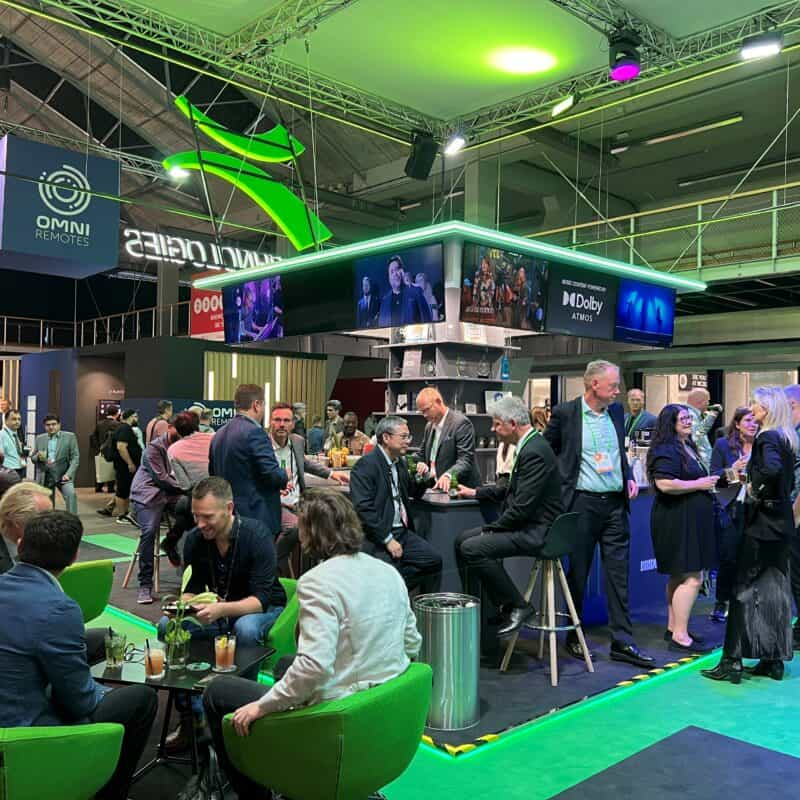
Which all combines to mean that this year, Bridge’s booth (1.A71) will present a more interesting spread than ever: combining the kind of technological innovations that make IBC headlines, with the kind of solid developments which make a meaningful difference to broadcasters and the performance of their networks on a day-to-day basis.


Birthday presents for everyone

In the field of production, Bridge will be demonstrating how they still lead the pack in ST 2110 innovations. Their unique production probe – the VB440 – will see a move to its Mk4 iteration, which will boast two 200gig interfaces, as well as improved processing and memory. In terms of functionality, new additions such as the Canvas interface – a fully customisable workspace in which users can add and group any number of readouts, graphs and scopes, video previews and audio tools to suit their own workflow – will highlight the revolutionary nature of the production probe, capable of facilitating remote, distributed production for creatives and engineers alike, for up to eight users from anywhere in the world. Audio engineers will also be particularly interested in the upgrades made to the supported Dolby™ and SMPTE standards and speaker control recently added to the VB440.

In the field of distribution – be that RF, IPTV multicast or OTT/ABR – Bridge will be showcasing their new StreamOverview feature; a single page addition to the VB330 which provides first and second-line engineers at-a-glance insight into the performance of a single channel. This compliments the existing extensive, deep-dive analytics of the probe, providing an alternative ‘quick access’ overview which adapts according to whether the stream in question is RF, IPTV multicast or OTT/ABR, and allows engineers to quickly assess and troubleshoot problems as and when they occur.

RF specific support will also be on display with upgrades to the VB258 and VB278, along with Bridge’s unique, patented Microbitrate analytics for IP-based distribution. At every level of the market, and for every network configuration, Bridge Technologies offers the means to monitor at any level of detail, all with the goal of helping broadcasters to achieve greater effectiveness and efficiency in their operations, both day-to-day and at the strategic C-suite level.


Let there be cake. And champagne!

Of course, for it to be a birthday celebration there needs to be more than just new product developments. With a pole position in Hall One, Bridge will be in a celebratory mood and engaging in their normal levels of IBC revelry, with after-show drinks, guest boat rides and awards show attendance. So, why not stop by to say Happy Birthday, and stay to discover what Bridge Technologies has in store for the year ahead (and twenty more…).

proton-smallest-world-camera


Flexible mini cam delivers practically unlimited creative potential


Press Release

Garbsen, Germany — 2nd September 2024

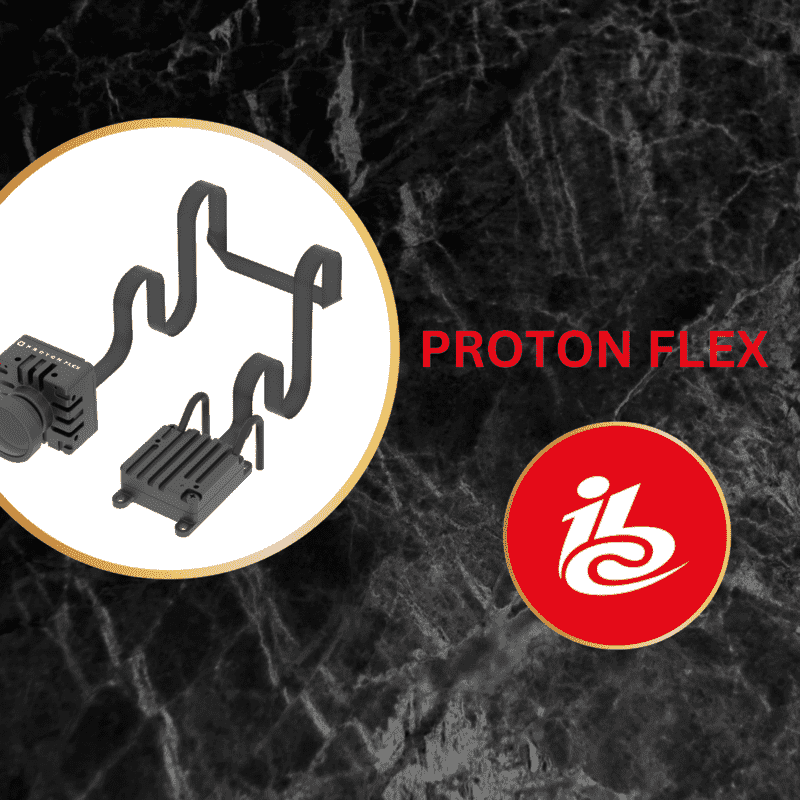
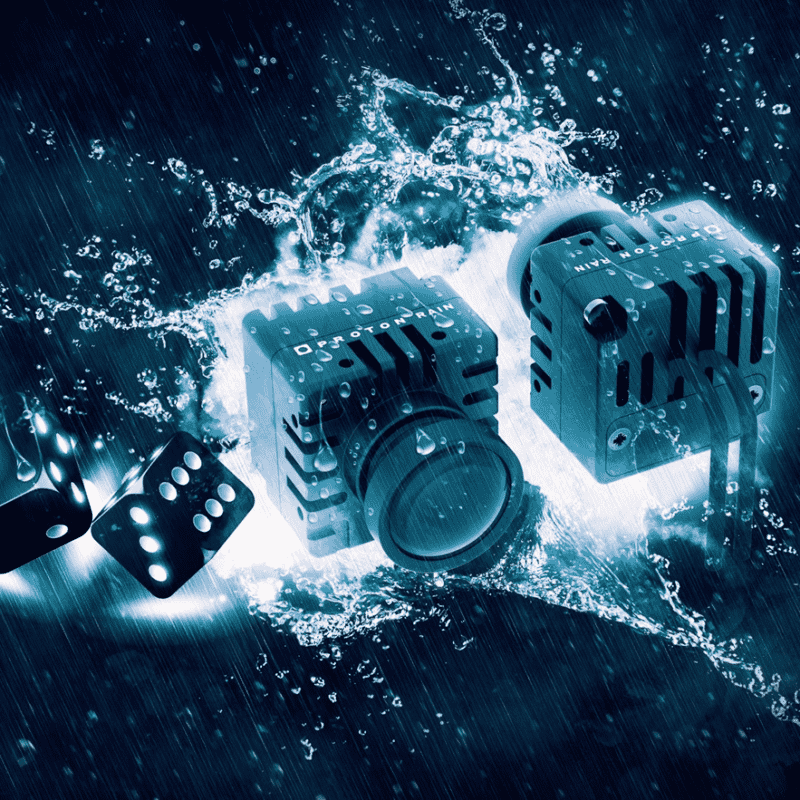
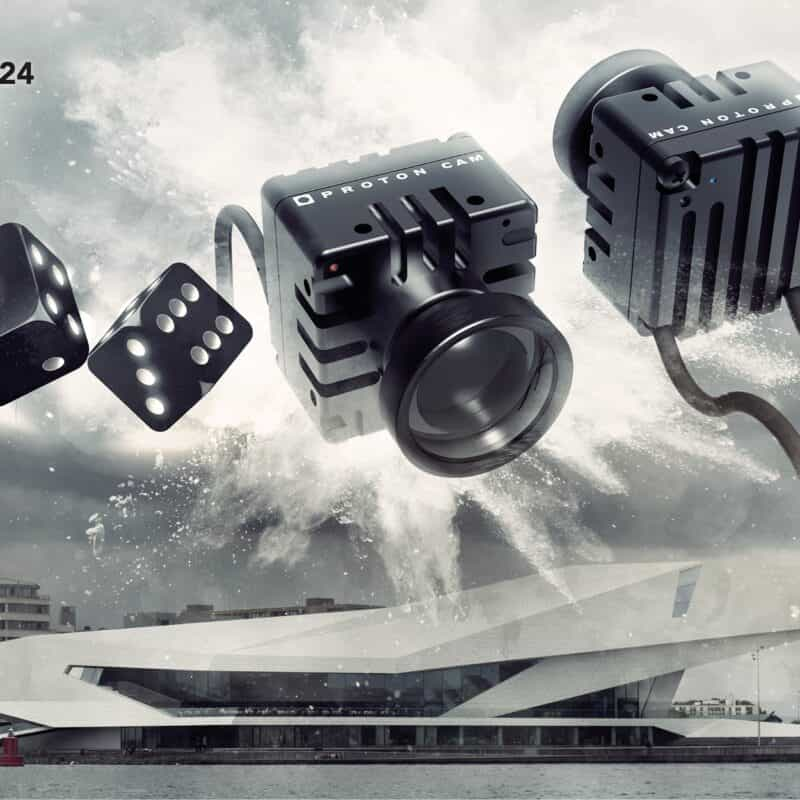
As part of a suite of new releases being unveiled at IBC 2024 by German start up Proton Camera Innovations (Booth 11.A06), the company today announces the launch of its PROTON FLEX, a miniaturised camera that uses a flexible design to maximise performance in any live production that requires heat and space management.

proton-flex-minicam-ibc2024-innovation-sports-broadcastThe PROTON FLEX has an overall profile which measures just 28mm x 28mm and weighs just 37g, and which separates the lens from the main body using a flexible flat ribbon cable. By separating the lens with the sensor on one side from the video processing chip with the power supply on the other side, the PROTON FLEX achieves the best performance from both elements, whilst maintaining a discreet profile that can be flexibly integrated in a range of operational contexts. For instance, in the case of motor sports and helmet-mounted applications, the divided lens/video processing construction allows for better weight distribution, whilst for applications where operational temperatures are a concern, the PROTON FLEX can withstand like similar cameras outside temperatures of up to 75°C. In essence, the PROTON FLEX provides a level of operational flexibility which significantly increases the creative potential of the camera, offering broadcast operators options limited only by their imagination.

All of this comes with no compromise to visual clarity and sharpness. The standard lens, that can be easily replaced by other lenses, offers a 97°-degree view, whilst the 12-bit sensor and camera body operate to deliver exceptional image quality. The PROTON FLEX incorporates two separate PCBs (Printed Chip Boards), leveraging the power of a VEGA microprocessor to deliver crisp Full-HD 1080p images.

The PROTON FLEX – like the other members of the Proton line-up – is ideally suited to live broadcast with a particular applicability in sports productions; whilst it has been designed to accommodate environments where weight distribution, reduced space and temperature are an issue, its counterparts – the PROTON RAIN and original PROTON CAM – are designed to accommodate weather-sensitive/durability-centered contexts and size-sensitive applications respectively, with the original PROTON CAM taking the title of smallest camera currently available on the broadcast market. In this way, the range as-a-whole provides both flexibility and specificity, allowing users to tailor their camera choice to their exact needs, and innovate in previously unexplored creative contexts and spaces.

Speaking of the reception the range has received thus far, and expectations for the upcoming IBC, Marko Hoepken, CEO for Proton, said: “We continue to be amazed at the ways in which people are using our flagship PROTON CAM. We developed it with creative potential as the central consideration, but even we hadn’t anticipated how it would be used and how visually stunning some of the result would be; both in terms of the unusual, exciting and visually progressive framing/shot types that are being achieved, as well as the technical quality of the image produced”.

He continued: “Now, with these extensions to our range – in the form of the PROTON FLEX and PROTON RAIN – we allow users to leverage that potential in even more challenging contexts; sensitive temperature, rugged terrain, or weather-dependent conditions. We are really excited for the upcoming IBC Show, and the opportunity to showcase our in-house developed and controlled innovations to both existing and potential customers, as well as our industry peers”.

More information about Proton and its products is available at http://proton-camera.com/.

# # #

About Proton Camera Innovations GmbH

Proton – a new entrant in the field of miniature cameras – leverages its team’s extensive experience in camera miniaturisation to deliver the industry’s smallest and lightest broadcast-standard cameras currently on the market. Incorporating its own chip technology with a larger sensor than competitor models, the Proton’s cameras deliver wider shots, higher dynamic range, improved low-light performance and lower energy draw. With the addition of stereo audio, tally light, exchangeable lenses these cameras are perfect for sports broadcast, live events, drone attachment, PoV and body-mounting or any number of other creative and immersive live production applications where versatility, robustness and space are key determinants of success.

Logo-Noa-archive

for over 260,000 archival audio carriers dating back to the 1950s


Vienna, Austria — 26 August 2024

The Ministry of Information Kuwait National Radio has awarded the contract for Radio Archive Project to Al-Rashed Group and chosen NOA GmbH, a leading AV digitizing and archiving specialist, to modernize its radio repertoire. The comprehensive project includes the digitization of the broadcaster’s entire repertoire and disaster recovery backup.

As per the seven-year agreement, finalized at the end of June, a complete NOA mediARC archive management system will be integrated into Kuwait Radio’s existing Dalet playout. Concurrently, the organization’s complete radio archive using NOA’s ingestLINE will be digitized.

The first year of the project will focus on the delivery and ramp-up phase, followed by a three to four-year period during which the entire archive will be digitized. The mediARC Archive Asset Management system will be installed at the radio broadcaster’s main site in Kuwait City, with the disaster recovery site located in Magwa. All framework modules will support the storage system, holding four copies.

Dr. Nidal Fawaz, Director of the Technology Solutions Division at Al-Rashed Group, said: “While the organization’s radio archive has been partially digitized for production purposes,  the re-digitization of the entire inventory  is yet to be completed. The MOI tender amounts to approximately €10 million. The goal is to digitize some 260,000 archival audio carriers dating back to the 1950s, including quality control, inventory, and enrichment of metadata.”

NOA’s mediARC solution provides a flexible framework for Archive Asset Management, enhancing efficiency for broadcasters and archives of all sizes. The NOA ingestLINE offers professional, purpose-built digitization tools for archive preservation projects, ensuring flawless quality and outstanding cost-effectiveness.

“After a thorough analysis of this prominent tender, we’re excited to finally start this project with our contractor Al-Rashed Group and their International technical partner NOA,” added Eng. Dalal Alhindal, Project Manager of MOI – Kuwait Radio. “This initiative will preserve our unique radio archive heritage, one of the oldest in the Arab world.”

The installation represents the first of its kind in Kuwait, adding to NOA’s significant installations for AV archiving at Abu Dhabi Media Corp. and Sharjah Broadcasting Authority in the region.

Jean-Christophe Kummer, managing partner of NOA, added, “We’re thrilled to expand our footprint in this region by winning this prestigious seven-year project with our partner AI-Rashed Group. Our enterprise framework, based on NOA mediARC and ingestLINE, combined with our experience in delivering archive technology for over 5 million hours of AV material worldwide, positions us well for success in this endeavor.”

More information about NOA and its products is available at www.noa-archive.com or by phone at +43 1 545 2700.


# # #

About Al-Rashed Group Holding Company

Al-Rashed Group Holding Company is one of Kuwait’s leading family-owned Groups. Through its subsidiary companies Al-Rashed Holdings has a number of strategic divisions focusing on: Major Oil &, Gas, Utilities Power and Infrastructure Projects; Technology Solutions, Building Materials, Oil Sector Services, Equipment Supply, and Logistics as well as number of smaller specialist business units. Through its operating divisions Al-Rashed Holdings has built an outstanding reputation in these key markets working with its partner international companies in the State of Kuwait and the wider Gulf Region.


 About NOA GmbH

NOA delivers scalable, high quality AV digitizing and archiving innovations to make audio and video archives easily available in enterprise storage facilities. Sustainable long-term preservation of media content is guaranteed as NOA’s unique products rely on open archival standards and formats, and continuous checks for transfer integrity to ensure highest possible quality of audio and video content. NOA’s turnkey solutions deliver systems to meet the specific needs of any business. ingestLINE™, actLINE™, jobDB™, mediARC™ and the entry level Pico systems safeguard future media accessibility and enterprise-wide collaboration. Advanced semantic metadata management ensures NOA’s family of products deliver efficient and reliable identification and retrieval of archival content.

NOA’s intuitive proprietary technologies are currently installed in more than thirty international institutions including Austrian National Broadcaster ORF, Sveriges Radio Förvaltnings (SRF), Yleisradio Finland (YLE), Radiotelevizija Slovenija (RTV), the national sound archives of Switzerland and Mexico, the Vlaamse Radio- en Televisieomroep (VRT) and many more.


adds satellite monitoring capabilities to existing probes

 
 Press Release


OSLO, Norway — 26 August 2024

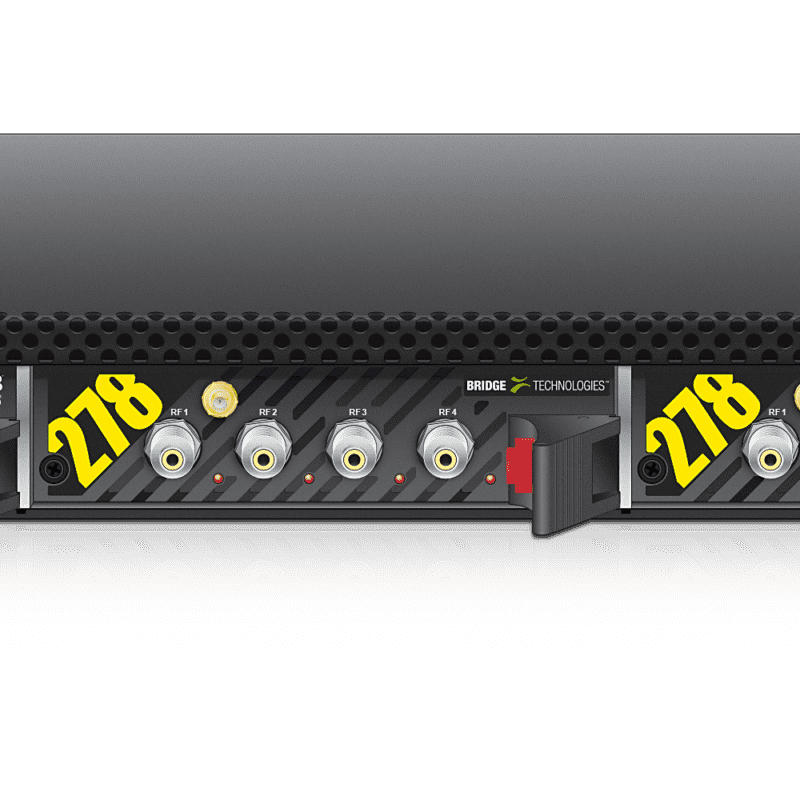
As part of a wider range of upgrade modules being made for their existing VB120 and VB220 monitoring probe lines, Bridge Technologies today announced the launch of the VB278 module, which will expand the extensive capabilities of both base probes to incorporate satellite contribution and direct-to-home distribution monitoring, supporting the DVB-S, DVB-S2 and DVB-S2X modulation standards.


The base VB120 and VB220 accommodate a range of network standards, including IP unicasts and multicasts, OTT/ABR streams, and a whole range of RF formats, as well as SRT and ASI, offering key monitoring features such as TR 101 290 analysis, IP multicast monitoring, HLS/M-DASH monitoring, TS recording, RF analysis and SRT relay operations. SRT (Secure Reliability Transport) is of particular interest, because it allows for received RF streams to be converted into an IP/UDP stream, which is then made available via the SRT standard. This framework makes it possible to gain central access to streams that would otherwise be hard to access, thus giving engineers greater insight, diagnostic capability and control over their network.


bridgetechnologies-vb278-satellite-ibc2024-technologyThrough the addition of new VB278 module, these probes gain up to four independent RF L-band inputs, which allow for the specific monitoring and analysis of the RF streams found in satellite contribution and direct-to-home distribution infrastructure. With each VB278 module, one input is activated by default, and the other three through software license key. Two VB278 modules can be added to any single chassis, therefore allowing for up to eight independent RF inputs, and through the use of round-robin operation, a significantly higher number of transponders can be monitored overall.


Alongside support for DVB-S, DVB-S2 and DVB-S2X, the VB278 supports QPSK, 8PSK and 8/16/32APSK modulation standards, along with DirecTV and AMC mode support. Configuration of the probe for symbol rate detection – requiring only the input of the frequency by the user – adds to the intuitive and easy-to-use nature of the module, an element common to all Bridge probes. Moreover, the VB278 incorporates a range of monitoring metrics and graphs specific to satellite signal analysis, including Modulation Error Rate (MER), Signal to Noise Rate (SNR), Error Vector Magnitude (EVM), Constellation Diagrams, RS Packet Error, Trend RF graphs, Pilot detection and Energy per information bit/transmitted bit/symbol to noise power spectral density ratio. These are all presented using clear, intuitive, at-a-glance metrics which inform in-the-moment decision making, along with longer term, strategic planning, both in terms of network engineering and business development. All of this data can be accessed from anywhere in the world through any HTML5-enabled web browser.


In addition, the VB278 is future-proofed through the incorporation of an expansion port for hardware add-on functionality, which in the near-future will include a Software-Defined-Radio (SDR) plug-on block which allows for a range of added functions, including waterfall spectrum analysis and I/Q spectrum triggered recording. These expanded functionalities will have importance for areas such as signal interference detection and intermittent fault analysis, and represent Bridge Technologies’ commitment to increasing the range, flexibility, functionality, versatility and capacity of their core monitoring solutions, providing for broadcasters who maintain complex, hybrid and evolving networks.


Speaking of this most recent addition, Chairman Simen K. Frostad said: “Our commitment to IP-based broadcast – a vision we’ve held for 20 years – has been vindicated in the broadcast market. But even bigger than that is our commitment to monitoring in general, regardless of platform. Effective monitoring should constitute the backbone of any network delivery solution, especially those who are taking legacy components and beginning to hybridise them with IP-based standards”.


He continued: “That is why we have developed an extensive range of add-ons for our core VB120 and VB220 probes, including the VB273 for redundancy and the VB258 for the monitoring of DVB-T/T2, ATSC1.0/ATSC 3.0, DVB-C, QAM-B and ISDB-T formats. With these options, alongside the VB278 for satellite, broadcasters are able to create the perfect custom solution, regardless of the complexity and range of their broadcast infrastructure”.


Bridge’s full range of monitoring solutions will be on display at IBC2024, Booth 1.A71.


More information about Bridge Technologies and its products is available at www.bridgetech.tv or by phone at +47 22 38 51 00.


# # #

About Bridge Technologies

Bridge Technologies creates advanced solutions for protecting service quality in the digital media and telecommunications industries. The company’s award-winning monitoring/analysis systems, intelligent switchers and virtual environments help deliver over 25,000 channels to more than 1.2 billion subscribers in 96 countries.

From live uncompressed production for end-to-end IP environments, satellite ingress, terrestrial and cable distribution, OTT measurement right down to the home network, Bridge offers patented innovation and true end-to-end transparency, developing technologies that have helped ignite the IP and IT transformation of the broadcast industry. A privately held company headquartered in Oslo, Norway, Bridge Technologies has worldwide sales and marketing operations through a global business partner network.

Learn more – www.bridgetech.tv


for their existing VB120 and VB220 network monitoring probes


 Press Release


OSLO, Norway — 20 August, 2024


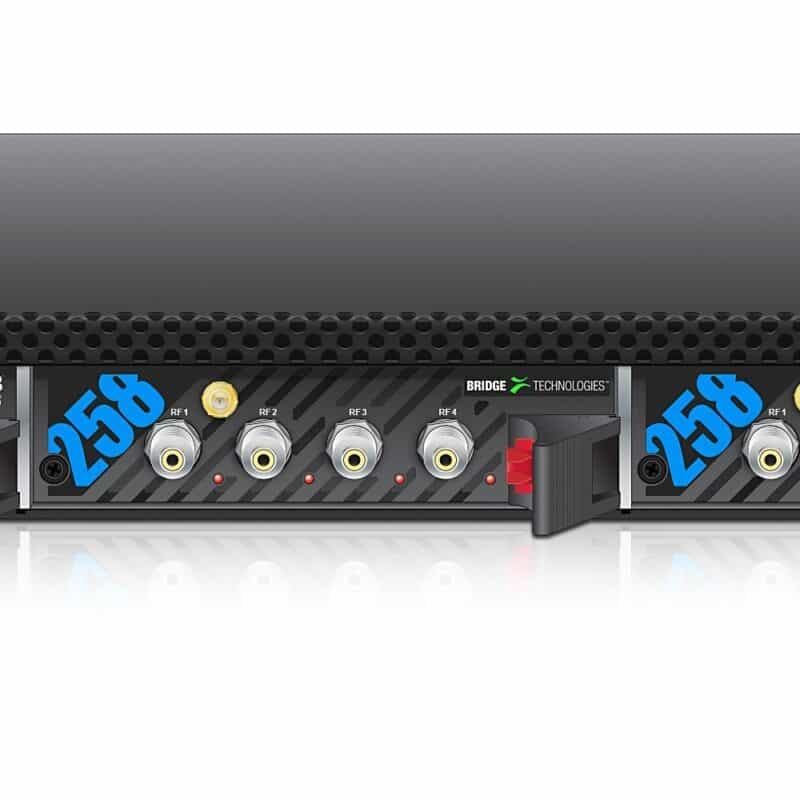
In anticipation of the upcoming IBC2024 Show in Amsterdam (Booth 1.A71), Bridge Technologies today announce the release of the VB258, an upgrade module for their existing VB120 and VB220 monitoring probe lines, both of which constitute cost-effective and powerful monitoring solutions that accommodate a range of network standards, including IP unicasts and multicasts, OTT/ABR streams, and a whole range of RF formats, as well as SRT and ASI. The new VB258 addition will allow monitoring of up to four independent RF inputs, supporting DVB-T/T2, ATSC1.0/ATSC 3.0, DVB-C, QAM-B and ISDB-T formats. This makes it ideal for networks that incorporate terrestrial or cable delivery elements.


The addition of these standards to the VB120 and VB220’s existing monitoring capabilities represents Bridge Technologies’ commitment to increasing the range, flexibility, functionality, versatility and capacity of their core monitoring solutions, providing for broadcasters who maintain complex, hybrid and evolving networks. The addition of ISDB-T format monitoring ensures that these capabilities are also extended to those in the Japanese and South American markets.


Whilst each individual VB258 maintains capacity for four independent inputs (one of which is activated by default, and the other three by license key), the monitoring capacity can be doubled by placing two VB258 modules within a single chassis. Furthermore, each input is further capable of round-robin operation to allow for monitoring of a full frequency raster, as typically found in DVB-C/QAM-B cable networks.


In terms of functionality, the VB258 complements the VB120 and VB220, offering key monitoring features such as TR 101 290 analysis, IP multicast monitoring, HLS/M-DASH monitoring, TS recording, RF analysis and SRT relay operations. SRT (Secure Reliability Transport) is of particular interest, because it allows for received RF streams to be converted into an IP/UDP stream, which is then made available via the SRT standard. This framework makes it possible to gain central access to streams that would otherwise be hard to access, thus giving engineers greater insight, diagnostic capability and control over their network.


In relation to ATSC 3.0-based terrestrial systems, the VB258 facilitates monitoring of RF parameters such as MER, constellation diagram and Channel Impulse diagram. As with all of Bridge Technologies’ probes, the probe delivers data as usable information, providing clear, intuitive and at-a-glance metrics that can inform in-the-moment decision making, along with longer term, strategic planning, both in terms of network engineering and business development.


bridge-technologies-ibc2024-vb258-upgrade-terrestrial-cableCrucially, the speed of the VB258 has also been enhanced, and is now capable of providing updates to the controller card (either a VB120 or VB220) every second, thus providing for increased accuracy. The firmware of the module has also been made field upgradable, thus futureproofing it to accommodate subsequent probe developments.


Speaking of this most recent addition, Chairman Simen K. Frostad said: “Whilst our role as IP evangelists has been what has defined us within the broadcast space, we recognise that not all broadcasters are ready or able to make a full transition to IP architectures. And we believe wholeheartedly that effective monitoring should constitute the backbone of any network delivery solution, especially those who are taking legacy components and beginning to hybridise them with IP-based standards”.


He continued: “We will be looking forward to demonstrating this entire range of Bridge monitoring solutions at IBC2024, with a particular focus on the way that our full range of monitoring probes can be combined to meet the unique needs of individual customer systems architectures, all accessible through a single, intuitive interface”.


More information about Bridge Technologies and its products is available at www.bridgetech.tv or by phone at +47 22 38 51 00.


# # #


About Bridge Technologies

Bridge Technologies creates advanced solutions for protecting service quality in the digital media and telecommunications industries. The company’s award-winning monitoring/analysis systems, intelligent switchers and virtual environments help deliver over 25,000 channels to more than 1.2 billion subscribers in 96 countries.

From live uncompressed production for end-to-end IP environments, satellite ingress, terrestrial and cable distribution, OTT measurement right down to the home network, Bridge offers patented innovation and true end-to-end transparency, developing technologies that have helped ignite the IP and IT transformation of the broadcast industry. A privately held company headquartered in Oslo, Norway, Bridge Technologies has worldwide sales and marketing operations through a global business partner network.

Learn more – www.bridgetech.tv

Logo-Proton


New mini-cam for outdoor production and sport


 Press Release

Garbsen, Germany — 19 August 2024

Building on the remarkable reception of their debut PROTON CAM, Proton Camera Innovations – a German innovator in the field of miniaturised cameras – announce the upcoming launch of their second major market offering, the PROTON RAIN; a robust mini-cam that has been designed to meet market demand, particularly in the field of outdoor production and sport. Proton will use their attendance at IBC2024 (Booth 11.A06) to showcase the potential of this new offering, alongside their flagship PROTON CAM – the smallest and lightest broadcast camera currently available on the market, alongside a range of further, yet-to-be-announced extensions to their product range.


The PROTON RAIN measures only slightly bigger than the flagship PROTON CAM, coming in at just 30mm x 30mm, but maintains a heavy-duty casing which allows the camera to be used in conditions where the risk of impact or jolt are higher. Most significantly, the IP67 camera is weather-proof and is suitable for outdoor environments under severe rain or dust without compromise to image quality nor risk to the camera itself. This makes it ideal for sporting applications such as off-road motor sports, extreme sports and contact sports, or indeed any application in which there is a need for exceptional image capture in challenging conditions, and where a durable, hardwearing and resilient camera can be the difference between an exceptional moment captured live, or a missed opportunity.


The camera maintains a micro lens, which can be uniquely replaced with even wide-angle lenses and when combined with its tough and durable casing – grants operators full flexibility in the way they capture shots. Its small size and light weight allow for unusual and creative angles to be used, while its rugged build allows for immersive, close-to-the-action approaches to video capture.


A further key concern for Proton is usability; the company has made extensive efforts to simplify operations, maintain a real-time operating system and facilitating firmware updates through a PC or Mac, rather than the traditional approach.


Speaking of this further addition to Proton Camera Innovations’ range, Marko Hoepken, CEO for Proton, said: “The reception of our flagship PROTON CAM was fantastic, and we anticipate that the PROTON RAIN will be just as well received. With very little difference in size, the PROTON RAIN brings a rugged durability that dramatically extends the range of applications the camera can be used in. It was developed directly on the back of customer feedback, which indicated that Proton’s expertise in miniature cameras, encapsulated in a weatherproof, resilient body, would make an ideal addition to a cameraman’s arsenal”.


He continued: “This is our second launch announcement, but our range will continue to grow, both before IBC and afterwards. Our aim is to take the core of our remarkable innovation – particularly our uniquely developed chip architecture – and then offer it to the market in a range of ways, with adaptations which precisely meet the specific needs and creative visions of our clients”.


More information about Proton and its products is available at http://proton-camera.com/.


# # #


About Proton Camera Innovations GmbH

Proton – a new entrant in the field of miniature cameras – leverages its team’s extensive experience in camera miniaturisation to deliver the industry’s smallest and lightest broadcast-standard cameras currently on the market. Incorporating its own chip technology with a larger sensor than competitor models, the Proton’s cameras deliver wider shots, higher dynamic range, improved low-light performance and lower energy draw. With the addition of stereo audio, tally light, exchangeable lenses these cameras are perfect for sports broadcast, live events, drone attachment, PoV and body-mounting or any number of other creative and immersive live production applications where versatility, robustness and space are key determinants of success.

This is a sample post created to test the basic formatting features of the WordPress CMS.

Subheading Level 2

You can use bold text, italic text, and combine both styles.

  1. Step one
  2. Step two
  3. Step three

This content is only for demonstration purposes. Feel free to edit or delete it.

This is a sample post created to test the basic formatting features of the WordPress CMS.

Subheading Level 2

You can use bold text, italic text, and combine both styles.

  1. Step one
  2. Step two
  3. Step three

This content is only for demonstration purposes. Feel free to edit or delete it.

Bridge Technologies was interviewed by Digital Studio India

How are you adapting to green technology?

As a Norwegian company, the concept of sustainability is baked into our culture: nine out of ten cars sold in the country this year were electric and Oslo was awarded Green City of the Year in 2019. So it hasn’t been a case of ‘adapting’ to green technology, but growing alongside it.


Are there any sustainable practices are being implemented by your organisation?

Bridgetechnoloiges-interview-sustainability-digital-studio-india-xpressocommunications-content-writingAs a company, we are always looking for ways to improve the sustainability of our operation; not just environmentally, but socially too. For instance, since 2008, Bridge has shipped all its equipment to customers using fully recyclable packaging, with organic ink used for all printed materials.

But actually, the biggest sustainable impact we make – not for our company but for the industry as a whole – comes directly from the product we make. A key aspect of our monitoring probes is that they draw significantly lower power and have a much longer MttF (Mean Time to Failure). So, they are inherently more sustainable in their core design.

The VB440 is really the best example of how innovation can have multilayered impacts on an industry. We developed the VB440 to harness the power of IP in production environments, and our main goal was largely functional; to democratise live, distributed production by making it cost effective and achievable for broadcasters of all sizes.

But this new way of thinking has knock-on benefits. Because it can be accessed through any HTML-5 browser and performs multiple production functions, it all-but eliminates the need for specialist monitors in an OB van or studio. And that in turn substantially reduces the cabling needed. The net result is that broadcasters who make use of the VB440 dramatically reduce their carbon footprint, by lowering energy consumption, rolling lighter-weight trucks, and minimising the amount of electrical landfill waste they generate. And it goes further: because the VB440 allows for distributed production, it reduces the need to move production teams around the world – they can work remotely. So we’re reducing the carbon emissions associated with business travel too. The environmental benefits are really multi-layered.

For us, it’s the perfect example of how sustainability doesn’t need to be a compromise – it shouldn’t be viewed as a zero-sum game, but instead something that can be an added-value benefit of good design. It just takes the right mindset.


What measures according to you need to be taken for reducing carbon footprint?

There’s often a debate about individual responsibility versus government regulation, as if the two concepts are mutually exclusive. But in reality, the battle must be fought at every level.

It may be the case that both countries and industries need guidance, assistance and regulation from above. But so much can be done by thinking both small and big, on an individual and organisational level. Small, incremental improvements add up to large scale change on aggregate, and shouldn’t be overlooked. But big-picture thinking: questioning convention, adopting a creative – even disruptive -mindset can be the catalyst for change on a macro-level.


Is there a plan to transition to renewable energy?

Alongside the impressive green credentials we listed about Norway at the beginning, another important development for the country is that 60% of the energy generated for the country comes from hydropower. When you see the powerful Akerselva river cascading outside our window, it comes as no surprise! So we don’t need to make any specific efforts to transition; we are fortunate to be living in a country that makes renewable energy a priority already.  


Any efforts to manage waste and recycling?

Yes. In order to prevent the generation of hazardous waste, we take back and recycle electrical and electronic equipment at the end of its lifespan. We don’t just do this to maintain our obligations in accordance with the WEEE directive, we go above the required standards through partnerships with a number of forward-thinking environmental schemes.

Around the office we’re always making small changes too. We’re keen to do our part, but we recognise its an ongoing and incremental process with constant room for improvement. But it’s an improvement we’re committed to, individually and collectively.


Are there any initiatives to promote sustainability?

Within the Bridge Offices, we have created a group called ‘Bridge is Green’, which is tasked with monitoring trends in the industry and conducting ad-hoc projects focused on sustainability. For instance, recently, they’ve been tracking and monitoring the office’s energy consumption and preparing a plan for reduction.

The group is manned by three of our wonderful employees; Maria Høydalsvik, Jon Egil Eriksen and Jørn Richter. All of them were instrumental in developing the group and driving its progress. For us at Bridge this is important, not just in relation to sustainability but the business as a whole: it’s crucial to empower employees when they are enthusiastic, motivated and driven about an idea or project, and support them in pursuing projects that they feel passionately about.

The net result is that sustainability within the company is driven from both below and above, which makes for a powerful mechanism for change.


We regularly contribute articles – both in industry publications and our own blog – which promote the message of sustainability and share the ways that we are ‘leading by doing’. Making change requires a collaborative – rather than competitive – mindset, based on sharing best practices and ideas.

What measures should be adopted to minimize energy consumption in media operations?

Well, we would say the obvious answer is – use Bridge Technologies’ monitoring probes!


What role should media companies play in raising awareness about sustainability?

Media companies have a specific role: one of messaging. Media has the ability to fundamental shape behaviour and normalise practices. It doesn’t have to be a ‘big message’ or a controversial issue – simply showing normalised representations of environmentally-conscious behaviour has a drip feed effect on daily practices. Children (and even adults) learn behaviours from the culture they grow up in. And that culture, in large part, is shaped by the media and the messages which it delivers  – both deliberate and subconscious.

If we extend those messages to normalise recycling, plastic reduction, carbon-friendly consumption choices, etc. then we will raise the next generation to think of their practices not as something specifically ‘sustainable’, but simply as ‘normal’. Simen Frostad, Chairman of Bridge Technologies

This is a sample post created to test the basic formatting features of the WordPress CMS.

Subheading Level 2

You can use bold text, italic text, and combine both styles.

  1. Step one
  2. Step two
  3. Step three

This content is only for demonstration purposes. Feel free to edit or delete it.

Proton-logo


Company will highlight its wide range of potential applications


 Press Release

Garbsen, Germany — 23 July 2024


Following their extraordinary reception at NAB2024, Proton Camera Innovations – a German innovator in the field of miniaturised cameras – will be using their attendance at IBC2024 (Booth 11.A06) to showcase their PROTON CAM, the world’s smallest broadcast camera.


In its European debut, the Proton team will not only demonstrate the remarkable technical specifications of the camera, but also highlight the wide range of applications in which it has already been implemented by a range of enthusiastic customers, of which high profile sports applications have been one of the most popular. These have included a number of global mountain biking events and a range of competitions in which the production team has sought to leverage live drone footage to capture in-the-moment action. Indeed, since its launch, demand for the camera has been so pronounced that Proton have decided to add two further additions to the range, which will be announced nearer to IBC.


Measuring just 28mm x 28mm and weighing only 24 grams, the PROTON CAM is not only tiny in size, but offers technical specifications which outstrip those of its competitors. In addition to the extremely low 2.5W power consumption, it uses 12-bit sensor technology and advanced chip technology for superior image quality and dynamic range, with a 97° wide-angle view, optional lenses from 70° up to 124° and excellent low-light performance without distortion. PROTON CAM also includes a tally light and stereo audio, a feature rarely offered on miniaturised cameras, making it ideal for both spontaneous action capture and directed productions. Additionally, its efficient power consumption provides longer battery life and reduces heat generation, ensuring reliable operation in challenging environments. Because Proton Camera Innovations maintain 100% ownership over their research and design process, they can thus guarantee full control over the innovation and quality standards of their products, which is what has led to the remarkable specifications associated with the miniature camera.

It is this combination of factors which has made the PROTON CAM so popular, even though it has only been available for a few months. A wide range of users have found the almost limitless creative potential of the camera appealing, and have deployed it in flexible and varied ways, from close-up, person-mounted shots at ground level to soaring wide-angle views from above. The wide and narrow lens options have also proved to be particularly beneficial in the field of motor sports. These applications – as well as integration into sports equipment, nets, pitch-markers or goals – will all be on show at IBC, with the company focusing on demonstrating how these unusual and often unprecedented angles and perspectives enhance the overall viewing experience for audiences worldwide, immersing viewers in the moment.


But this immersive quality is not limited to sport alone. Live concerts, events, reality shows, TV and film will all benefit from the compact and discrete nature of the Proton, allowing cinematographers and DoPs to not only capture dynamic, high-quality footage in any environment, but granting a valuable tool for those seeking innovative ways to tell their stories and capture compelling visuals.


Speaking of their attendance at IBC, Marko Hoepken, CEO for Proton, said: “The last year has been a whirlwind, and there is no sign of the pace slowing down. Indeed, with the popularity of the PROTON CAM since its launch, we’re working hard to bring our next two cameras to market, and we’ll be excited to showcase them at IBC. One area where we have experienced high demand is in the cinematography market, where the tiny size and negligible weight of the PROTON CAM allow for seamless integration with drones. This means that operators can choose a drone based on maneuverability and performance whilst still achieving broadcast quality images, rather than being forced to compromise with an integrated camera drone, which is optimised neither for flight nor for image capture. The PROTON CAM substantially changes the game in this field”.


He continued: “But to be honest what has surprised us the most is simply the sheer creativity of our customers; there have been some incredible integrations and applications, in all manner of objects, in helmets, on people… It’s strong evidence that our proprietary chip technology, flexible power supply and varied lens options lead to a camera with practically unlimited creative potential”.


The PROTON CAM is now available to ship.


More information about Proton and its products is available at http://proton-camera.com/.


# # #

 About Proton Camera Innovations GmbH

Proton – a new entrant in the field of miniature cameras – leverages its team’s extensive experience in camera miniaturisation to deliver the industry’s smallest and lightest broadcast-standard camera currently on the market. Incorporating its own chip technology with a larger sensor than competitor models, the Proton delivers wider shots, higher dynamic range, improved low-light performance and lower energy draw. With the addition of stereo audio and tally light, the Proton is perfect for sports broadcast, live events, drone attachment, PoV and body-mounting or any number of other creative and immersive cinematography applications where versatility, robustness and space are key determinants of success.


In2Dialog-SaaS-platform-HR


in its AI-driven technology revolutionising recruitment


Press Release

Utrecht, The Netherlands — 16 July 2024


In2Dialog – a Dutch startup company which uses AI-driven technology to revolutionise the recruitment and interview process – today announces that it has secured a second round of investment from a group of angel investors, all of whom have an established track record of success in both technology and recruitment markets. The investment signals the strong potential of the In2Dialog platform and the faith that key market stakeholders have in its developing success.


First and foremost, In2Dialog saves recruiters significant amounts of time – often as much as thirty minutes per interview, by eliminating the need to write post-interview reports, and ensuring that interviewers can focus directly on their candidate without being distracted by note keeping. The reports it generates give a targeted, relevant and accurate account of each candidate, extracting information relating to interests, motivations and skills, as well as any customised parameters set by the user. In this way, it renders the interview process significantly more efficient, and creates a more objective and consistent method of reporting to key decision makers. Indeed, this communication of insight is automated and streamlined yet further through integration with a range of key ATS providers, including Bullhorn and Byner. By auto-populating the users’ preferred ATS, stakeholders are provided at-a-glance understanding of potential candidates without any need to change existing organisational workflow.


The AI dimension of the platform makes In2Dialog far more than an automated note-taking system though. In2Dialog are committed to ‘breaking the black box’ of interviewing, streamlining the information-gathering process and providing measurable, objective insight into the way that interviews are being performed by recruitment teams. This insight can then be used to not only assess candidates and communicate their attributes more consistently across the organisation but can also be used to monitor the performance of the recruitment team itself, helping managers to understand how their team engage in interviews, and providing benchmarks to harmonise future performance. The system quantifies and compares interviewing style, generating metrics for elements such as duration of interview and rate of trait extraction, percentage of turn-taking and open questioning, subject focus breakdown and energy-match between candidate and recruiter. Managers can use these to assess and benchmark team performance, without the time-consuming process of individually overseeing and monitoring interviews in-person.


As such, In2Dialog occupies a relatively unique space in the market, since it works to not just secure better and more efficient individual matches through greater efficiency and improved candidate insight (particularly through the development of additional validated psychometric candidate data), but also provides recruitment managers with an understanding of team performance, and how they can engage in a process of continuous improvement. In2Dialog’s use of thematic, syntactic and psychometric analysis grants deeper insight into candidates and their qualities, as well as recruiters and their recruitment approach, thereby helping to not only secure better individual matches, but improve the interviewing process across the board.


Diddo-van-zand-founder-in2dialog-ai-analytics-interview-recruitment-hr-investmentIn2Dialog is the brainchild of recruitment specialist Diddo van Zand, along with a team of professionals with backgrounds in the field of recruitment, psychology, AI and data science. Speaking of this most recent investment round, van Zand said: “The faith signaled through this most recent funding injection further cements to us the real value that In2Dialog can bring to the recruitment industry, a faith that had already been demonstrated in part through the range of market-leading ATS providers who have sought to integrate our technology. We will be using the funding to further enhance In2Dialog’s functionality and expand into new geographical markets”.


He continued: “While some other start-ups are beginning to see the value of applying AI in the field of recruitment, their approach often seems to miss the point – seeking to replace rather than augment the role of people in the process of matching candidates and organisations. The human dimension will always be crucial to making effective employment matches: In2Dialog works to support and refine this, delivering efficiency, consistency and objectivity, but never reducing the process to a mere automated ‘tick box’ exercise. Ultimately, our product delivers both better individual matches, and an enhanced organisational approach for securing those matches”.


More information about In2Dialog and its products is available at https://in2dialog.com/ or by phone at +31 853036330.


# # #


About In2Dialog

 In2Dialog develops AI-augmented conversation analysis tools to streamline and improve recruitment. Spanning the fields of recruitment, psychology and data science. The Utrecht-based company delivers a more efficient, accurate and objective approach to interviewing, securing better matches while fostering greater management oversight and continuous organisational improvement.


Logo-BridgeTechnologies-2024


Unique Analytics to identify bursty network behaviour in IP broadcast transmissions


Press Release 

OSLO, Norway — 1st July, 2024

Bridge Technologies today announced to have further improved its already advanced Microbitrate analytics, integrated into the VB330, VB220 and VB120 and NOMAD monitoring solutions. This proprietary feature – unique amongst IP-based broadcast monitoring probes on the market – provides unparalleled insight into network performance, and is essential for broadcasters committed to maintaining superior Quality of Service (QoS) and Quality of Experience (QoE) in an increasingly competitive market.


Traditional network traffic measurement instruments often rely on average metrics over a second to assess network performance. In reality though, a network is subject to ‘microbursts’, a phenomenon in which data packets are transmitted in rapid, oversized bursts. Although these constitute only momentary fluctuations, they have the potential to overflow the buffers of the network stack, undermining broadcast quality. Thus, a per-second readout of network performance may indicate that – on average – everything is operating within parameters, when in reality the broadcast is subject to jitter and dropped packets. Indeed, a network showing an average rate of four gigabits per second may experience microsecond-level peaks reaching as high as 25 gigabits.


By addressing this issue at the microsecond level, Bridge Technologies’ Microbitrate feature helps engineers to pinpoint the exact moments and causes of microbursts, facilitating immediate and effective troubleshooting. Whilst the core functionality of Bridge Technologies’ Microbitrate analytics has been integrated into the IP probes for over six years, it undergoes continuous evolution with each new version release, providing increasingly intuitive and in-depth visualisations of network traffic peaks and troughs. With the ability to customise time in increments at which measurement is undertaken, no other broadcast probe on the market offers this level of detail and user-friendly presentation.


“The ability to monitor and analyse microbursts is indispensable for providers dealing with IP transmissions,” said Simen Frostad, Chairman of Bridge Technologies. “With our version 6.3 release, we have further improved our MicroBursting analytics, empowering users to maintain the highest standards of distribution quality, and ensuring seamless delivery and optimal viewer experiences.”


More information about Bridge Technologies and its products is available at www.bridgetech.tv or by phone at +47 22 38 51 00.


The Microbitrate feature and the whole range of monitoring solutions will be showcased at IBC 2024 (booth 1.A71).


# # #


About Bridge Technologies

 Bridge Technologies creates advanced solutions for protecting service quality in the digital media and telecommunications industries. The company’s award-winning monitoring/analysis systems, intelligent switchers and virtual environments help deliver over 25,000 channels to more than 1.2 billion subscribers in 96 countries.

From live uncompressed production for end-to-end IP environments, satellite ingress, terrestrial and cable distribution, OTT measurement right down to the home network, Bridge offers patented innovation and true end-to-end transparency, developing technologies that have helped ignite the IP and IT transformation of the broadcast industry. A privately held company headquartered in Oslo, Norway, Bridge Technologies has worldwide sales and marketing operations through a global business partner network.

Learn more – www.bridgetech.tv


for an overarching improvement

In this month’s blog we explore how breaking into the recruitment black box can improve your recruitment outcomes across the board: saving time during interviews, gaining deeper insight on your individual candidates, empowering management, and fostering an environment of consistency, transparency and continuous improvement for your entire team.


What is the recruitment black box?

In any field, the concept of a ‘black box’ refers to a system where you can see the inputs and the outputs, but the process of transformation in-between is completely hidden. Sometimes this can refer to a process that literally cannot be seen or examined, but more often it refers to one that is opaque and unclear in terms of how it operates and delivers results.

Unfortunately, in the field of recruitment, the interview element can be a bit of a black box. That’s not to say that it’s entirely secretive and unobservable (though interviews are, by their nature, usually a more private undertaking). Instead, we mean that gaining real, meaningful and predictable insight into how the interview process yields results has historically been something of a challenge.


The interview as the block box of recruitment

Why is it a black box? Well, candidates walk in, and then candidates walk out – either as future employees or continuing job seekers. Or worse, as effective employees, or mistaken hires. What separates the two? That’s not always clear. Interviewing is generally personal in nature: a significant amount of subjectivity and intangibility exists in the interview room. The information gained is qualitative – difficult to measure as metrics or concrete data. And as a result, difficult to use for effective comparison.

The irony is that the very weakness of interviewing – its focus on ‘the human dimension’ – is also its very strength. Interviews need to preserve a sense of the character, attitude, energy and personality of the interviewee. But since those elements exist in the connection forged between interviewer and interviewee, they can be difficult to convey effectively in a report to other decision-makers in the organisation. And it can be difficult to give every candidate the same opportunity to shine, since your interviewers all bring their own distinct personality into the interview room too.

This means that in ‘dealing with the black box problem’ of interviewing, there needs to be a way to maintain the human dimension that is crucial in elevating interviews beyond a mere tick-box exercise, whilst at the same time increasing both transparency and consistency.


opening-black-box-recruitment-in2dialog-interview-analysis-conversation-intelligence


Opening the black box of recruitment

Solving the black box conundrum is what drives In2Dialog. We recognised early on that with the effective application of validated psychometrics, language analysis tools and AI, we had the potential to augment – but not replace – human judgement and assessment in interviews. Making the interview process clearer, easier and fairer.


Saving time

At the most basic level, we realised we could save recruiters time. By automating the recording process for both live and online interviews and then generating both a transcript and summary of key points, we free recruiters up to focus on developing a meaningful dialogue with their candidates, all but eliminating the time and attention wasted on report writing. Recruiters are even able to set key themes for summaries, ensuring that the information presented on candidates is relevant to the organisation’s specific needs, consistent, and can be used to make meaningful comparisons.

Moreover, because the entire In2Dialog team has a background working with some of the biggest ATS providers on the market, we recognised that through seamless integration, we could save recruiters even more time: putting the information stakeholders need at their fingertips whilst allowing them to maintain their established workflows. And it isn’t just in-house information sharing that is improved: In2Dialog’s automated reports make it easier to share feedback with candidates, thereby improving the company’s image, reputation and ethicality as a candidate-focused recruiter.


Gaining candidate insight

We realised that if deployed correctly, these tools could achieve far more than just efficiency: they could enhance the effectiveness of interviews too. With psychometric and language analysis, we are able to measure specific candidate characteristics and character dimensions, including vivacity, mirroring, flexibility, complexity, variety, fluency and rate of speech. These all help to render the intangible more tangible, allowing recruitment teams to compare character-based attributes across their candidates.

The net result? Better matches, more placements, improved performance.


Improving your team

And even with all these benefits already realised, we recognised that we could deliver even more through the power of In2Dialog’s interview analysis. Exactly the metrics which assess interviewee qualities could also be used to measure the style, techniques and methods used by the recruitment team during interviews.

In2Dialog can gain remarkable insight on this front. How long are interviewers taking, and how often are they extracting various traits from the interview: traits such as motivation, personality and competencies? Are they sharing talk time equally with candidates, and matching their energy and interview style? At what rate are they asking questions, taking turns in asking questions, and asking open questions? What areas and topics do their interviews tend to focus on?

By understanding these elements of the interview, managers are empowered to really open the black box of the interview process – using tangible metrics and records which make the interview transparent. Managers can then use these metrics to set benchmarks for the team to pursue, harmonising the team approach, and providing consistency regardless of which member of the team is undertaking an interview.


The net result is fairer and more objective interviewing, aligning the interview approach with the values and culture that the organisation wants to promote. Put together, these elements all yield more effective candidate matches. And the process of improvement is continuous and incremental: every interview provides more data for the In2Dialog model to work with.


Managing more effectively

All of this together produces a situation in which recruiters are able to develop their skills more effectively and in a more targeted manner, both individually and as a team. This can be particularly useful in the onboarding process; the metrics provided by In2Dialog present clear and objective expectations to new team members, and then provide them with a quantifiable measure of their progress as interviewers. This means that managers don’t have to devote time-consuming focus to the one-on-one development of their team; the metrics generated by In2Dialog ensure that managers stay constantly abreast of team performance, without having to sit in and actively review individual interview sessions.


Logo-Noa-archive


will showcase major archive transfer technology project in the Middle East

Press Release 

Vienna, Austria — June 17, 2024

NOA GmbH, a leading AV digitizing and archiving specialist, is set to participate in the 24th edition of the ASBU Radio & TV Festival & Convention. The event, held in collaboration with Tunisia’s Ministry of Cultural Affairs, will take place from June 26–29 in Tunis.

On June 26, during the pre-festival technical day, Wigdan Abdelrahman Nassr, Key Account & Project Manager, will present a detailed case study on the digitization project of Abu Dhabi Media Company (ADM). This presentation will provide an in-depth look at how NOA successfully managed the delivery and installation of a comprehensive audio and video archive workflow system for the UAE-based public service broadcaster and media company, covering operations in both Abu Dhabi and Dubai.

noa-archive-asbu-adm-presentationThe project represents the largest Archive Transfer Technology installation in the Middle East, involving the digitization of the organization’s entire national radio and television archive, including 137,000 audio carriers and 339,000 hours of video content.

“We are thrilled to present our work on modernizing archiving processes to set a new benchmark that encompasses all business aspects, including logistics and multi-site, multi-platform broadcast infrastructure,” said Jean-Christophe Kummer, managing partner of NOA.

The ASBU Radio & TV Festival & Convention aims to foster the development and enhancement of Arab radio and television production, reflecting the aspirations and principles of its member corporations. Additionally, the Festival seeks to identify and encourage innovative and meaningful trends in radio and television production, thereby promoting the creative energies within the Arab media landscape.

Each year the festival hosts representatives from ASBU member corporations, private Arab production companies, news agencies, foreign Arab-speaking radio and TV stations, as well as private radio and television networks and international radio and television unions.

More information about NOA and its products is available at www.noa-archive.com or by phone at + 43 1 545 2700.


# # #


Abu Dhabi Media Company

Abu Dhabi Media (ADM) is the UAE’s leading public service broadcaster and media company that focuses on developing, producing and distributing unique premium content, covering news, entertainment, sports and culture to a wide array of demographics across the Arab World. Focusing on digital first content, ADM’s portfolio includes exclusively digital assets, as well as digital and traditional platforms for its TV, radio, and print assets. ADM is also available on Smart TV applications, including Apple TV and Android TV, delivering streaming, catch-up and video on demand services on ADTV and ADSports. Also, the new addition of ADRadio’s digital platforms and applications features audio and podcast streaming across the radio assets.


About NOA GmbH

NOA delivers scalable, high quality AV digitizing and archiving innovations to make audio and video archives easily available in enterprise storage facilities. Sustainable long-term preservation of media content is guaranteed as NOA’s unique products rely on open archival standards and formats, and continuous checks for transfer integrity to ensure highest possible quality of audio and video content. NOA’s intuitive proprietary technologies are currently installed in more than 30 international institutions including Austrian National Broadcaster ORF, Sveriges Radio Förvaltnings (SRF), Yleisradio Finland (YLE), Radiotelevizija Slovenija (RTV), the national sound archives of Switzerland and Mexico, the Vlaamse Radio- en Televisieomroep (VRT) and many more.

Logo-BridgeTechnologies-2024


Adds value to real-time transmission monitoring


 Press Release

OSLO, Norway — 11 June 2024


Bridge Technologies – a leading provider of broadcast and telecommunication monitoring technologies – today announces that it has successfully completed integration with Zabbix, a robust, scalable, and flexible IT monitoring solution that is offered free to users. The integration will now allow Zabbix users ways to access the unmatched depth and breadth of data provided for by Bridge Technologies’ monitoring probes, whilst still maintaining the familiarity of the Zabbix platform.


Zabbix is an open-source, enterprise level monitoring solution that offers an overview of IT infrastructure stacks: from servers, virtual machines and network devices to applications, container and cloud infrastructures. Integration with Bridge Technologies allows Zabbix users to access additional metrics on the performance and quality of media services within the context of the overall IT infrastructure, and gain important client-side analysis that can be correlated with that generated by Zabbix’s own stack monitoring. Together, they provide for deeper, more comprehensive analytics that facilitate improved fault diagnosis, and provide for historical and trend analysis that can help identify patterns and optimise the performance of media services within the broader IT infrastructure.


The integration also ensures that existing Zabbix users are able to access this valuable additional data through the familiarity of the Zabbix platform, providing stakeholders with a unified view of system performance, and ensuring that efficiency and operational coherency is maintained.


Of course, for users who do want to access Bridge’s intuitive and easy-to-use UI, which contains within it the patented MediaWindow™ display – an intuitive, highly visual display of MPEG over IP traffic performance in a single, composite graph – this is still possible. Bucking the traditional model in the industry, which closely guards API access, Bridge has expanded its probes’ EII to allow free and unlimited access to API developers, allowing for data to be shared to as many APIs as desired, in parallel with Bridge’s standard UI. Through the development of relevant drivers which use Bridge’s freely distributed base, Zabbix have taken advantage of this potential to significantly increase the value proposition they offer in the field of IT-based monitoring.


Speaking of the recent integration, Chairman for Bridge Technologies Simen Frostad said: “We hugely admire the work that Zabbix are doing in the field of IT, providing a remarkably powerful tool that tracks the performance and availability of IT infrastructure components in real-time. We believe that through this integration, businesses will be better able than ever to proactively identify and resolve issues before they impact operations, ensuring optimal performance and reliability across their systems”.


He continued: “The integration is highly valuable for real-time transmission purposes, whereas data from switches and routers can be correlated with data from the content-aware Bridge probes”.


More information about Bridge Technologies and its products is available at www.bridgetech.tv or by phone at +47 22 38 51 00.


# # #


About Bridge Technologies

Bridge Technologies creates advanced solutions for protecting service quality in the digital media and telecommunications industries. The company’s award-winning monitoring/analysis systems, intelligent switchers and virtual environments help deliver over 25,000 channels to more than 1.2 billion subscribers in 96 countries. From head-end satellite ingress to the home network, and now with significant presence in the field of uncompressed IP-based production, Bridge Technologies offers patented innovation and true end-to-end transparency, developing technologies that have helped ignite the IP and IT transformation of the broadcast industry. A privately held company headquartered in Oslo, Norway, Bridge Technologies has worldwide sales and marketing operations through a global business partner network.

Learn more – www.bridgetech.tv

Logo-BridgeTechnologies-2024


New GUI grants unprecedented production workflow flexibility and efficiency

 Press Release

OSLO, Norway — 4 May 2024

Bridge Technologies today announces the release of its new Canvas interface, an innovative new way to organise and interact with the extensive functionalities of the VB440, its market-leading, IP-based production probe. Canvas, which is now available to all the VB440 customers, allows users to completely customise their workspace, combining video and audio previews with a vast range of graphs and visualisations in order to let production professions – be they camera painters, audio engineers or network technicians – even quicker and easier access to the tools that underpin their roles.


In essence, the VB440 gathers network data in an IP production environment, and converts this to usable, intuitive information that can inform almost every part of the production process. Most importantly, it makes this available with next-to-no-latency, using only an HTML5 web browser. Allowing up to eight users simultaneous access to the VB440’s extensive set of features, a range of production professionals can use the features of the VB440 to guide their work, simultaneously, live, from anywhere in the world.


Previously, the various aspects of the VB440 were broken down into tabs, according to the role and function being performed. Users could click-through to access elements including (but not limited to) Gonion, LUFS and room meters for audio; HDR-on-SDR-screen previews, colorimetry with CIE, vectorscopes and waveforms for video (which now includes both YRGB parade and overlay view), and an extensive range of modifiers that allow users to save their selected scopes together with their own designs.


Now, with Canvas, users are instead given a single screen option in which they are able to fully customize whatVB440-Canvas-New-BridgeTechnologies-production-ibc2024 is displayed to them, adding as many scopes, meters and displays to the page as they desire, re-sizing, and arranging in a way that makes most sense for the user’s specific workflow. Importantly, users can group together video previews and associated scopes to correspond with one channel input (using colour coded markers) and set these to either lock to a specific channel, or automatically change with the channel selected. Visualisations can be stacked separately, or imposed as overlays on the video preview, with adjustable transparency, scale, gridline density, etc. All these new features add an invaluable level of precision in viewing scopes which specifically addresses colourists and their need for a heavily detailed and full-screen scalable display.


Configuring one’s Canvas takes a matter of seconds. Each block on the user’s constructed workspace can be added, moved, toggled, locked in place or deleted in seconds using a mouse or keyboard paddle shortcuts. The interface has also been optimized for use on a touchscreen basis with an iPad. Users can create multiple Canvas screens with varying arrangements depending on the task they are focusing on, which are displayed as changeable tabs. Users are then able to copy and paste any of these tabs out of the VB440 – for instance, into a Slack chat or email – and then use them to automatically access the preconfigured screen on another device, allowing users to quickly jump between a fixed monitor and tablet when on the move, for instance. Alternatively, users can also save their entire Canvas – with multiple tabs – and then export it for use on a different VB440.


The net result is that the new Canvas display has now made the already extraordinary functionality of the VB440 even more easy-to-use, accessible, versatile, customisable and efficient. Speaking on this development, Bridge Technologies’ Chairman Simen Frostad said: “The Canvas interface has been in development for some time, as we have sought to truly maximise the flexibility and efficiency that it grants users. It entirely reinforces the VB440’s raison d’être; to allow production specialists of all types at-a-glance, intuitive access to the information they need to complete their role, on a remote, distributed and live basis, from any HTML-5 web browser, anywhere in the world. No other production tool on the market does so much, so well, and so efficiently – and the new Canvas interface has taken this even further”.


More information about Bridge Technologies and its products is available at www.bridgetech.tv or by phone at +47 22 38 51 00.


Bridge Technologies will be showcasing all its latest monitoring solutions at IBC2024 (Booth 1.A71).

# # #


About Bridge Technologies

 Bridge Technologies creates advanced solutions for protecting service quality in the digital media and telecommunications industries. The company’s award-winning monitoring/analysis systems, intelligent switchers and virtual environments help deliver over 25,000 channels to more than 1.2 billion subscribers in 96 countries.

From live uncompressed production for end-to-end IP environments, satellite ingress, terrestrial and cable distribution, OTT measurement right down to the home network, Bridge offers patented innovation and true end-to-end transparency, developing technologies that have helped ignite the IP and IT transformation of the broadcast industry. A privately held company headquartered in Oslo, Norway, Bridge Technologies has worldwide sales and marketing operations through a global business partner network.


logo-BridgeTechnologies-r-May24


Single page diagnostics overview gives first-line engineers instant insight


 Press Release

OSLO, Norway — 27 May 2024

Bridge Technologies today announces the release of its newly developed ‘StreamOverview’ functionality, introduced to the VB330 as a part of the version 6.3 upgrade. Reinforcing the role of the VB330 as an all-encompassing monitoring probe which allows for both in-the-moment decision making as well as deeper-dive troubleshooting, StreamOverview represents a new way of obtaining at-a-glance insight into the performance of a single channel, so that it can be assessed and troubleshooted as and when problems occur.


The VB330 as a whole is designed to help media and broadband providers of all types deliver exceptional Quality of Service (QoS) and Quality of Experience (QoE), and is capable of monitoring IP multicast, video OTT/ABR streaming, video-on-demand unicast and Ethernet trunk microbursts, as well as undertaking PCAP recording, L2TP unpacking and monitoring and general traffic protocol inspection. Across these network types and a full range of signal formats, it incorporates numerous metrics and insights, including – but not limited to – OTT/ABR QoS transport and manifests, Freeze Frame and signal loss, audio level, QoE MOS score, ETSI TR 101 290 with Gold TS reference, SCTE35/104 ad insertion, IP jitter, packet loss, OTT profile alignment, SRT and closed caption verifications. The extensive nature of these functions means that, although intuitive to use, the main interface for the probe is based on a series of tabs and click-through menus, which can be slower to navigate. Whilst ideal for engineers seeking to undertake forensic analysis of the network, it is less ideal for first-line engineers aiming to troubleshoot immediate problems.


StreamOverview addresses exactly this. It provides a simplified view of each channel in accordance with the needs of first- and second-line problem solvers, providing exactly the data required and nothing more, in a manner that is instantly accessible and highly intuitive. A high-speed search bar and drop-down list allow for the user to instantly target a problem channel and select it, with that channel’s information automatically updated to show all relevant monitoring data for that channel alone.


The nature of this data changes according to whether the stream in question is RF, IPTV multicast or OTT/ABR. Thus, in the case of IPTV/multicast, the user is presented with a summary of the alarms that have been applied to the channel, their status, a thumbnail and various QoE parameters – including MOS score, along with other relevant data such as the latest SCTE 35 splice events, video resolution, audio/video codecs, and general stream information. In addition, a MediaWindow™ readout is provided (a patented Bridge Technology that displays packet traffic performance in a single, easy-to-read, composite graph), as well as various ETR 290 parameters and a full ETR 290 history graph. For HLS/DASH streams, a summary of alarms is again presented, along with the OTT profile, including information pertaining to elements such as the video resolution and segment numbers, along with an OTT segment overview with profile health over the last 120 minutes.


In essence, StreamOverview consolidates all top-level measurements for a given service into one page, covering all aspects of content behaviour, both video and audio, and thus constitutes an elegant, accessible and highly valuable starting page from which deeper investigation can be undertaken, all with a simple click.


Speaking of this addition to the VB330, Bridge Technologies’ Chairman Simen Frostad said: “Our mission has always been to make the complex simple, but never to compromise on the depth and precision that make our monitoring probes so powerful. The key to achieving this is data presentation; giving users the flexibility to access what they need, when they need it, in a way that suits their task best”.


He continued: “StreamOverview gets to the heart of the matter when it comes to in-the-moment network performance, which is crucial for time-critical error diagnosis. Diagnostic and maintenance engineers can go deeper with the probe, getting into the nitty-gritty, but for those fighting fires, the StreamOverview interface is an invaluable tool, and represents our commitment to creating tools that meet the multi-layered needs of broadcast organisations”.


More information about Bridge Technologies and its products is available at www.bridgetech.tv or by phone at +47 22 38 51 00.


# # #


About Bridge Technologies

 Bridge Technologies creates advanced solutions for protecting service quality in the digital media and telecommunications industries. The company’s award-winning monitoring/analysis systems, intelligent switchers and virtual environments help deliver over 25,000 channels to more than 1.2 billion subscribers in 96 countries.

From live uncompressed production for end-to-end IP environments, satellite ingress, terrestrial and cable distribution, OTT measurement right down to the home network, Bridge offers patented innovation and true end-to-end transparency, developing technologies that have helped ignite the IP and IT transformation of the broadcast industry. A privately held company headquartered in Oslo, Norway, Bridge Technologies has worldwide sales and marketing operations through a global business partner network.

Monitoring doesn’t just help avoid mistakes, it also informs active improvement

There is a human instinct to distil things down into neat packages. Even the biggest questions that face us are posed in the singular; what is the meaning of life? We aren’t happy when people suggest there might be multiple meanings; operating either in isolation or in parallel. We want a coherent, simple, distilled, unifying and singular response. It’s what makes Douglas Adams’ pithy responses of ‘42’ so wonderful; it satisfies all of our desires in terms of what we want from the answer to life, the universe and everything (except of course the really crucial one: meaning).

Which is why, in response to the question: ‘what is the essence of monitoring’ it would be disingenuous to pretend that there is any singular essence. Some of key principles that underpin monitoring – or more accurately, effective monitoring –  run in parallel with each other; a set of multiple pillars rather than a singular base. But others change according to context; what makes for good monitoring in one situation may not in another. (Of course, you could call that itself an essential pillar of effective monitoring: it needs to be flexible, adaptable and context-specific – but more on that below).

So, whilst a singular ‘essence’ of monitoring is beyond our grasp, with 20 years of monitoring experience behind us, we can at least manage five key principles for effective monitoring:

Monitoring is not just about error detection

You don’t watch the weather report in order to find out if it’s raining outside right now; you watch it to plan what to wear later. Monitoring is not (just) about finding out about what went wrong, it’s about stopping it from going wrong in the first place. By monitoring trends and out-of-parameter occurrences, data is generated to inform predictive diagnosis, which ultimately ensures that your audience remains blissfully ignorant to the fact that there was ever the potential for a problem.

But monitoring doesn’t just help avoid mistakes, it also informs active improvement – suggesting points where network efficiency and delivery could be improved. And this isn’t just on an operational basis, but an organisational one too: reporting from monitoring probes can inform engineering and strategic C-suite decision making alike, or it can be handed to stakeholders – such as advertisers – to provide accountability.

And at Bridge we’ve gone one step further in turning monitoring from a passive error-detection solution into an active, value-adding tool. With the VB440 we’ve taken the complex data delivered by the probe and turned it into actionable information that can be used in production studios – remote, distributed or on-site – by a range of creatives and network engineers alike, simultaneously and in real time. Network data is turned into visual previews, waveforms, vector colometry, LUFs and gonio metres, timing path displays and any number of other production tools, ready to be used by audio technicians, camera painters, producers and engineers.

There is no singular, holy grail approach

This pertains heavily to the point raised in the introduction about monitoring needing to be flexible and context-orientated. The broadcast industry has seen a significant move away from hardware solutions, with both software and cloud-based platforms becoming de rigueur  for a variety of tasks and workflows. And rightly so; there are a host of advantages to using software-based tools.

But, those advantages don’t always apply in every situation, or to every use case. There are many reasons, some might say 330, why you might want your monitoring solution to operate on its own appliance, or on an embedded basis. Each network configuration is different, and at Bridge we provide the expertise needed to advise on the best solution, and the flexible deployment options – appliance, embedded, software and cloud – needed to achieve it.

There’s no time like the present (except for the past)

The best time to plant a tree was 20 years ago. The second best time is now’.  – Chinese Proverb.

Something that we’ve been working hard to communicate is the message ‘build it in, don’t bolt it on’. Monitoring should be a key consideration for network strategy right from the start, and broadcasters keep monitoring at the forefront of their minds whilst developing a network strategy and operations plan will see far more effective results from their systems.

But of course foresight is a luxury not everybody has. Not everybody can develop a greenfield site or wipe the slate clean and build a network from the ground up. Even for legacy systems, investing in monitoring today can significantly improve the performance of a network – not just in terms of error resolution, but error prevention, efficiency and performance improvement, and enhanced strategic performance across the board.

Functioning comes before functionalities

A tool with lots of bells and whistles is all well and good, until it doesn’t work. Piling on functionalities without providing a secure, stable and reliable base is not just counter-productive in the long run, it’s downright bad business practice: frustrated customers mean lost revenue and a huge expenditure of resources to correct what should have been right from the start. Companies developing monitoring solutions – indeed engineers and programmers in general – have a responsibility to work to develop the core of their systems in a way that sets an effective base for ongoing development; ensuring stability, reliability and sustainability of operation no matter how many functionality upgrades may follow in the future.

The problem is – even though it’s more efficient and effective in the long run – it can feel time-consuming, laborious and decidedly unglamourous. Ultimately though, doing things right first time brings its own rewards.

Monitoring is for everybody, not just engineers

Another responsibility product developers have is to ensure the usability of their product, and not only for network engineers. Monitoring is a complex undertaking at the technological level, but it shouldn’t have to be at the personnel level. That’s why we design our tools to ‘make the complex simple’. We deliver network metrics in a way that is at-a-glance intuitive – often using graphs and visualisations, and we supplement them with meaningful, contextual information that facilitates in-the-moment decision making, even by non-engineers, without confusion or delay.

By applying these five principles, both monitoring solution developers and their customers can approach monitoring in a way that truly maximises its potential and delivers measurable benefit to the entire broadcast chain, from end-to-end. That’s the essence of the issue, ultimately.


Addition of ST 2110-31 and -41 extends immersive audio potential in live production


 Press Release

OSLO, Norway — 9 April, 2024

Bridge Technologies will be using NAB 2024 (Booth C4939) to demo the VB440’s extensive range of production monitoring features, which has now been extended to include monitoring of ST 2110-31 and -41 sADM for the effective transmission of immersive audio in live, uncompressed production environments. This new capability, which follows on from the incorporation of monitoring for Dolby’s full set of audio standards – including ATMOS – is unique to the VB440, and cements the probe’s position as the de-facto monitoring probe for IP production environments, particular for broadcasters engaging in immersive audio and live production.


SDAM-monitoring-audio-VB440-BridgeTechnologies-innovation-pressrelease-xpressocommunicationsIn normal cases, immersive audio is rendered and accompanied with an ADM file, which contains the metadata needed to facilitate immersive playback. However, in the case of live production and transmission, the ADM file cannot be constructed and added as a metadata file, it needs to be serialised in the form of sADM.


Two approaches can be used. The first is to use one of the available audio tracks as a data carrier for the metadata. This however carries disadvantages. For uncompressed transmission, the ST 2110 -41 standard can be used to construct a separate serialised metadata file and transmit it separately to the audio file, allowing for the transmission of live, uncompressed, immersive audio. However, this approach adds complexity; by separating the audio and its metadata into two transmissions it brings added risk in terms of synchronicity upon delivery.


It is exactly this risk which the VB440 is now able to mitigate with its incorporation of ST 2110-41 monitoring and decoding. It allows not only for the identification of sync issues in the moment, but – through its unrivalled understanding of packet behaviour and IP network performance more generally – is able to identify network anomalies which may lead to issues down the line, facilitating much earlier error detection and avoidance. Its intuitive presentation of the audio and metadata being transmitted – both numerically and through an incorporated room meter – give at-a-glance insight into the real-time performance of immersive audio productions. Through this, the VB440 thus enables immersive audio for live production by granting full consistency and reliability to immersive audio productions.


Speaking of the incorporation of the -31 and -41 standards, Chairman of Bridge Technologies Simen Frostad said: “Yet again, with the VB440 we are pushing forward the scope of what can be done in the field of live IP production. Our recent focus on audio advancements has seen us incorporate a range of crucial immersive audio tools, and currently no other monitoring solution on the market incorporates ST 2110-31 or -41 monitoring. The development has been driven by a client’s need to deliver immersive audio for the live broadcast of one of the world’s largest global sporting events, coming up later this year – but its potential use will extend to a whole range of broadcasters and events. We’re excited to showcase its full potential at NAB2024”.


More information about Bridge Technologies and its products is available at www.bridgetech.tv or by phone at +47 22 38 51 00.


# # #


About Bridge Technologies


Bridge Technologies creates advanced solutions for protecting service quality in the digital media and telecommunications industries. The company’s award-winning monitoring/analysis systems, intelligent switchers and virtual environments help deliver over 20,000 channels to more than 900 million subscribers in 94 countries. From head-end satellite ingress to microanalytics in the home network, Bridge Technologies offers patented innovation and true end-to-end transparency. A privately held company headquartered in Oslo, Norway, Bridge Technologies has worldwide sales and marketing operations through a global business partner network.

Learn more – www.bridgetech.tv


From necessity to sustainability: the genesis of the Bridge Show

Article published by The Flint

Necessity is the mother of invention. But the nature of that necessity has a significant baring on the response it generates, and some necessities can feel more pressing than others.  Competitive forces drive product developments, logistical obstacles drive business decisions. And a crisis can lead to a revolution. But sometimes the need to stay ahead of these immediate challenges leads to reactive improvements, rather than strategic or sustainable ones.

The global events between 2019 and 2022 certainly prompted a whole lot of necessity-driven change for businesses around the world, and Bridge HQ was no different. We were fortunate though, because as well as prompting change, it gave us time and space to consider not only how we should react in the moment, but how we could also build for the future.

The key term for consideration was ‘sustainability’. Of course, sustainability goes far beyond the idea of the environment, though that is undoubtedly an important dimension. For us, our central issue was the sustainability of our communications. For a start, one of our key messages for over twenty years had been an evangelising call for IP in a broadcast industry that was still very much beholden to the old ways. How could we maintain that message in an industry that was now starting to see the light – accelerated all-the-more by the demands that were being forced by remote working? How could we maintain the personality and character of our communications which had previously been dependent on forging personal connections in face-to-face meetings and exhibitions across the globe? How could we sustain our team spirit during some very dark days? (literally, in Norway…).


Our answer: ‘The Bridge Show’

Launched on the 25th of August 2020, the Bridge Show was – on the face of it – nothing particularly new: it is after all simply a chat-show with a charismatic host, and if we were to claim innovation on that front, we think Letterman, Leno, Parkinson, Dimbleby et al. might have something to say. The difference here though was in the details. First, it was created by broadcast industry experts for broadcast industry experts. As such, whilst it contained all of the light-hearted humour of a traditional chat show, the content of it was informational and technical in nature – something that was vital for an industry whose in-person collaboration, communication and knowledge-sharing had just been severely impeded.

Bridge-Technologies-article-ghostwriting-xpressocommunications-sustainabilityThe second major difference was that the Bridge show was not filmed in any conventional studio. Instead, it took the bottom floor of the Bridge offices – a cramped stone basement overlooking the Akerselva river, taken up mostly by our kitchen and dining room – and became a fully-fledged IP studio, with studio floor, multiple cameras, production desk and MCR.

More than this, it wasn’t manned by a veteran production staff, but by the rag-tag members of the Bridge team. That included our incredible chef and catering manager manning the production desk, which was kitted out with our unique VB440, a holistic production tool that harnesses monitoring data and turns it into information and tools that can be directly used by production creatives in studio environments, be they live, remote or distributed. It also saw our office manager expertly handling the MCR, using our VB440 to ensure that the live distribution went exactly as it should. Both had never set foot in a studio before this, but within weeks were running things like they’d been born to it. A constant rotation of our engineers and sales team manned the cameras, and guest speakers  – be they business partners, collaborators or industry friends – joined us, virtually at first, and then later as lockdowns lifted, in person. And holding it all together with force of personality was our Chairman Simen K. Frostad.


But why bother?

Whilst it was necessity that sparked the initial idea, it was strategic, long-term and sustainable thinking that truly shaped its form. Producing in-house and using our own people, gave us an opportunity to do something vital: to not just talk the talk but also walk the walk. Getting our hands dirty with production allowed us an intimate understanding of the challenges that face our customers, and the tiny details that make the difference between a product that is intrinsically intuitive or entirely unusable.

The Bridge Show ended up becoming not only a key communications tool, but something that directly informed our product development process, and allowed us to speak with authority about the potential inherent in IP broadcast monitoring – particularly in the production sphere, where our approach remains relatively unique on the market.

But it also allowed us to think more sustainably, in every sense. It gave us a project to sustain our team’s focus, creativity and drive in complicated times. It offered environmental sustainability as we reduced our trips abroad and forged industry links in a way that was far more engaging and meaningful than endless, tedious Zoom calls. It allowed us to leverage all of our in-house resources; equipment, technology, knowledge and people in a way that really made use of their full potential. And it allowed us to sustain our key message: that IP is the door to the future of broadcast, and that effective monitoring is the key to unlocking it.

The real sustainability of The Bridge Show was evidenced by the fact that it was something that continued for three years, long after lockdowns had lifted. We took it on tour to IBC and NAB, hosted Christmas specials, broadcast our annual award events and much more. Whilst 2023 saw us move onto new projects, we were proud of turning a moment of necessity into something sustainable.

It delivers exceptional image quality for sports, broadcast and live events


Garbsen, Germany — 4 April, 2024

PROTON Camera Innovations – a German innovator in the field of miniaturised cameras – will be using their first attendance at NA2024 (Booth C3452) to launch PROTON CAM, the world’s smallest broadcast-quality camera.


PROTON CAM is tiny in size, measuring just 28mmx28mm and weighing only 24 grams, but also incorporates market-leading specifications compared to other comparable cameras on the market. From an image quality standpoint, it incorporates 12-bit sensor technology and advanced FPGA to deliver unmatched high resolution and dynamic range, capturing every detail with exceptional clarity. It also grants a wide-angle view of up to 120° and better low-light performance, without any image distortion, thus allowing broadcasters significant flexibility and creative scope in its deployment.


Additionally, a tally light and stereo audio functionality are integrated into the miniature unit – an upgrade from other offerings on the market which generally lack a tally light and maintain only mono audio capture. This again extends the way in which the PROTON CAM can be used, making it ideal not only for spontaneous action capture, but also directed productions where there is a need for synchronized audio capture and consideration of camera status.


Proton-Cam-smallest-world-camera-sports-broadcast-nab-2024Power consumption is a further area in which the PROTON’s advanced feature set provides broadcasters with greater flexibility in how and where the camera is deployed. Not only does the camera maintain a longer battery life than comparable market offerings, but its lower power consumption also reduces heat generation, ensuring reliable operation even in challenging environments.


This means that the creative application of the PROTON CAM is almost limitless. For instance, in the rapidly expanding realm of drone cinematography where size, weight, and power consumption are critical factors, the PROTON represents an ideal solution; its compact design, low power consumption, and superior image quality make it perfect for capturing breathtaking aerial shots in everything from live sports events to cinematic productions.


Moreover, in the realm of sports broadcasting, the PROTON opens up new possibilities for immersive viewer experiences; it can be mounted on players and referees, or integrated into equipment, be that on-board cameras in motor racing or extreme sports, or nets and pitch-markers in tennis and football. These unusual and often unprecedented angles and perspectives enhance the overall viewing experience for audiences worldwide, immersing viewers in the moment.


This immersive quality is not limited to sport alone. Live concerts, events, reality shows, TV and film will all benefit from the compact and discrete nature of the PROTON, allowing cinematographers and DoPs to not only capture dynamic, high-quality footage in any environment, but granting a valuable tool for those seeking innovative ways to tell their stories and capture compelling visuals.


The PROTON CAM represents the culmination of the PROTON team’s decades-worth of collective experience in the field of miniaturised cameras.

Speaking of this experience, Marko Hoepken, CEO for PROTON, said: “Whilst collectively the PROTON team have attended so many NAB shows over the years as members of various organisations, there is always something very special about attending for the first time as a new company”.


He continued: “Crucial to the core proposition of PROTON as a company is our ability to maintain 100% ownership over our research and design process, meaning that we guarantee full control over the innovation and quality standards of our product. Whilst the tiny size of the PROTON is of course a key USP, it was crucial to us that this was not a gimmick that came at the expense of other deliverables. The exceptional image quality and technical specifications embodied within the PROTON are what will set it apart from the market, and we look forward to demonstrating this at NAB2024”.


More information about PROTON and its products is available at http://proton-camera.com/.


# # #


About PROTON Camera Innovations GmbH

PROTON – a new entrant in the field of miniature cameras – leverages its team’s extensive experience in camera miniaturisation to deliver the industry’s smallest and lightest broadcast-standard camera currently on the market. Incorporating advanced FPGA technology with a larger sensor than competitor models, the PROTON delivers wider shots, higher dynamic range, improved low-light performance and lower energy draw. With the addition of stereo audio and tally light, the PROTON is perfect for sports broadcast, live events, drone attachment, PoV and body-mounting or any number of other creative and immersive cinematography applications where versatility, robustness and space are key determinants of success.


Last week we sent our very own Gry Synnøve to attend the SVG Europe Women Scotland_Connecting the Community_ event in Glasgow. Once a city with a reputation for the rougher side of life in Scotland, thirty years ago Glasgow was awarded the title ‘City of Culture’ – putting it alongside European landmarks such as Berlin and Amsterdam – and it is now a flourishing and vibrant city, and home to a number of broadcast specialists.

The event – as the title suggests – was about connecting the community, which is a vital reframing of a crucial issue not only in the broadcast industry, but across almost every field of commercial endeavour.

People in general recognise themselves as forming parts of units that extend in concentric (and often overlapping) circles outside of them; family, friends, neighbours, town, nation. Football team, Tesla drivers, Coke or Pepsi drinkers… Setting aside personal, social connections and focusing only on business ones though, we can see that in a work environment these concentric circles are more narrowly and strictly drawn: generally starting with your team or department, then your company as a whole, followed by your direct market and finally something nebulously referred to as ‘the industry’.


Reframing industry as Community

svg-europe-women-connecting-technology-broadcastWhat’s interesting particularly is that under a traditional model, anything outside of those two immediate circles is considered a ‘competitor’ rather than a member of a wider community. Which is funny, because community is roughly defined as a set of people with common interests, beliefs, attitudes or characteristics in common – potentially united by a shared goal. It is an industry by any other name.

But the difference is, communities can lean on each other for support, advice, collaboration and growth. Which is why it’s really important that in the broadcast industry, we start to view others in our industry as a part of our community, not at-arms-length competitors (an idea we’ve expounded a number of times before). Technologically, financially, personally, when we engage in collaborative and not merely competitive action, we all benefit.

And the SVG event did a brilliant job of highlighting exactly why community matters to this idea. The world is ever more challenging, career paths are less stable and defined than they once were, and standards and expectations fluctuate more rapidly. Individuals – especially younger entrants into the field – need both the logistical and psychological support that communities bring; places they can go to share questions, unload burdens, understand conventions, brainstorm solutions and feel that they are not alone in their uncertainties and struggles. Mentorship, guidance, and support are all key dimensions of an effective community.


Finding common experience in communities

As the SVG Europe Women Scotland showed, whilst it’s important to see the industry as-a-whole as a place of community, there can be benefit in bringing together smaller sub-groups within that, shared by particular characteristics which impact their experience in the wider community space. Thus, this most recent Glasgow event – held at the atmospheric Poetry Club – focused on the community of women in broadcast and production, and the SVG Europe event provided a positive and uplifting space in which to discuss the challenges facing women particularly, and feel supported by the calls-to-action which were voiced from veteran community members. The challenges facing freelancers and the Scottish market were also voiced – again showing the importance of being able to unite with various ‘sub-communities’ who share experiences and challenges. In providing focused support for the interests of specific sub-communities – be that related to geography, race, gender or specialism – we encourage and benefit from greater diversity within the industry as a whole.


Providing support from within

Of course, these core components of community are all things we make efforts to foster in the Bridge offices. Mentorship, support and an open environment for guidance and growth are key aspects of our work culture. But just as there are some issues you talk about with your friends rather than your family, we recognise that external support structures are just as important. This is exactly what SVG Europe is providing with this kind of events, and we are incredibly grateful to them for it.


Bridge-Technologies-LOGO


New functionality facilitates far more nuanced sync detection


Press Release 


OSLO, Norway — 19 March 2024


New functionality facilitates far more nuanced sync detection

Building upon their market-leading understanding of broadcast, packet behaviour and timing, Bridge Technologies today announce the development of two new PTS/PCR time checks, which will provide even more in-depth analysis of misalignment and timing slippage, and allow for detection of hard-to-identify buffer timing issues, which – under traditional PTS/PCR comparison checks included in as part of the standard TR 101 290 checks  – might previously have been missed. These checks will be available as part of the new version 6.2 upgrade, available for all Bridge Technologies’ probes, include their flagship VB330 monitoring probe.


Whilst IP-based broadcast delivers innumerable benefits in terms of audio-visual delivery, the complexity of timing issues associated with TS can cause issues in terms of alignment, not only between audio and video, but also additional elements such as subtitles. These individual assets generally maintain their own PTS (Presentation timestamp) within each stream, which can then be referenced against the PCR (Program Clock Reference) to ensure alignment. Whilst clock slippage necessarily constitutes a part of most major monitoring systems by virtue of the mandatory PTS Repetition check that forms part of the ETSI TR 101 290 specification, its analysis generally only goes as far as indicating presence of slippage. As such, it lacks diagnostic or predictive power. In SFN-based terrestrial networks or in head-end satellite ingest systems particularly, conventional clock slippage monitoring methods may often prove insufficient.

The two new standards, developed by Bridge, aim to address this issue. Through a more sophisticated understanding of difference values and their interactions and patterns, alarm trigger thresholds can be configured to identify and alert engineers to time slippage skew in much harder-to-detect contexts (including subtitling), and thus predict eventual errors far more promptly and accurately.


Bridge Technologies will be demonstrating the potential of these two new clock checks and associated alarms at the upcoming NAB2024 show in Las Vegas (Booth C4939).

Speaking of the new functionality, Chairman Simen K. Frostad said: “This new PTS-PCR check and alarming system is unique to the Bridge suite of probes, and provides a much greater level of insight into the behaviour of the network and potential timing issues. Its development is a function of our unrivalled understanding of packet behaviour, developed over the course of 20 years as we have championed the case for IP adoption in the broadcast industry”.

More information about Bridge Technologies and its products is available at www.bridgetech.tv or by phone at +47 22 38 51 00.

# # #


About Bridge Technologies

 Bridge Technologies creates advanced solutions for protecting service quality in the digital media and telecommunications industries. The company’s award-winning monitoring/analysis systems, intelligent switchers and virtual environments help deliver over 20,000 channels to more than 900 million subscribers in 94 countries. From head-end satellite ingress to microanalytics in the home network, Bridge Technologies offers patented innovation and true end-to-end transparency. A privately held company headquartered in Oslo, Norway, Bridge Technologies has worldwide sales and marketing operations through a global business partner network.

Learn more – www.bridgetech.tv

WebVlip2Go_logo


Moves The System Beyond DIY Studio To Full, Any-Context, Automated Production Facility


Press Release

Veenendaal, The Netherlands _10 January, 2024


Utrecht University has selected WebClip2Go to provide an automated recording system, installed in-situ in their grand ‘State Room’, where PhD candidates undertake their viva – a process in which they are questioned upon and defend their submitted doctoral thesis. More than 200 of these events are carried out on an annual basis, and the WebClip2Go system was deemed to meet the stringent requirements of the university, which needed the system not only to ensure academic integrity in the most efficient and reliable way possible, but also to produce high quality, professional-grade recordings to honour the significance of each occasion and mark it for posterity.


Utrecht University commissions all of their technology implementations through preferred supplier JNV, who after a rigorous testing and comparison of various recording systems identified that the WebClip2Go system was unrivalled in the smooth, easy-use-nature of its automation workflows, and the quality of the output delivered.


webclip2go-installed-two-systems-utrecht-university-educationThis was particularly true given the very specific demands of viva recording; whilst certain elements of the procedure are easily automated (such as the entry and exit ceremonies), the back-and-forth dialogue-based nature of the procedure itself required more sophisticated solutions. WebClip2Go provided for this with its VCP feature, which engages in automated switching based on who is speaking. The system can also be adjusted to randomize reaction shots to create a more naturalistic recording – replicating the experience of being in the room and witnessing the viva thesis defense live.


From a hardware perspective, the WebClip2Go system brought together four Canon PTZ cameras, meaning that pan, tilt and zoom movements could be added to the shots (also on an automated basis), creating a more dynamic, less static feel to the recording. Dante audio input and Televic systems were also supported, allowing for crystal clear audio capture, with Cisco and Crestron systems facilitating remote video conference attendance and the control of auxiliary equipment, such as additional screens. With the MAX WebClip2Go model supporting eight simultaneous input sources, even the most complex of viva presentations could be recorded without issue.


Alongside the technological challenges of the job, the logistics associated with the installation were also crucial. Only six weeks were available for the removal of the existing system and installation of the WebClip2Go-based replacement. Off-site testing was therefore crucial, alongside an approach to service delivery and installation that was efficient, professional and meticulous.


Commenting on the project for WebClip2Go, CEO Gerrit Bulten said: “This installation at Utrecht University represents a natural evolution of application for a system that itself has been evolving for years –  moving beyond its exclusive role as a DIY studio, and allowing it to operate also as a full video automation system, capable of handling productions in any space or context. This versatility will prove to be of growing importance to higher education providers, who are integrating video into their operations in increasingly sophisticated ways”.


Further information on WebClip2Go and its products is available at  https://webclip2go.com/

Bridge-TECHNOLOGIES-lOGO


Last week, Bridge Technologies completed its membership application to join SVG (the Sports Video Group) to increase their visibility in the sports sector, and tap into a community of sports broadcast-related expertise. But why does this matter for you as Business Partners?


Why IP and Sports are a match made in heaven

IP broadcast has revolutionised the world of sports production. The ability to work in remote locations, in real-time, and with audio-visual quality of the highest quality means that sports fans can access content from anywhere in the world. IP has also facilitated the development of increasingly sophisticated equipment – from cameras to consoles and everything in-between – that allow audiences to experience ever-more immersive, engaging and exciting sports productions.


Of course, as Bridge Business Partners, you know that right at the heart of this rapid IP development sits Bridge Technologies’ own innovations. Not only do products such as the VB330 make sure that distribution is seamless across the globe, but the VB440 has completely revolutionised the ‘what’ and ‘how’ of live, remote and distributed production – giving sports broadcasters the opportunity to create seamless, sophisticated productions of unparalleled quality, using a workflow that is significantly less resource intensive, and entirely more flexible and adaptable to both operational context and the preferences of individual users.

And of course, as Bridge Business partners, you’ll also have been keeping up with the specific sports productions that have benefited from these technologies. Some of those we’ve been able to make a song and dance about in the press, and some we’ve had to keep closer to our chest – but through both the Bridge Event and Bridge Awards you’ll certainly know all about them (did somebody mutter something about the 2022 World Cup or upcoming Paris Olympics?).


Getting the word out through SVG

But we don’t just want you as Business Partners to know of our great success, we want the world to know. Because publicity for the revolutionary things we do doesn’t just help us at Bridge, it helps you as our business partners to communicate with authority the prestige, innovation and quality that comes with Bridge products.

For that reason, we’re proud to announce our newly confirmed membership of SVG. Formed in 2006, SVG has a reach that includes leagues, owners, teams, players, broadcasters, webcasters, and consumer technology providers, and provides a space within which they can learn from each other and share experiences, with the aim of collectively advancing sports production and distribution, and ultimately delivering an unmatched consumer sports experience.


Membership will mean we have access to educational events and networking, as well as a much higher degree of visibility in their online news and daily newsletter.

Simen K. Frostad stated: “We, at Bridge Technologies, are thrilled to join Sports Video Group, an organisation that has grown into a collaborative community of manufacturers, users, engineers and creatives all of them involved in multiple aspects of sports production. With regards to our involvement in this specific segment, our VB440 has been deployed in busy IP and SDI-encapsulated production environments during major sports events, delivering ultra-low latency analytics of compressed and uncompressed data to facilitate not just technological engineering oversight, but – through intuitive visualisation – the production activities of visual creatives and audio engineers”. He concluded: “We look forward to attend the coming summits and connect with like-minded individuals”.


So if you’re implementing – or proposing implementation of – Bridge Technologies’ solutions into a sports-specific installation, why not liaise directly with us to see if we can develop a case-study for SVG; increasing our collective visibility and making sure that people know what we’re capable of; us as IP-innovators, and you as providers of exceptional technology and the highest levels of customer service.

And of course, even more importantly, our membership of SVG means you now have a genuine excuse to read sports news at work and have it count as ‘professional development’…  You’re welcome!


Test & Monitor: Look Closely

Advanced Television interviewed Simen K. Frostad, Chairman of Bridge Technologies Simen-k-frostad-chairman-bridge-technologies-test-monitor-advanced-television-interview

Q. Have lockdown-enforced working practices required a change of approach to T&M?

A. Lockdown may have constituted a pivotal and concrete moment of ‘shift’ in terms of working from home, but a paradigm change had long been brewing – especially in the broadcast market. IP was already facilitating remote and distributed working options before the lockdowns, and these were appealing because of the added possibilities they give to live broadcast; allowing OB vans to create in-the-moment, immersive productions across sports, news or events.

So for us at Bridge Technologies specifically, no we didn’t have to change our approach to how Bridge products tackle monitoring. Tools like our VB440 were designed to join up creatives and engineers working on a distributed or remote basis in real-time long before their hands were forced by the pandemic. It’s precisely because we were already ready with the tools needed to facilitate remote/distributed/socially distanced production that an increasing number broadcasters turned to us during that period; there was no lead time in developing what they needed, so broadcasters could pivot and adapt to the situation quickly. They hit the ground running.

Q. Has there been an increase in virtualised/Cloud-based services?

A. As with any market development, you see an initial surge – almost hysterical – with uptake and people proclaiming it’s a game changer. And then it’s tested in real-world cases, and the nuances of its strengths and drawbacks become apparent. That’s entirely what the situation with the Cloud is now. There are certainly huge advantages to its use – across a variety of applications – but it isn’t a panacea for everything, and broadcasters need to be analytical about their specific operational context.


That’s why at Bridge we’ve kept the options open for them. We have moved many of our VB330 network monitoring services to AWS, and for some users the ability to select what they need, when they need it, at the scale that suits them will be a huge advantage. But we retain the ability to deploy the VB330 on a software, embedded or appliance basis because each carries different strengths and opportunities. Being open and honest with clients and truly considering their context and needs is far more important than shoehorning them down a singular ‘on-trend’ path.

Q. What role will ML and AI play in T&M? 

A. A similar answer as above – some caution needs to be shown in relation to the relevance of ML, DL and AI: they’re not one single thing and having a precise definitional understanding of what we’re talking about in relation to those terms will be important. Our probes have been engaging in deep analytics for years, and facilitating automated decisions on that basis; the extent to which those decisions constitute ones made on an ML basis will be a spectrum, not an absolute.

In relation to AI – if you define AI as the ‘mimicry’ of thought, rather than the neural networks of DL – I suppose that it will become increasingly important in making technical systems more accessible to non-technical users. That’s been a Bridge mission for years; we make the complex simple by finding ways to communicate complex data in meaningful ways – be that visually, or more recently – through our addition of Dynamic Explanatory Hovercards, which allow the user to understand the metric they’re looking at, how it’s calculated and why it matters. AI may present a new method for interfacing: where the needs of a non-technical user are ‘translated’ to and from the system in a way that makes intuitive sense even for those who don’t necessarily understand the nitty-gritty of complex IP networks. Which is not to say that we’re trying to eliminate the role of network engineers, merely that – already, even without ‘AI’ as such – Bridge Tools are allowing for the ‘mundane’ tasks to be handled more efficiently by non-techs, so that the techs can invest their time and efforts in more productive activities.


Q. What are the challenges for ensuring QoE for budget-conscious service providers/subscribers with content being consumed over a range of networks and devices?

Who isn’t budget conscious these days? The core part of the question is ‘over a range of networks and devices’. That adds so many layers of complexity and places for things to go wrong. Each one needs a very specific approach to how it is understood and monitored – which traditionally will have meant expensive equipment tailored to each network/delivery type. But more important than the fact that it was costly was the fact that it was chaotic; requiring the engineer to learn a range of systems, keep eyes on a whole host of disparate interfaces, and make space for a host of individual screens.

Avoiding this chaos has always been at the core of the Bridge mission – again, returning to the idea of making the complex simple. Our VB330 facilitates monitoring of pretty much every signal format across IP multicast, video OTT/ABR streaming, video-on-demand unicast, Ethernet trunk micro bursts, PCAP recording, L2TP unpacking and monitoring and general traffic protocol inspection. It therefore significantly condenses the amount of expensive monitoring equipment a broadcaster needs, by putting it all in one tool.

Moreover, it incorporates a huge number of QoE metrics to ensure seamless delivery to the end user including MOS score, ETSI TR 101 290 with Gold TS reference, IP jitter, packet loss, OTT profile alignment, SRT and closed caption verifications. Most importantly, it allows for an engineer to monitor this from a single interface – accessible from one screen, anywhere in the world – and indeed, to join up other additional platform-specific probes, such as the VB252 for digital terrestrial transmissions and the VB272 for satellite – combining them all through our VBC and displaying them at-a-glance through our Remote Data Wall. In this way, it puts all the information in a single place, thus significantly streamlining the efficiency of an engineer’s workflow.

Q. What are the challenges of service provider packaging of third-party OTT channels?

A. Drawing from the answer above, more moving parts equals more potential for failure. Maintaining consistency and harmonising content and format all require careful and meticulous examination of the contribution components. Monitoring has the be end-to-end for service providers to know that they’re not passing on – and thus taking the blame for – the mistakes embedded in the content they’re receiving from third parties.

Perhaps a very specific challenge currently arising in the industry is how to integrate the needs of advertisers into such a diverse range of broadcast formats, and ensuring that delivery of adverts remains consistent across them all. The focus we’ve put on SCTE 104/35 monitoring is crucial to helping broadcasters deliver successfully on this front; giving them metrics that not only allow them to maintain the healthy and consistent playout demanded by their advertisers, but to demonstrate accountability to advertisers by keeping record of the playout integrity being achieved.

What’s your learning style?

In the field of education, increasing focus has been paid to the concept of ‘learner types’. For many decades, schools across the world pursued a fairly singular paradigm of teaching and learning, focused on textbooks, exams and essays. And under this system, many students failed to shine. But increasingly, research in the field of psychology identified that it wasn’t a simply question of some children being ‘less able’; instead, many actually absorbed and processed information in a different way, and would flourish when they used a ‘learning style’ that matched their needs better.

From here, four key learning styles were identified: Visual, Auditory, Read/Write, and Kinaesthetic (which essentially means physical touch and learning by doing). It isn’t really hard to identify which style suits you. If you have to assemble a piece of Ikea furniture, do you dive straight in and figure out how the pieces work yourself, or reach for the instruction book first? If you’re exploring your favourite topic, do you prefer YouTube, a book, a podcast, or a museum? Do you listen to music whilst your work, or fiddle with a pen in your hand? Recognising the ways that you subconsciously seek out information gives hints as to what kind of learner you are.


Learning about your network: the Bridge way

At the Bridge offices, we have a fair amount of diversity in learning styles too – and we’ve used that to our advantage. For instance, in communications, we’ve used every tool at our disposal to get our message across in a way that will engage different audiences in different ways; from our formal PRs to our less-than-formal blogs, from the Bridge Show to visual Social Posts, through our dynamic new VB330 and VB440 webpages which include graphics, text, interactive displays and videos, and with on-site and remote product demos. We tick all the boxes for Visual, Auditory, Read/Write, and Kinaesthetic learners.

But it’s also present in our products. For many years we’ve focused on turning numerical data into visual, highly intuitive and usable information – most notably our waterfall graph, which makes it quick and clear to identify when data is falling outside of its expected parameters. Combined with automated alarming, it provides at-a-glance, actionable insight.

But what we’ve come to realise is: making data visual is just a first step. To make our probes truly versatile to all users, we need to provide flexible ways for users to choose how they engage with the data – catering both to their learning style, and the objectives they hold when they’re engaging with the data.

As a result, we’ve recently expanded the ways that we present data. For instance, we’ve re-introduced the numerical data readouts themselves alongside graphic visualisations, which allows for a more objective understanding of the values themselves, rather than their relative relational values.  And alongside in-the-moment waterfalls and data readouts for immediate error recognition, we’ve incorporated general recording logs of all events, to allow for improved ‘over time’ detective work to hunt down more subtle and pervasive errors in the network. We’ve also added thumbnail views so that the ‘theory’ of the network values presented can be directly checked against the ‘reality’ of the images being broadcast.

On our VB440, we’ve pursued the visualisation of data even further – augmenting our existing and extensive list of waveform, vectorscope, diamond view and chromaticity graphs with augmented HDR visualisation of the actual images that audiences are seeing – allowing users to preview HDR even on standard definition screens. On top, we’ve added things like a pixel value selector, and a safe area preview for graphics and titles, so creatives are instantly able to see what their data is doing, without necessarily having to understand or translate numerical data into meaningful insight themselves. After all, for camera painters, there is no greater weapon in their arsenal than their eyes: whilst metrics help to contextualise what they’re seeing, real-time visualisation is crucial, and the VB440 lets them do it from anywhere in the world, with nothing more than a HTML-5 browser window.

The same goes for audio engineers. Gonio, LUFS and room meters are key tools to them – and we provide them all – but hearing the mix is the ultimate litmus test, and our ability to downmix multi-channel audio into a stereo browser output, or – as of this month – isolate and generate audio preview of individual channels in a multichannel mix, means that audio engineers can listen to broadcasts with headphones through any browser, meaning audio engineers are able to deploy their most valuable tool – their ears – even whilst on the move.

Giving context to the complex

On top of this, we’ve also placed a big focus on one of the most important components of a data set: context.

People believe that the more data you have at your fingertips, the more insight you have into an issue. But this belief misses some key points. Take a look at the chart below. That’s a lot of data. But does it give any insight? No: because it has absolutely no context: no explanation, background, labels or identification.

Even if you put it in a visual graph – you might get a little more insight, the possibility to at least identify trends and correlations. But without knowing what the data points represent, there is no real meaning to be gathered from the data. It seems simple – after all – it was drilled into us repeatedly at school: ‘always label your axis!’. But it represents a much more important truth: data is useless without context. And thus, necessarily, data is at once an objective measure of something, and at the same time a highly manipulable, subjective entity that gives meaning according to the context we give it ourselves.


This is why we think it’s important to a) give clear context to the data we’re presenting, and b) be entirely transparent about what that context is and why it matters. And we’ve done that with our latest addition: the ability to hover over any network value being displayed, and have its background explained in clear detail: what the value means, why it matters and how it is being calculated. Even better, the example given for that calculation is dynamic, constantly inputting the real-time data into the formula to show you how adjusting values are creating the moving output.

This benefits both veterans – who can be more critical about what they are seeing and why – and rookies, who can ‘learn on the job’ as kinaesthetic learners, with the dynamic hover cards allowing them to immerse themselves in the data and understand it in its direct operational context.

Bridge Technologies: Have it Your Way

Strangely, we always thought ‘Have it Your Way’ made better sense as a slogan for Subway, not Burger King. But setting aside burgers and sandwiches, it’s us at Bridge Technologies that deserves the title most of all. Because we give you data, your way. Whether it be through the entirely customisable Remote Data Wall, through our own Widgets™, through API integration into your own systems, or through partnership with other network control providers (one brilliant example being Skyline Communications’ DataMiner) we allow you the flexibility to access data that matters to you, in a way that is meaningful and accessible to you.

So regardless of whether you’ve already learned everything there is to know about network performance and packet behaviour, or whether you are just setting out on your learning journey, you can be sure that with Bridge Technologies, regardless of your learning style, there will be nothing you don’t know about how your network is performing.

Growth for us is good for all

Reporting on IBC each year is becoming a bit of a challenge, because really, how many more ways can we say that things were bigger, better and more exciting than ever before? That every year we achieve greater success, meet more people, and make bigger waves? (both metaphorically and literally, since our boat cruises are now an integral feature of our Amsterdam adventures!)

Pleasingly, our success this year was part of a broader trend for the industry; the IBC committee reports that this year’s show attracted slightly more than 43,000 attendees from 170 countries – up 16% on last year, with a 25% increase in terms of exhibitors. And as we’ve said before, success for each competitor is success for the industry, and success for the industry is success for each competitor (it’s kind of a Three Musketeers thing, y’know?).

But it’s hard to believe that anybody was visiting anybody else’s booths at the show, because a lot of the time it felt like every single IBC attendee was at ours! With our founders giving back-to-back interviews, our sales team and engineers offering a constant stream of product demos, and our wonderful booth team churning out coffee after cocktail after champagne flute, it was difficult to find time to catch a breath. (And more than a few deep breaths were needed to help us complete our annual Saturday morning one-mile BridgeTech team run!).


Doing More with Less

But all of this frenetic energy is in keeping with a theme that permeated our time at the show, and which Simen Frostad focused on in his interview with InBroadcast: the idea of doing more with less. From a show perspective, that meant filling every minute with both fun and function, every inch of the booth with evidence of our remarkable innovations this year, and it meant calling on the Bridge team to spend every waking moment delivering the Bridge monitoring message.

But what was more interesting than the messages our team did deliver is the ones they didn’t have to. In previous years, the VB440 was so groundbreaking in nature that a whole demo had to be used to communicate its basic premise: a complete production toolkit designed for engineers and creatives alike, which can be accessed from anywhere in the world on a next-to-no-latency basis. People didn’t believe it, so they had to be shown. Whilst still groundbreaking and unmatched in the market, at IBC2023 we didn’t have to explain this idea so much anymore or convince anybody of its truths: these days, the VB440 has made such an impact on the industry that everybody now knows what it is.


Focusing on the (award winning) details

This meant we could use booth time to let customers explore some of the added functionalities we’ve been working on this year; including an extensive new audio panel (which scooped a TVTech Best Of Show  award this year!), 64-channel audio signal generationdynamic explanatory hovercards and full event logging.


Similarly, when it came to the VB330, a greater industry-wide understanding of IP broadcast and the importance of monitoring within that meant we could focus on details rather than the fundamental message. Indeed, no greater evidence was needed to prove that the industry understands the significance of the VB330 than the fact that it was awarded Best Monitoring or Network Solution by CSI for its SCTE 104/35 ad insertion & recording feature.


Taking More from Less even further

But when Simen Frostad was talking about ‘doing more with less’ in one of his interviews at IBC, what he was referring to wasn’t our busy booth or our terrific team: he was talking specifically about the technology, and the remarkable amount of functionality packed into each of our probes.

So when we say more, we mean things like the fact that the full range of Dolby® standards is now incorporated within the VB440 (something that was in evidence if you attended our after-hours drinks session at the booth, where the music was brought to you using an amazing Dolby ATMOS setup).

More from less also refers to the fact that a whole host of our probes’ functionalities (VB330 software) are now available on-demand through AWS – meaning if you don’t want hardware, you don’t have to have it (though there are many reasons you still might!).


And it refers to the idea of being able to perform full multi-channel audio monitoring using just a browser and stereo downmix, and full HDR monitoring using only an SDR screen. Or to monitor JPEG XS video, thus allowing lossless video transport with a fraction of the bandwidth demand.

And it also refers to our approaches to sustainability, which see us constantly seeking to deliver more to the industry, with increasingly less impact on the environment.

So all of this rather invites the question: how much more could we possibly deliver, and how much less can we do it with? Watch this space, because we suspect IBC2024 will hold the answer!


Unlimited channel monitoring with single channel isolation over unlimited flows


Press Release

OSLO, Norway — 9 August 2023

In a sweeping host of advancements that Bridge Technologies will be announcing for its VB440 production probe in the run-up to IBC2023 (Booth 1.A71), the expansion of its audio panel, which facilitates virtually unlimited audio monitoring across an unrestricted number of flows, and which now additionally allows for single channel solo isolation to pinpoint audio issues. The expansions represent Bridge Technologies’ positioning of the probe as a single appliance that gives creatives and technicians alike access to the in-depth information they need to complete their work, whilst at the same time eliminating as much as five rack units’ worth of space, equipment and associated energy draw.


PressRelease-Bridge-Technologies-new-audio-panel-vb440-IBC2023The new audio control panel allows for audio monitoring across a practically unlimited number of flows in a service, with each flow capable of maintaining 64 channels grouped into any required audio bond, from monaural and stereo channels to fully immersive 7.1.4, with all current Dolby audio standards supported by the probe. As well as providing extensive visual insight into the performance of audio groups with a range of LUFS, Gonio phase display and room meters, users can now also isolate a solo audio channel in order to engage in closer listening for problem identification. This is on top of the existing ability to listen to any audio grouping – including 7.1 – in a stereo down-mix through the browser. Combined, these features allow audio engineers to ensure that both channels and flows match expected outputs, not only in terms of audio quality, but actual audio content.


A further additional feature is the ability to access audio quick-controls from any given VB440 screen, allowing the user to toggle audio on and off, dim decibel level even whilst they are engaged with the multitude of other engineering and visual analysis tools included within the probe.


This range of extensions to the audio capabilities of the VB440 yet further cements the centrality of the probe in busy IP and SDI-encapsulated production environments, delivering ultra-low latency analytics of compressed and uncompressed data to facilitate not just technological engineering oversight, but – through intuitive visualisation – the production activities of visual creatives and audio engineers. Allowing access to eight users at a time through any HTML-5 browser, production professionals are granted all of the tools they need to complete work even – indeed, particularly – in a remote or distributed environment.


Speaking of these new audio enhancements, Chairman of Bridge Technologies Simen Frostad said: “We are incredibly proud of the quality of the audio visualisation tools that were already embedded within our VB440. But first and foremost, an audio engineer wants to determine what they can hear. Crystal clear audio is fine, unless it happens to be crystal clear French commentary going out on your live English-language sports broadcast. Only listening can tell you that.”


He continued: “The range of listening tools now incorporated into the VB440, from single-channel isolation to 7.1 stereo down-mix, and the fact that they can be applied to 64 individual channels within each flow with no limit on flow numbers, is really quite remarkable. It’s even more remarkable when you consider that audio monitoring is just one a much vaster range of production functions handled by the probe”.


More information about Bridge Technologies and its products is available at www.bridgetech.tv or by phone at +47 22 38 51 00.


# # #

About Bridge Technologies


Bridge Technologies creates advanced solutions for protecting service quality in the digital media and telecommunications industries. The company’s award-winning monitoring/analysis systems, intelligent switchers and virtual environments help deliver over 20,000 channels to more than 900 million subscribers in 94 countries. From head-end satellite ingress to microanalytics in the home network, Bridge Technologies offers patented innovation and true end-to-end transparency. A privately held company headquartered in Oslo, Norway, Bridge Technologies has worldwide sales and marketing operations through a global business partner network.

Learn more – www.bridgetech.tv

There’s nothing sus about our approach to sustainability

Did you know that in 2022, four out of every five cars sold were electric? And that Norway maintains the world’s biggest hydropower plant, and secures 60% of its energy needs from hydropower? With Oslo listed as the European Green Capital of 2019, it’s very clear that Norwegian culture places a strong emphasis on sustainability and the preservation of the environment. Which is hardly a surprise: if you’ve seen the beauty of our fjords and forests, you’ll understand why as a nation we’re keen on preserving them.

At the Bridge offices, if you gaze out of the window into the car park, you see – aside from the roaring Akerselva river – two very distinct approaches to environmentalism; a peculiar mixture of old-school peddle power and cutting-edge EVs. Tradition and Technology both have a role to play in securing our collective future.

But it’s not just outside of the offices that you see sustainable efforts at play – there’s plenty to discover inside too. Maybe it’s our Norwegian roots, or maybe it’s just the fact that in today’s age, it’s abundantly clear that companies have a moral duty to think sustainably: socially, environmentally and economically. Either way, at every turn we are working to embed sustainable thinking into our practices and products, from the point of manufacture, through to their distribution, and embedded in their very design and functionality itself.

Of course, there are business benefits to embedding environmental credentials in a brand or product too. Pressure from above, in the form of regulation and taxation, and below, in the form of end-consumer demand, are all driving technology manufacturers to focus on promoting the ‘green’ nature of their tech. But how much of that is mere lip-service? ‘Greenwashing’ claims by noncommittal organisations risk undermining the wider efforts of the industry as a whole.

So in this month’s blog we thought we’d walk you through exactly how Bridge products promote environmental sustainability, and reinforce our commitment to improving this year by year.


Designing-in reduced energy consumption and product longevity right from the start

Starting with the core design and function of the probes themselves, the VB220 and VB330 are designed to operate as either appliance, embedded or software solutions, depending on customer need. One of the fundamental motivations for this choice in deployment type stems from the ability to allow customers to reduce their energy draw: whilst a server can run from anywhere between 200 to 1000 Watts, our embedded probes draw as little as 25 Watts. This reduced energy draw not only serves the practical function of allowing customers to deploy them in contexts where electricity is harder to access or unreliable, and to reduce OpEx, but it also ensures that customers are able to reduce their energy consumption and overall environmental impact, and thus uphold their ethical duty towards sustainable operation.

Moreover, this reduced energy draw and reduction in hardware complexity means that Mean Time to Replacement (MTTR) is significantly increased – with a server generally requiring replacement in five to seven years, but a probe in a much more sustainable 15. Moreover, Bridge solutions embed multiple functions within a single unit, and thus eliminate as many as 24 rack units of equipment – not to mention the tens of associated screens (since they facilitate access from any HTLM5 enabled browser, and thus eliminate the need for devoted displays). These facts combined mean that Bridge products don’t just reduce customer OpEx, but from an environmental perspective are crucial in reducing electronic waste, not to mention the huge energy draw that would normally come from the equipment that Bridge probes now render obsolete. And even further, when deployed in OB vans, this hardware reduction also makes for more lightweight truck rolls (particularly through the reduction of cabling) which itself has knock-on reductions in fuel consumption.


Moving mountains to avoid moving (wo)men

Add to this the idea that our probes are designed to facilitate access from anywhere in the world. In the case of the VB440, this involves joining up the expertise of producers, camera painters, audio technicians and a whole load of other creatives, all able to access the image and audio data metrics they need to complete their job from anywhere in the world. From a manpower perspective, this means that there is no need to move production professionals around the globe or make sure they are on-site: a camera painter operating in Los Angeles and a sound engineer in London can both contribute in real time to a production being recorded in Paris. This substantially reduces the carbon footprint associated with the movement of personnel.


Mindset is everything: encouraging sustainability in employees and partners

Our engineers are encouraged and incentivized to think sustainably in their design process, not only in terms of the function of the product, but in its materials and manufacture. Bridge has sought out manufacturing partners for their full range of probes with a key focus on the environmental credentials of those manufacturers. Mechanized processes designed to maximise efficiency sit at the heart of the manufacturing processes, particularly in relation to PCBs.

Moreover, since 2008, Bridge has shipped all of its equipment to customers using fully recyclable packaging, with organic ink used for all printed materials.


‘Til Death do us part: sustainability through the full product lifecycle

Bridge’s commitment extends to the end of the useful life of our products also. In order to prevent the generation of hazardous waste, Bridge Technologies undertakes the responsibility for taking back and recycling electrical and electronic equipment, and we not only maintain our obligations in accordance with the WEEE directive, but maintain partnerships with environmental schemes which replace or supersede these European requirements, or extend them to non-European contexts. Where no such partnership scheme exists, we have the equipment shipped back to Bridge HQ, and our environmental partners NORSIRK AS handle it on our behalf.


A work in progress

We’re keen to do our part, but we recognise its an ongoing and incremental process with constant room for improvement. But it’s an improvement we’re committed to, individually and collectively. Because with a view like this how could you not care?


Recognising success with real intent 

The annual Bridge Awards  have come and gone. Usually, in our post-awards blog, we engage a run down of all the excitement and enjoyment we had the opportunity to indulge in. And certainly, there was the usual amount of champagne, cigars, showmanship and shenanigans – all embodied in our live YouTube broadcast, which included music acts from 2022 Eurovision Song Contest entrant Gaute Ormåsen (one of the yellow wolves), and a visit to one of Norway’s most venerated glass artists, who also designed and created our unique new ‘Business Partner of the Year’ awards.


But this year, in our post-event blog, we’re not going to focus on the style and surface-level details of our celebration, wonderful though they were. Instead, we want to dig down into the substance of it, and examine why we have our celebrations, and why they really matter.

We’ve talked in previously blogs about how enjoying what you do is as or perhaps more important than what you do, how you do it, or why you do it. And that is certainly true. So our celebrations are always at least in part about finding pleasure in our work.

But what our celebrations are really about is the idea of community.  Specifically, our Business Partner community. They are about celebrating the fact that different organisations with their own particular objectives and ways of working can come together to achieve something bigger than the sum of their parts, and engage in coordinated, collaborative activities that produce net benefits all around; a win for us at Bridge, a win for our business partners across the globe, a win for our customers, and in turn, a win for their customers – the audience at home.    


Why we have business partners

Since our inception, Bridge Technologies’ business model has been built around forming relationships with strategic business partners, and using these to achieve globalised distribution within the broadcast and telecommunications markets. The benefits of this strategy have been manifold.

First and foremost, it means that when we approach potential customers with our product, we’re not delivering a product pitch in isolation, abstracted from its role within a wider broadcast setup. When our business partners approach potential customers to discuss the benefits that our monitoring probes can bring, nine times out of ten they are doing so as part of a wider proposition; perhaps as a full greenfield install, or a multi-side coordinated upgrade. As our business partners use their expertise to guide customers in making complicated, coordinated infrastructure decisions, they are more able to communicate the role that Bridge Technologies probes play as a part of a holistic broadcast operation.

Which leads into our next idea: integrating our product into a wider infrastructure sale doesn’t just make it easier for customers to understand our product, it also means that Bridge is able to offer a more comprehensive service – from consultation and installation on through to training and ongoing maintenance. It also means that during installation, our customers have the potential to integrate monitoring right from the start – adhering to a key mantra of ours: ‘build it in, don’t bolt it on’. Not only is this more convenient and less disruptive for broadcasters, but – more importantly – systems which have integrated monitoring from the start are able to better optimise the potential of their network as a whole, and get the most in terms of efficiency, effectiveness and functionality from our probes.

Of course, another important advantage is that with business partners, all of these activities above are carried out in the direct context of the customer; speaking in their language, understanding their operational context, being sensitive to the market environment and the competitive forces that play upon them… Using business partners ‘on the ground’ in each country means that they can ‘translate’ – not just linguistically – the benefits of Bridge products directly into the context of the customer. Of course, this isn’t just good for our customers, it’s good for us; it’s been a method to secure global growth in a relatively short period of time, and with minimal investment in penetrating new markets: our business partners have done all the hard work for us, often having achieved market penetration and maturity before starting their collaboration with us. This means that, through confidence in the established reputation of our business partners, customers can also be confident in us by extension.

And that aforementioned idea of ‘translation’ goes two ways. Because the use of business partners allows us – through them – to liaise with clients on a much closer level, then it means that when they have ideas or requests for how the product could be developed to even better suit their needs, business partners are able to extract this information and communicate it to us. The net result is a product development strategy that almost perfectly balances proactive and reactive growth; predicting and anticipating market needs in general, whilst tweaking elements to ensure the product fits perfectly with our individual users.

And why we celebrate them

It can be seen from the long list of benefits above that the use of a business partner distribution strategy massively benefits both us and the end customer. Which means the answer to ‘why we celebrate our business partners’ is pretty self-evident: when they do so much for us, it’s vital that we in turn do as much as we can for them. And to us that means going above and beyond merely creating favourable contract terms; it means creating a support structure that allows them to do their job to the best of their abilities, giving them the resources they need to attract and convince customers that they are the right (wo)man for the job, and we are the right product to do that job with. Through our regional sales managers, we work to foster close, strategic and lasting relationships with our business partners, always seeking to maximise mutual benefit.

And of course, key to all this is celebrating their efforts: recognising and rewarding their commitment to both us and our (collective) customers.

And that idea of celebrating effort – not just achievement – is crucial to our Bridge Awards philosophy. Our biggest award of the evening, the ‘Business Partner of the Year’ award, is based on measurable outcomes. And whilst our winners each year are truly deserving and put quite incredible levels of work into the sales they secure, we also have to recognise that some of our BPs will benefit from working in markets where achieving big sales is a more tenable proposition; either because of the size, maturity, fragmentation or wider economics of the national broadcasting context. It’s for this reason that we developed our additional awards: ones that celebrate technological innovation, customer focus, strategic communication and other vital but less quantitatively measurable business elements.

So whenever you see our posts online of glowing faces, champagne held aloft and sparkly hi-tech stages and cameras in the background, be sure that we’re not just making an award show for the sake of it (even if we do love the excitement and energy of the process itself, and benefit hugely from the experience it gives us in truly knowing and understanding – on a direct level –the challenges that face our customers). No, the main reason is to try and communicate, in the best way we know how pleased, proud and privileged we feel to be working with such incredible Business Partners. Thank you, always, to them.

Congratulations again to all our award nominees and winners:

01 Innovator of the Year Award
1. Techtel – Australia 2. Satcab – Portugal 3. Meratech – UAE 4. Techex – UK

WINNER: SATCAB – PORTUGAL

02. Market Developer of the Year Award
1. Canal Cable – France 2. IBIS Instruments – Balkans 3.  NorthCast – Chile 4. Techtel – Australia

WINNER: TECHTEL – AUSTRALIA

03. Service Excellence of the Year Award
1. TV-Connect – Austria 2. Canal Cable – France 3. Scansatec – Finland 4. VP Media Solutions – Belgium

WINNER: SCANSATEC – FINLAND

04. Technology Project Implementation of the Year Award
1. Teksys – New Zealand 2. Vietcoms – Vietnam 3. 2110 Solutions – US 4. Network Electronics – Japan

WINNER: VIET COMMUNICATIONS – VIETNAM

05. Communicator of the Year Award
1. IBIS Instruments – Balkans 2. Meratech – UAE 3. SHM Broadcast- Germany 4. Avicom – Brazil

WINNER: MERATECH – UAE

06. Bridge Choice Award

WINNER: JOKERTV – SPAIN

07. Business Partner of the Year

RUNNER UP – SHM BROADCAST – GERMANY

RUNNER UP – TECHTEL – AUSTRALIA

WINNER – TECHEX – UK

The new VB330 website

Website design has evolved a long way. Technology and design have mutually informed each other, bringing with them not just possibilities (who remembers the clunky JavaScript animations of the 90s?), but also driving what we require from our design. In particular, the rise of phone browsing means that where menu-driven websites were once popular, and scrolling pages were seen as the antithesis of good design, now a single continuous page is seen as de rigueur.

Elegant though single scroll pages are, they do present their own particular design complexities.

This is relevant to us this month, because we’ve finally fulfilled a job that has been on the to-do list for a long time; creating a website that attempts to do justice to our VB330. We were prompted into action by the many awards that the probe has been picking up over the course of the last 12 months, particularly at the latest NABShow. It made us realise that we needed to streamline the growing body of information now available in relation to the VB330; clearly outlining its extensive abilities and providing deep insight and easy-to-follow demos for people across the industry.

And this is what we came up with:

It wasn’t easy though. We had challenges defining a product that was not just unique but incredibly diverse in what it does.

When it comes to the VB330, a large part of our headache stems from the need to make a scrolling site. See, the problem with vertical scrolling is that it implies a hierarchy; one assumes that the information at the top is the central and most important ‘point’, and that things which follow are smaller or less hierarchically important details.

Well, in that case, what should we lead with when describing our VB330? Of all the various tasks it performs, what might we say is its ‘central’ purpose… Its headlining feature?

We might stress its capacity – with the ability to monitor up to 2000 IP multi-casts, QoE Content and TR 101 290 analysis on 1000 streams and 1000 streams of OTT traffic.


But that really only gives you an idea of the depth of its ability, not its breadth. Or perhaps we’d want to lead with a list of the functions and technologies embedded within it? Well, that presents a challenge too, since it includes more than 40 individual elements across the fields of QoE measurement, QoS measurement, ad insertion examination, content analysis, recording and alarming, alongside a comprehensive range of network, data and packet analytics….

Indeed, as we explore those broad categories of functionality on the website, we have to break them down even further: so you’ll also find sections relating to OTT/ABR QoS transport and manifests, freeze frame and signal loss, audio level, MOS score, ETSI TR 101 290 with Gold TS reference, SCTE35/104, IP jitter, IP multicast, video OTT/ABR streaming, video-on-demand unicast, Ethernet trunk micro bursts, PCAP recording, L2TP unpacking and monitoring and general traffic protocol inspection, OTT profile alignment, SRT and closed caption verifications… to list but a few. And of course we’ll need to find space on the website to stress also the full-range of signal formats found in any media operation, including HDS, HLS, MSS, MPEG-DASH, MPEG TS, as well as all common compression standards – including JPEG XS.


As you can see from all this, the list of the VB330’s capabilities goes on and on, and defies singular characterisation or product pigeonholing: no single feature could be called its ‘core purpose’ or ‘leading attribute’ – they all come together to build a probe that is far more than the sum of its parts. Which makes it quite difficult to design a website where each element is set out individually. After all, we don’t want visitors to have to scroll to the moon and back, but equally, we don’t want them to miss what they’re looking for just because it was lower down the scrolling list.

Which means to say, if you head on over to our new VB330 website – make sure you keep scrolling. All the way to the bottom. Because every feature we’ve packed onto our VB330 contributes equally to what makes it so unique on the market; a comprehensive suite of monitoring and analytics tools, designed to not just ensure smooth network performance, but to leverage the highest levels of commercial and technological value from your existing or planned broadcast infrastructure.

And to end, keep checking back in regularly to the site as we´re not finished adding features and technologies just yet….

How is the future looking like for women in Telecommunications in 10 years’ time?

Fiorenza Mella, Maria Tyrrell and Dr Gillian Kendrik talked to Broadband Journal about their achievements, how they got started in this sector and what motivates them now.

By Melissa Cogavin, Managing Editor SCTE.

SCTE-broadband-telecommunications-interview-fiorenza-mella

Interview with Fiorenza Mella, CEO at Xpresso Communications

Fiorenza Mella is an applied linguist with a passion for technology, data science and arts. She is an international communications and content strategist, marketing and PR specialist with commercial skills and intercultural competences. A visionary leader who enjoys building teams, growing businesses and envisioning future dynamics.

Based in the Netherlands, and with over 25 years’ management, business development, marketing and communications in electronics, broadcast, telecommunications and related markets, Fiorenza is the strategic mind behind the expansion of various businesses and the originator of several successful international branding campaigns as well as the creative voice of numerous social media accounts.
Following a career as managing director of broadcast and technology companies, in 2012 she founded Xpresso Communications aiming at “humanising” communications in technology-driven markets.

Xpresso Communications is headquartered in The Netherlands with home offices in London, Paris, Cologne, Rome, Bucharest and New York.

She is a fluent speaker of English, French, Italian, Spanish and Dutch.
Fiorenza has an M.A. with Summa Cum Laude in English/Applied Linguistics, as well as a B.A. in communication sciences.


What first attracted you to the telecoms/broadband industry and how did you get into this business? 

 A few years ago a degree in Communications Sciences and Foreign Languages and an MA in Applied Linguistics confronted me with a career choice:  Would I teach languages? Would I move into research?


With a certain faith in serendipity, I let opportunity present itself to me, and it soon did. A friend of mine asked me to help translate a technical manual highlighting a DVE, a hardware-based product generating special 3D effects and animation for the broadcast industry. That was an entirely unknown domain to me as an avid but largely traditional lover of literature – technical translation was well outside of my wheelhouse. Excited by the challenge but anxious that it might be a realm entirely outside of my cognitive capability, I asked if it would be possible to see, feel and touch the technology I was supposed to write about.


I entered a demo room surrounded by LEDs and I think I probably felt like an astronaut sitting in a real shuttle for the first time, after finishing their theoretical studies and simulations. I fell in love with the unknown: a moment of ‘fatal attraction’. That was the start of my career in broadcast technology. Tempted initially by the familiarity of the academic world, I instead decided to throw caution to the wind and launch into an applied role. I was given three months to learn how to use three systems (a DVE, a character generator and an editing system) and to be able to give a demo for each of them. Not yet fully aware of what I was getting myself into, I had to place a bet on myself – a bet that I had the determination, drive and aptitude to make it work. It was a bet I won. Helped immensely by a friend who gave me a crash-course in the basics of engineering, I was soon repairing hardware, installing it and training on it. I’d been bitten by the bug; technology was in my veins.


What, if any, mentors helped you along the way? 

I’ve had a few mentors who have supported my curiosity and desire to develop my technological expertise. One of them – David Hughes, a brilliant engineer and passionate individual – was fundamental in increasing my technical knowledge and offering me a job at Dynatech, an American company with European Headquarters in The Netherlands.


I moved with no indecision to The Netherlands, a place far more meritocratic for women in tech compared to Italy back then. David’s support was crucial when I started working at a global level with different technology requirements and cultures. Here, I really gained the opportunity to start introducing my instinctual, theoretical and practical knowledge of language into the world of technology (or technology into my world of language perhaps: the crux of the fusion remains for me – deliberately, I think – indistinct). My job involved a lot of experimenting, innovating, and constantly learning. I would travel with heavy flight cases (back then we were moving around big boxes and cables – the software solutions of today were but a dream), proceed with installation and then engage in the part where my real strength lay: demonstration and training.


What have you learned along the way as a woman in a male-dominated environment? 

I always experienced it as an advantage, but arguably that’s because I made a deliberate effort to try and construct things that way – a task that wasn’t always easy, and means I certainly understand those who have had more challenging experiences in their own journeys. My experiences of discrimination were never overt, but I certainly always felt a pressure to outperform my male peers just to be held as an equal – which may be far more about my conditioning than the actions of the people I actually interacted with.


When I moved into a commercial role, I think the general feeling of curiosity that was held towards me – a petite Italian woman who understood engineers’ needs and spoke the same tech language being something of a novelty at that point – actually served as a benefit; it drew people in and served as an ice-breaker and form of connection.  That was back then, when sales were very much about physical products and demo units, and I was regularly closing big deals at shows like NAB and IBC. These days, I’ve segued into marketing and communications, and the industry has hugely changed in what and how it sells: that form of connection with clients no longer comes from the novelty of being a woman, but from years of industry experience instead.


What are the main challenges for women in this industry?

 I would say that the main challenge is to become one of those women in this industry: to break in in the first place – to get to know this industry and follow an educational path that matches the increasing needs for technical staff across the board.


Broadcast used to be a niche space for audio-visual solutions. Nowadays it’s a big container that includes several domains and is connected with other technology fields such as broadband and telecoms, to name just two of the biggest. All these industries have shifted to cloud and software-based solutions, bringing an increasing connection with IT and software, and meaning that those entering the field need – somewhat paradoxically – a wider, broader and more holistic understanding than ever, but also, a more niche area of specialisation. As with almost any industry, education and an appetite for new knowledge are going to be the crucial points of differentiation in a competitive employment market. But women also shouldn’t undervalue the soft skills they can bring to areas such as communication and management. These skills matter.


What would improve opportunities and prospects for women looking for a career in telecoms? 

My suggested advice stands for both women and men together, in all honesty: education, passion, and flexibility. Being involved in technology requires constant learning, experimentation and change. Individuals will improve their own prospects when they foster these values, meaning being open-minded as to how experiences of all types might contribute to their growth.


From an industry side though, we can encourage this through improved access to post-graduate (and indeed, even university level) mentoring. And again, for both sexes (and none), creating a work environment and culture that is genuinely respectful of work/life balance.


What are you most proud of in your work?

Technologically, I am proud of one challenging project that called upon me to develop a new solution which allowed the shooting of an animation TV series with a simultaneous double chroma-key setting. It was an innovation that enabled the production company (Back then I was the Managing Director of Toonder Studio’s) to carry out 100-day production in a more efficient and less costly way by reducing both acting and editing time.


But on a broader industry level, the creation of my own business has been a huge personal achievement, not just because it has been successful, but because it proved to me that my values do have a place in this industry: human connection, openness and collaboration, a non-hierarchical organisational structure and truly flexible, remote working conditions that value talent and output, not hours behind a desk.


What do you see the future looking like for women in this sector in 10 years’ time?

I am truly positive about the increasing presence of women in this technology-driven sector – both because there are better opportunities than ever in software development and engineering, but also because as the industry broadens and diversifies, there is a more diverse range of skills and attributes that will carry value. With any luck, more flexible working conditions and improved educational tracks into the industry will combine to not only bring a new, younger generation to the industry, but to also encourage back those who have left because the industry previously wasn’t able to accommodate their needs.


The statistics seem to support the overall positive trend for women in the industry. On the software side, there are over 195,349 software programmers currently employed in the United States: of which 28.7% are women, while 71.3% are men. Whilst that’s by no means parity yet, it is significantly better than it was just a few years ago, and better than many other comparable industries. And the growth of remote work as the ‘new normal’ seems likely to improve that number in the future; in the UK, female engineers in general (not software-specific) increased from 13% to 14.5% in 2022, and in the USA, the growth seen was from 13% to 17% between 2019 and 2021.


Where will we see you in 5 years’ time? 

I will be still communicating (with Xpresso Communications) and learning about technology while devoting more time to tech start-up consultancy  – a side-project that indulges my love of innovation. I recently started studying data science out of curiosity but also with a view to future business deployment: I’m as fascinated by the unknown as by any future-ready plan – so just as serendipity guided my entrance into the industry, I’ll allow it to keep guiding my path forward now.


On our first day at the NABShow, during our Bridge Show interview with the always-engaging Stan Moote, CTO of IABM, we asked him ‘how is it that NAB keeps getting better every year?’.

And it really wasn’t just flattery or rhetoric; we truly felt this was the best NAB to date.

Much of that had everything to do with Stan’s apt and to-the-point answer: ‘innovation’. His central argument was that it wasn’t anything particular the NAB was doing (though their efforts remain remarkable every year). Instead, it’s the energy and innovation of the industry participants themselves that collectively contribute to something which becomes more than the sum of its parts. Every corner of the convention centre defied any of the click-bait titles we see too often in the media: ‘is this the death of broadcast as we know it?’. Absolutely not! In every field it was clear that business was thriving.

As Stan observed, a big reason for this was the fact that NAB was really broadening its reach to accommodate the full spectrum of ‘broadcasters’ (loosely defined), from individual social media content creators to multinational media conglomerates. The key idea was not scale, but quality; finding ways to put top-level tools in the hands of everybody. Because –as we’ve been saying for a while now – quality broadcast shouldn’t be the preserve of the elite, and what benefits one benefits all in this industry, creating a chain-reaction of improvements that result in an ultimate win-win outcome for both the companies creating products, and the end-user audiences enjoying their outputs.

Change starts from within

But in terms of what made NAB so great for us, it wasn’t just what was going on around us that made the week – it was the magic we were pulling off within Bridge ourselves. Our team has grown significantly over the last four years, but when it comes to NAB we have a veteran gang who knows the ropes inside out – and most importantly, they know how to have fun with it. That’s not to say the run-up to the show isn’t a littttttle bit stressful – but once the booth is rigged and the lights are up, the natural energy and spirit of the team shines through. And that extends well beyond the booth; whether it’s after-hours dinners with customers, lounging by the pool, riding the Tesla loop or getting more than a little competitive at our Top Golf evening – our trips to Las Vegas are marked by a real sense of camaraderie and fun.

Which we think comes through on the booth too. This year we brought Aksel Kolstad with us – a supremely talented musician and an incredibly funny entertainer, and the perfect person to embody the Bridge culture and attitude to business. After all, what other booth was putting out live music performances, producing a daily live YouTube show using its own production equipment, churning out some tasty coffee in Central Hall and taking time out to pick up their NAB Best of Show award!?

It’s no wonder that we had so many engineers turning up on the booth saying that they’d been told that when it comes to QC and monitoring, ‘they had to go and see Bridge’. Of course, whilst the coffee and music certainly must have helped, we think that maybe it’s the quite remarkable technical credentials of our monitoring probes that proved to be the main lure: especially in light of the advancements we were demo-ing in Las Vegas – including our award winning VB330 SCTE 104/35 recording feature and the addition of Dolby E monitoring to the VB440. Or maybe they saw our second day Bridge Show, which highlighted the fact that the VB440 constitutes the backbone of one of the world’s largest OB vans: All Mobile Video’s ‘Eclipse’ truck. Indeed they may also have caught wind of the fact that the VB440 sits at the heart of some of the biggest studios in the world; including those belonging to a household name OTT provider, and those used in one of the biggest sports events of last year. Whilst it’s news we’ve mostly been keeping on the down-low, word travels fast at a show like NAB, and tongues have been wagging!


Onwards and upwards

Now safely returned, and with the jetlag shrugged off, it’s on to ever greater things – many of which you will of course be hearing about in upcoming Bridge blogs. Part of that will be capitalising on the connections we made at NAB, but much of it will be transplanting that post-show energy into planning for the next big event in the calendar: IBC.

But that doesn’t mean we don’t still have time for friends, old and new. If you didn’t manage to catch up with us at NAB it’s not the end of the world; we’d love to welcome you to our Oslo offices for a full demonstration of our monitoring solutions (and who knows, perhaps a concert piano performance or two!?).

The Magic of Las Vegas 

David Copperfield. Sigfried and Roy. Penn and Teller. There’s no doubt, Las Vegas is the home of magic. But you don’t have to spend a fortune at one of the big name shows to be impressed and astounded by a bit of mind-bending magic – we promise you’ll find some directly within the Central Hall of the Las Vegas Convention Centre (Booth C.4939, to be precise…) 


The mechanics of the magic trick

A magic trick is really, at its heart, about making a part of the process invisible, so that our normal understanding of logical links is interrupted. Slight-of-hand takes something that you are sure should be there, but masks it so that it seems like it was never there at all. 

The magic tricks we perform at Bridge kind of operate in reverse. We take what isn’t usually visible to the naked eye – or at least, what isn’t usually comprehensible to the human brain, and render it visible and – most importantly – intuitively understandable. So what magic tricks exactly can we perform at Bridge Technologies?


Making you see what isn’t there

Take for instance what we’re able to do on the VB440 with our HDR viewer. As you probably know, HDR refers to dynamic range. There are two ‘magical’ ways that we make the invisible visible here. Firstly, we’ve created a visual preview of HDR outputs that can be displayed on any browser and monitor – even, or perhaps especially – those which are not specifically HDR compatible. This is achieved by converting the specific coding of the HDR image into the sRGB colour space of the browser, thus effectively ‘mimicking’ a localised preview of what the HDR output will be like for audiences.  We take what would be invisible – the HDR image – and make it visible!  This isn’t just a magic trick we do for entertainment though – the huge benefit is that creatives can engage with HDR-level production, without the need to kit out all of their studios and OB vans with expensive new HDR monitors. Indeed, people can even work from home on their own desktop computer, simply by accessing the VB440’s incredible functionality on a browser. 

The second magic trick we perform relates to helping us see what our eyes can’t see, regardless of monitor. Humans have a relatively high visual dynamic range, but they can’t operate at both ends of the spectrum at the same time. That means if you looked at an HDR image with high saturation at both ends, you wouldn’t really process it very well. But by converting the visual HDR image into an intuitively understandable graphical representation, with adjustable IRE and NITS graticule sensitivity and CIE Chromaticity scope, the user can understand the way the image is composed – and how well it will work for audiences – in a way that they wouldn’t be able to do if they were just using their eyes. 


Making you hear through your eyes

We manage the same with sound. Sound is invisible – until you put it through the VB440! Our LUFS, Gonion and Room Meters – capable of accommodating 7.1 audio mixes and ordering of up to 64 channels in one flow, all make audio intuitive. In fact, they allow you to start hearing with your eyes! Rather cleverly though, we’re also able to give you an extra set of ears (or two), by offering – in a similar way to our HDR preview – a ‘downmix’ of 7.1 audio tracks so that they can be heard over the browser with just a pair of stereo headphones. 


Making huge equipment disappear

A final magic trick worth mentioning (but by no means the last one, the VB440 is packed with so much it’s like when a magician keeps pulling endless bunnies out of their hat…) is the Signal Generator function. This particular magic trick is particularly impressive because it makes huge pieces of studio equipment invisible – just like when Houdini made the elephant disappear. So – whilst on your studio floor, all of your expensive cameras are entirely invisible – almost like they’re not even there, on your network setup and testing apparatus, the signal indicates they all. We’ll tell you the secret to this particular trick; the equipment seems like it’s not there because it isn’t – the signal generator just imitates its presence on the network. Which means you can test all of your connections and network flows without having to unpack a single piece of equipment. 

Actually, in general it’s kind of remarkable how much large equipment seems to disappear when there’s a VB440 around; nobody needs racks of single-function server equipment any more, and the OB van no longer needs walls and walls of dedicated displays, since all of the functionality needed can be accessed through a single browser, even on a tiny iPad. 


Reversing Time (or predicting the future)

It’s not just the VB440 that performs magic tricks, the VB330 has some tricks up its sleeves too. The most recent one is that ability to reverse time with our new SCTE 104/35 recording feature. When ad inserts go wrong, engineers need to know why and how. We already integrated an extensive range of alarms to tell engineers when something happens, but engineers need to be able to actually see what happened before and during the event, not just after. But how can you see what happened before an event, if you don’t know when the event is going to happen!? The VB330 performs this little magic trick using a pre-fill recording buffer to capture all the moments that matter. This allows engineers to build up a living cache of records centered around the trigger points themselves, thus facilitating more in-depth validation, inspection, fault-finding, fault evidence and reporting. 

These are of course just a few of the functions that will be on show at NAB, at Booth C.4939. Indeed, we haven’t even mentioned one of our most important pieces of news – the addition of VB330 functionality directly through the AWS Market Place! (mainly because we couldn’t find an appropriate magical metaphor to shoehorn in…). 


The showmanship that makes it all work 

Of course, a good magic show is not just about the mechanics of the trick being performed, it’s about the showmanship of the performer. And that means a lot to us at Bridge. We want to not just explain how our products work and why they will benefit so many people in the broadcast industry, but really show them. And we intend to show them with our usual amount of Bridge flair! That means we’ll be bringing our Bridge Show with us: a full-scale production that demonstrates just how usable our probes are – capable of delivering a complete, live IP-based show, using browser-based tools that operate with next-to-no-latency, from anywhere in the world – even the floor of Central Hall at NAB!  

We hope you’ll be joining us at NAB for each taping – we’ll be airing an in-depth 4pm Bridge Show every afternoon, where we’ll be joined by some of our favourite industry friends. But if you can’t join us for filming, we hope you’ll follow our Las Vegas-based antics on our Bridge Technologies YouTube channel instead. 

So if you’re a bit sceptical about magicians, come and see how a real magic trick is performed – both mechanics and showmanship together. And unlike at one of the big Las Vegas shows, there’s almost no chance of a tiger biting your arm off (though the engineers can sometimes be a little unpredictable…). 


Upgrade expands commercial monitoring ability of the VB330


OSLO, Norway — 27 March 2023

Furthering the 2022 incorporation of SCTE 104 and SCTE 35 marker monitoring into their suite of broadcast monitoring probes – including the flagship VB330, Bridge Technologies today announce the addition of a continuous log record feature that will grant broadcasters the ability to not only monitor and control SCTE 104 and 35 events through alarming, but also visually document and review the integration of downstream ad insertion on the VB330.


VB330-Bridgetechnologies-OTT-broadbandRecording of up to 200 channels in parallel will be facilitated on the VB330 Appliance probe, triggered either by events, or on a ring buffer basis with user-customisable loop duration. Trigger-based recording is prompted by reference to the comprehensive set of SCTE 104/35 error alarms already present within the VB330 (of which there are over 100, drawn from TR 290 standards). The recording feature uses a pre-fill buffer to ensure that the actual fault itself is recorded (for instance, audio loss or freeze-frame, or in relation to complex PSI/SI structure faults) and in this way allows engineers to build up a living cache of records centered around the trigger points themselves. These can then be used for validation, inspection, fault-finding and fault evidence.


Alternatively, recording can be automatically triggered based on the SCTE 35 cue in/cue out marker. A week’s worth of manual recording for any given channel can thus be captured for historical record keeping or analysis. File size is limited only by the storage system to which the files are directed, and can be stored locally, or via a Storage Area Network.


Recorded files are instantly accessible directly from the VB330 timeline, where an easy-to-use recording dashboard has been integrated; containing a record file overview with comprehensive search functionality. The files are intuitively labelled and quickly searchable, making for easy identification, with VLC playback facilitated in less than a second. This means the files can be accessed from anywhere in the world, through any HTML-5 web browser.


The addition of visual playback recording highlights Bridge Technologies’ commitment to equipping broadcasters with the full range of tools they need to ensure that viewers experience the highest Quality of Experience, and advertisers receive the deliverables promised by operators, with data-driven assurances that justify their investment. Measuring and maintaining records of not just signal integrity and continuity, but actual visual evidence of the quality of image received serves commercial benefit at every operational layer: allowing for improved reporting at a sales and marketing level, but also providing engineers with additional data from which to engage in post-event diagnosis and long-term operational improvement. In this way, this new addition furthers the dual-purpose benefit of the VB330 as both a tool for in-the-moment trouble-shooting, and long-term, C-Suite level decision making.


Speaking of the new addition, Chairman Simen Frostad said: “The ability to log every SCTE 104 and SCTE 35 event through both data and visual record carries with it a high commercial value that is truly important to broadcasters, especially in a market where advertising revenue is becoming increasingly important, and the delivery of advertising is becoming increasingly sophisticated. As we constantly push both the capability and capacity of the VB330, we cement its position as an indispensable tool for broadcasters at both a commercial and engineering level: no other probes on the market maintain this capacity, this depth of functionality, nor this level of intuitive operation”.


The VB330 new functionality will be showcased at NAB2023, Booth C.4939.

More information about Bridge Technologies and its products is available at www.bridgetech.tv or by phone at +47 22 38 51 00.


Technological stability in a volatile OTT market

An Over the Top reaction to OTT changes?

(We’re sorry, it’s practically copywriting law that you include an OTT pun when you’re writing about OTT services. We promise there won’t be any more). 

Market fragility demands technical stability

Just when viewers had started to take OTT for granted and the market seemed pretty settled, everything seems to have changed. Issues such as password sharing, season renewal strategy, investment in original content, and the increasing fragmentation of OTT providers into more niche content groups mean that where once there were two or three market giants who all-but-guaranteed their stake in the market, now the attention of audiences is up for grabs. A far more competitive market landscape and negligible switching costs mean that every business decision has the potential to bring about big consequences when it comes to audience retention. The market is more fragile than it has been for a while. 

But what it also means is that on an engineering level, there is now absolutely no margin for error. If the ‘big picture’ policy decisions – password sharing, series renewal, subscription brackets, ad insertion – are putting customers on a knife-edge about whether they see a future in their subscription (subscriptions that many customers will have held for a decade), then it is very clear that any compromise to the fundamental technical quality of the service offered could end up being decisive. A hint of frustration over buffering, lip-sync lag or service interruption can be the difference between continuing or cancelling your subscription next month. Signal and network stability need to be absolute if broadcast businesses – be they OTT, IP, traditional or otherwise – are to have any hope of building their market share. 

And of course, ensuring stability is where we at Bridge Technologies come in.  


OTT: the basics

We assume you know the basics of OTT, but just in case you don’t: OTT simply refers to the delivery of media content using the public internet, as opposed to IPTV, which does the same through a privately managed network. Where the private management of IPTV networks allows for much greater control over the variables that can impact ultimate delivery, with OTT there are an immense range of factors that can cause packets to get dropped and lost: not least the variability of bandwidth over different geographies, different times, and different stretches of the journey. 

Various standards seek to deal with this in various clever ways, each with their own distinct advantages and disadvantages. But whether it’s Adobe HTTP Dynamic Streaming (HDS), Apple HTTP Live Streaming (HLS), Microsoft SmoothStreaming (MSS), or the international standardized solution MPEG Dynamic Adaptive Streaming over HTTP (MPEG-DASH), pretty much all of them take the same approach; convert the broadcast into multiple ‘profiles’ (essentially differing resolutions and speeds that result in the videos delivery with various different bitrates) and then divide the video into ‘segments’ (typically lasting between 10  and 2 seconds). From here, all standards then apply ‘Adaptive Bit Rate streaming’ (ABR). ABR allows for switching between the aforementioned profiles: if bandwidth is clogged, the receiving client device can request to switch down, and if things are flowing smoothly, it can switch up. Although this may result in visibly diminished image quality, what is imperative is that the continuity of the broadcast is maintained without interruption. 

How we monitor 

It makes sense then that one of the key monitoring activities that needs to be undertaken on an OTT network is how well this ‘profile switching’ is being achieved at any given moment, amongst other things (particularly latency between origin, CDN and final client). 

For us at Bridge, this is largely achieved through the use of ‘active testing’ processes, which can be applied to all of the standards listed above – HLS, HDS, MSS and MPEG DASH. Passive testing – which is generally incredibly difficult to scale – still has its uses though, and Bridge’s OTT probes have the capacity to make use of this passive testing by introducing a filter which can set parameters – based on source, destination or a range of other criteria – to select only a portion of traffic for examination. But in terms of active testing, Bridge’s OTT probes – be they the Nomad, VB120, VB220 or VB330 – essentially act as if they are either the end customer (or at least, their device) seeking out a stream from a CDN, or they act as if they are that CDN making a request directly from the originating server. For full spectrum insight across the entire network, you ideally want two probes occupying both of these positions. 

What differs though is that where normally a customer would only be requesting one stream at a time, the probe requests multiple streams and all their associated data; including their initial manifest file, the manifest profile, and all of their associated ‘chunks’. On the VB330, a maximum of 50 OTT engines are available with each probe, and each engine can monitor up to 10 OTT streams. So a bit of quick maths tells us that’s 500 streams which can be monitored simultaneously (with the caveat that some engines need to be devoted to latency measurement). That’s quite some capacity. 

Now, it might be readily apparent to you: if the probe is demanding all of this data from the origin server or CDN, then this too becomes an additional burden on the network. But as always, Bridge probes are built with flexibility and adaptability in mind; so functionality includes the ability to simply check whether individual chunks are available, without downloading the actual media itself. Whilst this precludes in-depth content analysis, it allows for lightweight application of the probe when needed. 

What we monitor 

With all of these streams harvested as efficiently as possible – with next to no latency and optimally minimised load on the server and traffic on the network, that’s when the probe starts doing its job: seeking out error events which – if the probe was a human viewer rather than an impassive grey metal box – might impact the final viewing experience, either immediately or in the near future. Whether it’s failure of a profile to meet its stipulated bitrate, a lack of profile alignment or any number of other potential packet problems and parameter breaches, you can be sure that Bridge probes will flag them immediately.  

What’s particularly important – and impressive – about Bridge probes though is not just what they do and how much of it they can do at once, but how easy they make it to understand. Whilst the processes outlined above can seem unduly complex when written down in paragraphs, presented visually on the VB330 timeline, everything is instantly intuitable. A timeline – which can be set to show historical data over the course of two hours, 24 hours or four days – highlights in red when an error event has occurred, and marks exactly what type of error it was. These ‘alarms’ are split into three categories; Transport, HTTP and XML, and each has fully customisable threshold parameters.  Bars for each stream’s set of profiles show if one of them specifically is malfunctioning, and one click through gives deep-dive information on the performance of each profile, including expected and actual bitrate. Thumbnails can also be accessed at a click, with the possibility to check that each profile is suitably aligned (meaning when ABR switching occurs, the transition is seamless for the viewer). And latency for each stream can be measured throughout points on the network, giving at-a-glance understanding with just the click of a tab. 

To what end?

So it’s all very well and good to outline how Bridge probes measure OTT streams (of which we’ve provided an ‘explain it like I’m five’ explanation), what Bridge probes measure (of which we’ve barely scratched the surface), and how we present this to users in a way that makes intuitive and usable sense (which becomes ever more clear from an active demonstration). 

But so what? Why bother?

Well, that brings us back to the point we made at the beginning. Whilst a little bit of uncertainty and instability at the business-level might be expected in the world of OTT content deliver, there is almost zero tolerance for instability at the technical level. Whether it’s live streaming or on-demand content, users want the highest quality of image, unblemished audio, and no interruptions. In an increasingly volatile and precarious market, maintaining exceptional QoE can end up being the difference between a subscriber for life, or a disgruntled viral TikTokker swearing off your service for eternity, and telling everyone who will listen about it. 

And the one weapon against that is a Bridge OTT probe; because we keep our innovation agile, so that your technology can remain stable. There’s nothing over the top about it. (whoops, sorry…). 

How do you tend your garden?

article by Simen K. Frostad, Chairman of Bridge Technologies


It’s interesting that we refer to the broadcast media ‘landscape’ of different countries. In general, business loves a good nature metaphor, whether it’s ‘organic growth’ or ‘seismic change’, but sometimes those tired clichés are adopted to cover-up a murky and undefined supporting thought process.

In this case though, we think talking about the ‘broadcast media landscape’ is actually quite an appropriate term – because it captures concisely the idea of something broad and wide-reaching, comprised of seemingly diverse elements, all of which actually work symbiotically with each other in complex and nuanced ways. Ways that we may have an important hand in shaping and setting a base for, lest they grow tangled and unwieldy, or drought-ridden and unproductive.

simen-k-frostad-article-japan-broadcastJust as with natural landscapes, broadcast media markets present in endlessly different and unique ways. The Japanese landscape – both natural and broadcast – is no exception. Comprised of seven major broadcasting networks, two of which are owned by the national public broadcaster Nippon Hōsō Kyōkai (NHK), and five of which are commercial, it’s fair to say that the Japanese have always been ahead of the game when it comes to pushing the technological boundaries of broadcast. From the pioneering event of analogue HD in the 80s, or the ahead-of-the-curve screen technologies that continue to emerge from Japanese manufacturers even today, the Japanese have never been shy to engage in ‘experimental’ broadcast.

And this, it seems, has to do how the Japanese see their relationship with their industry ‘landscape’. Far from seeing it as a self-governed wilderness, or the responsibility of a few specific ‘gardeners’, or a bleak desert to import foreign-grown palm trees into, the Japanese broadcast market has always adopted a mentality of ‘tend your garden and reap what you sow’. Their investment in R&D has been about truly establishing foundations and fundamentals, focused on the knowledge that supports product development, rather than the development of the product itself.

Within this R&D-centric landscape, the role of NHK can’t be overstated.  Similar to the UK’s BBC, NHK is the national broadcaster, and is funded by a license fee. Occupying their own little microcosm – NHKWorld – on the very outskirts of Tokyo (with its own hotel!), what perhaps best illustrates their commitment to exploring the fundamental basis of broadcast is the fact that the bottom layers of the NHK STRL (Science and Technology Research Labs) are devoted to a number of laser labs. Lasers!

NHK maintain these labs – and a huge number of others – not because decades of spy films tell us that every cool secret headquarters needs a laser lab, but because in the Japanese context, the gathering of fundamental scientific and engineering insight – on every level – is a valuable undertaking, whether or not it directly contributes to the broadcast market, or to specific product development.

And in addition to creating this knowledge, there is an industry focus on sharing it too. NHK shares in journal publications relating to their R&D projects, across immersive media, content creation, transmission and content delivery, social, behavioural and cognitive sciences and materials science. It publishes an ongoing series of talks and lectures, a monthly magazine, and has a yearly open-day which anybody is free to visit. As they say themselves:

‘Many of the achievements by NHK STRL are open to the public. We welcome anyone taking advantage of our patented technologies and other expertise. To date, the fruits of our R&D have been widely used in areas of society other than broadcasting-related fields… medical imaging, architecture, education, museums… and other industrial applications’.

It seems to us then that in ‘painting a picture of a country’s media landscape’, what one needs to do is not list the features that can be seen, but to describe the philosophy with which that landscape is grown and tended. And the Japanese philosophy is to invest in that land, and recognise its value as shared space.


article-ghostwriting-broadcast-technology

At Bridge, all of this resonates with us very strongly, which is one of the reasons we love working closely with NHK, and maintain great admiration for them. Whilst a competitive vendor environment helped the European market to catch-up with Japanese technology throughout the 90s/noughties, the benefits of that fierce competition are starting to dwindle. Petty in-fighting detracts from the gains that the industry can make as a whole, both on a collective audience and individual company basis. We believe strongly that some of the major verticals in the European market need to be investing in deep research, and – crucially – make this available on a wider basis through collaborative industry initiatives. By looking to the Japanese model of R&D and viewing ourselves as a part of an inter-related industry ‘landscape’ rather than a series of individual gardeners tending our own patches, we have the potential not just to cling on to yearly harvests with our fingers crossed, but instead the opportunity to pick from a broadcast-orchard with deep, well-established roots that will yield increasingly strong crop for decades to come.

Article pubslished by TVTech Japan, February 2023

Bridge-TECHNOLOGIES-lOGO

All Mobile Video case study 


Challenge 

To help All Mobile Video maintain the status of the OB van ‘Eclipse’ as a market-leading offering in terms of IP production technology and broadcast reliability. 

Solution 

Installation of a VB440 production probe. 

Results 

Initial use of the probe to sweep the truck identified a number of IP devices operating outside of parameters, and in this way facilitated equipment correction before it proved to be mission critical. Ongoing sweeps continue to be used before every production to ensure preventative trouble-shooting, whilst in-the-moment and over-time metrics allow for on-the-fly and long term network adjustments to be made as needed. Overall, reliability has been dramatically improved, which serves bottom-line benefit in terms of AMV’s reputation as a company able to deliver production excellence. 

In addition, the VB440’s vast range of audio and video creative tools allow AMV to deliver faster, more efficient and more creative productions for their clients. 


Customer Profile 

All Mobile Video (AMV) – founded in 1976 by Anton Duke and based in New York – are a provider of global production services, catering for organisations across the full spectrum of the market – from niche productions to national broadcasters. Offering equipment rental, sound stage access, post-production services and OB van rental, AMV’s focus remains on providing the most up-to-date, cutting edge technology that allows broadcasters to push the boundaries of what, where and how they bring content to their audiences, be this live event, sports or cinematic production. 

AMV have provided services for some of the most high-profile productions in the industry, both in their native New York, as well as in events across the US and down into Central and Southern America. Whether it be high in the skies or deep underground, AMV have remained immersed in high-level, complex and technologically challenging productions, offering more and more creative possibilities to their clients as technologies evolve. 


Overview of Need

AMV have been expanding particularly in the field of Outside Broadcast, and their extensive fleet of OB vans extends from compact vans to fully extendable, double-unit, tractor-pulled movable studios. One of the most significant offerings in their fleet is the ‘Eclipse’, which first rolled in the spring of 2020. Built on a Cisco leaf-spine network architecture based on SMPTE ST 2022-7 to provide complete redundancy, and adopting some of the leading IP broadcast network technologies in the market, the key aim of the Eclipse is to provide customers with access to the extensive and boundary-breaking production capabilities inherent in IP. 

AMV did not approach Bridge Technologies directly with a specific need, but instead were approached through business partner 2110 Solutions. 2110 Solutions – through previous interactions with AMV over the course of a number of industry events – had recognized the immense potential benefits the VB440 could bring to AMV. Working to facilitate connection between AMV and Bridge Technologies, an initial virtual demonstration was given by Simen Frostad, from which AMV were keen to move forward. 2110 Solutions’ Joe LoGrasso then worked to complete the deal and facilitate the installation. 

What 2110 Solutions had noted particularly in their interactions with AMV was the fact that much of their production activity involved flipping between UHD/4K and fully uncompressed, full bandwidth productions, which was something that could be made significantly easier through the adoption of the VB440. Similarly, with audio, on any given day AMV may find themselves engaging in productions which make use of stereo, 5.1, 7.1 or any combination of immersive audio. As such, a focus on the ease with which multiple broadcast and audio formats can be accommodated simultaneously with the VB440 represented a key focus of the demonstration given, and was highly persuasive.

More than this though, once installation had been undertaken, it emerged that the VB440 was able to meet a whole host of extended needs that had not yet been identified. Once up and running, the VB440 was used to sweep devices on the truck and it was identified that a number of devices were not adhering to the ST 2110 standard in some of their elements flows. Additionally, it was identified that a number of SFPs were either non-functional or operating outside of accepted parameters. Failure of these components ‘in the field’ could have proved mission critical, so the identification of these errors – which otherwise would have gone undetected until the moment of failure – proved to be vital. 


Technical Deep-Dive 

The VB440 represents a set of comprehensive production tools contained in a single instrument, designed to give technical and creative professionals the insight needed to complete tasks on a fixed, remote and distributed basis. Providing the right tool at the right time, the VB440 incorporates packet analysis, content visualization, scopes, audio and deep engineering.

It uses monitoring and analytical data to generate visual information that drives in-the-moment decision making: condensing a range of IP production functions into one appliance, accessible from any HTML-5 browser, anywhere in the world. Providing analysis of SD, HD, HD HDR, 4K, 4K HDR and above, supporting speeds of up to 100 Gigabits, and operating in both compressed and uncompressed production environments (including JPEG XS), the VB440 also incorporates full redundancy analysis according to ST 2022-7.  

The VB440 therefore serves AMV – and their clients – in two specific ways. The first of these is in facilitating comprehensive understanding of packet behaviour in order to maintain network performance and engage in early error detection. The second is in providing vital visual representations of audio and visual data that can be used by creatives to guide the artistic dimensions of the production. It provides browser-based access to eight simultaneous users, giving them simple tab-based access to network, packet flow, video, audio and auxiliary information. 

From the engineering side, data is presented using the MediaWindow™; a single, composite graph that displays packet loss and jitter, using waterflow to represent both current and historical data that allows efficient troubleshooting and error detection, along with long-term, strategic decision making.  In addition, engineers can quickly access information concerning media metadata, deep packet analytics, signal integrity, redundancy relationships and PTP clock synch, all of which facilitate in-the-moment and over-time error detection.  

From a creative standpoint, AMV were able to significantly reduce the need for single-purpose, cumbersome and fixed equipment (including rack elements and screens) within the Eclipse, since the VB440 delivers a full range of waveform, vectorscope, diamond view and chromacity scopes – all accessible within a single browser window. More than this, the VB440 provides video preview – allowing colorists the ability to see exactly what audiences at home are seeing. This includes the ability preview HDR images even on non-HDR screens, through the application of a unique HDR-SDR LUT.  A comprehensive range of closed caption analysis tools are also incorporated. 

Audio-wise, sound engineers are granted the ability to both hear and visualize sounds across the full production, listening to 7:1 and 5:1 outputs over stereo through any browser, whilst monitoring multi-speaker outputs through customized mapping for up to 64 audio flows, with LUFs, Gonio and rooms meters. In the compact environment of the Eclipse van where sound engineers do not have the room for full sound space analysis, the ability to monitor different audio setups through a downmix and meters with suitably calibrated ballistics for close analysis is invaluable. 


Additional Elements 

Of particularly importance to AMV was the ability to integrate the VB440 quickly and easily within the existing IP infrastructure. The VB440 is versatile in the sense that it functions effectively both as the base from which a greenfield IP installation is built, or as a ‘drop-on’ element added to existing brownfield IP infrastructures, which is immediately able to act as a lynchpin of monitoring and analysis for all IP flows within the production environment. 

For AMV, quick installation was vital because the Eclipse van is in constant demand, and this meant any downtime spent installing or troubleshooting would result in lost revenue. The fact that every facet of the VB440 can be integrated through NMOS meant that it was a seamless process to install the VB440 (itself a single rack component) and ensure that it communicated with all IP dimensions of the on-board setup through Grass Valley’s own Orbit Orchestration system. 


Outcomes 

AMV have taken full advantage of the VB440 in relation to both its creative and network engineer capacities. Before every project the full suite of analysis, test, and measurement tools are deployed to ensure that every aspect of the Eclipse IP network is ready to roll. In this way, absolute reliability and integrity of production is ensured for every client and production. More than this though, the monitor and test capacity of the VB440 is not just valid in a pre-deployment context; the real-time metrics and the fact that they can be recorded historically with integrated PCAP functionality means that the VB440 operates perfectly as a tool for both ‘on-the-fly’ diagnostics and longer term data-gathering in order to make ongoing engineering refinements. This ability to check network performance before production, in-the-moment and over an extended period is vital to improving the overall reliability and stability of the Eclipse truck, which is of course vital to maintaining AMVs quality of provision and enduring reputation. 

Aside from pre-roll reliability, the creative potential facilitated through the VB440 also provided immense value to AMV. Because All Mobile Video roll their trucks both with their own team installed or as equipment ready for clients to install their own production teams in, then it is vital that the tools contained within retain the highest levels of familiarity and usability to creative production professionals. Any audio and video professional will be familiar with the tools incorporated within the VB440, and able to integrate them seamlessly into their workflow due to the highly intuitive, at-a-glance nature of the visualizations and monitoring instruments. 

Ultimately, integration of a VB440 into the Eclipse truck has improved the reliability of the Eclipse and allowed AMV to ensure that they continue to offer customers services which make use of the most cutting-edge technologies and workflows currently available in the industry, facilitating faster, more efficient, lower-cost and more creative productions. In this way, AMV are able to secure a vital source of competitive advantage and maintain ongoing reputational benefit. 


Client Testimonial 

Speaking of the new integration, Paul Butkiewicz, Technical Supervisor for All Mobile Video, said: “The VB440 probe has become the “go to” tool on the truck before and during any live production. We use it to sweep and compare all the devices for errors across both redundancy layers to assure device, QSFP, and signal flow integrity, both before the truck rolls out of the bay and during live productions”. He continued: “Because the Eclipse covers high-profile events, it’s critical to know when errors occur on any of our sources and remote feeds, through the use of notifications and alarms. We’ve been really impressed with the ease of integration of the VB440 and how seamlessly it has worked in our NMOS environment.”  

A World-class Agency Specializing in broadcast and Technology-driven Markets

CIOTIMES interviewed Fiorenza Mella


As a specialist in B2B communications marketing for technology-centred markets, Fiorenza Mella, Founder, and CEO, of Xpresso Communications, aims at creating intelligible communications by making detail-heavy products accessible to non-technical decision makers. There are two central tenants to that. The first is maintaining a benefits-driven approach to what they write: focusing not just on what a product does, but on why it matters.

The second is humanizing the content they deliver. In markets where technology is becoming increasingly abstracted and often with little tangible differentiation, they try to rememberfiorenza-mella-interview-ciotimes one thing: people do business with people. This means that the foundational aspects of trust and goodwill still sit at the heart of all transactions. It means that openness, authenticity, and humour aren’t elements to be stamped out of communications but instead drawn into them.

It also means leveraging creativity to maximise the creation of value – value not only for their clients but for their audience. Nobody enjoys being marketed ‘at’; it represents an imposition on their time and mental energy. But people do value being entertained, informed, educated – and most of all – having their needs met. These are things that represent value to customers. And if a company can provide value in their communications, the same time as communicating their own values of integrity, reliability, trust and capability, then customers are likely to feel more inclined to develop a lasting and meaningful relationship with them. It’s that which Xpresso bases its communications philosophy upon.


Brewing Fresh Ideas

Xpresso is a communications firm that specializes in broadcast and technology-driven markets.

Representing technology firms across the globe, they have won awards for their provision of integrated communications strategies, creating original content that dynamically balances both long-form and short- form approaches – including traditional PR, articles and white papers, social media, direct emails, blogs, industry leadership thought pieces, newsletters, videos, graphics, brochures and advertising copy.


More than this though, Fiorenza and her team provide consultation to ensure the delivery of a strategic integrated campaign that’s precisely tailored to the needs of their client. By combining their extensive industry knowledge with their ability to quickly synthesize information, they can forge relationships with clients and understand their technologies and needs with a next-to-no learning curve. That same industry experience also ensures that they can help companies to connect with the entities they need to help them; be that editors, journalists, industry bodies or potential customers.


One of Xpresso’s key innovations was the fact that they were one of the first agencies to start offering blogs within technology-driven markets.

“Whilst developing connections within the Trade Press was foundational to their initial success – and something I particularly valued because I believed in meaningful connection and personal relationships – I could sense a change in the winds. There was an increasing amount of pay-to-play and content gatekeeping in the major publications, which went against our idea of marketing as a process of democratising knowledge and providing meaningful information that supports informed decision-making,” shares Fiorenza.


xpresso-communications-awarded-content-marketing-agencyThey focused on the development of a coordinated marketing strategy that aimed to re-address those shifting power dynamics, removing the obstacles created by third parties and creating a more direct line of communication between Xpresso’s clients and their audiences. A balanced mix of strategies made for a more dynamic, flexible and far-reaching approach that yielded real results.


Putting in her Heart and Soul

Fiorenza believes that her path towards marketing started when she was five and fascinated with languages. As she grew, she became acutely aware of the power that words had; not to control, but to shape thought and behaviour.

She says, “Language had a weight to it – materiality. I took on any writing opportunity I could – experimenting with the understanding I was starting to develop about language. And of course, I’ve come to understand now how readily apparent that intersection of language, thought and behaviour is in the marketing world.”


A degree in Communications Sciences and Foreign Languages confronted her with a career choice: Would she teach languages? Before she could finalize her answer, life and a friend presented her with an opportunity to help translate a technical manual. That was an entirely unknown domain to her as an avid but largely traditional lover of literature. Excited by the challenge but anxious that it might be a realm entirely outside of her cognitive capability, she asked if it would be possible to see, feel and touch the technology she was supposed to write about.

She recalls, “I entered a demo room surrounded by LEDs and I think I probably felt like an astronaut sitting in a real shuttle for the first time, after finishing their theoretical studies and simulations. I fell in love with the unknown: a moment of ‘fatal attraction’. That was the start of my career in broadcast technology.

Tempted initially by the familiarity of the academic world, I instead decided to throw caution to the wind and launch into an applied role. I was given three months to learn how to use three systems and to be able to give a demo for each of them. Not yet fully aware of what I was getting myself into, I had to place a bet on myself – a bet that I had the determination, drive and aptitude to make it work. It was a bet I won. Helped immensely by a friend who gave me a crash course in the basics of engineering, I was soon repairing hardware, installing it and training on it. I’d been bitten by the bug; technology was in my veins.”


But of course, language was still in her heart. Her decision to move to The Netherlands came with opportunities to start introducing her instinctual, theoretical and practical knowledge of language into the world of technology. With no established paradigm of digital marketing or social media back then, she was feeling around in the dark; experimenting, innovating, and constantly learning. And it is these evolutionary and revolutionary cycles that have brought her to where she is today: founder of a now 10-year-old, award-winning communications company.


Encouraging Creativity at Xpresso

Creativity, drive, a passion for language and adaptability are the attributes Fiorenza seeks in her team; and the way to secure that is to create an environment of trust, flexibility, mutual respect, genuine friendship, empowerment and variety. She has always been clear that the conventions of an office are unnecessary and outdated and embraced the ‘digital nomad’ model decades ago. She believes that giving her employees the space to live in their own manner, pursue their own passions and organize their own time will all come back to her in the form of reliability, loyalty and quality of output.

Fiorenza describes Xpresso’s structure as horizontal; everybody knows they are free to voice opinions, ideas and counterpoints. “We shoulder responsibility equally because the responsibility is to one another as people, not just as colleagues. We know we can depend on one another. And by granting creative space in the projects I assign, I let the polymath nature of my employees – which is a hallmark of every one of them – shine through. They bring dynamic and unusual perspectives to their work, creating perceptive metaphors, drawing wide parallels and delivering unique insights,” she says.


xpressocommunications-team-content-writing-marketing-agencyFiorenza also supports diversity and inclusion by seeing people through to their manifest and hidden talents. She abhors stereotypes; people to her are not a set of attributes but human beings with values that deserve intrinsic respect. She believes that every person she meets has a quality or lesson that has the potential to enrich her both professionally and personally, and for that, she carries constant gratitude and respect. “From a practical viewpoint, the inherent flexibility of our remote work structure accommodates all kinds of people seeking to live according to a ‘non-traditional’ paradigm; whatever that might mean to them – be it working single mothers, people facing personal challenges, or simply those who want the time and space to pursue their own unique projects,” she explains.


In the years to come

Fiorenza and her colleagues will look to invest time in education while exploring data mining and AI generative content to support research and digital data reports – particularly driving the consultancy dimension of what Xpresso does. Other plans will be unveiled in the coming years.

“Our overarching content philosophy is likely to remain stable precisely because it is, by its nature, inherently flexible. Our core idea – that quality and creativity are the paramount considerations for content in all its expressions – will prevail. Publishing and content delivery may see future change, but these are mere practical elements that we can easily adapt to,” she concludes.