Press Releases, Articles and Blogs

Bridge-Technologies-synchronisation-assessement-comparison-VB440-audio-video-metadata
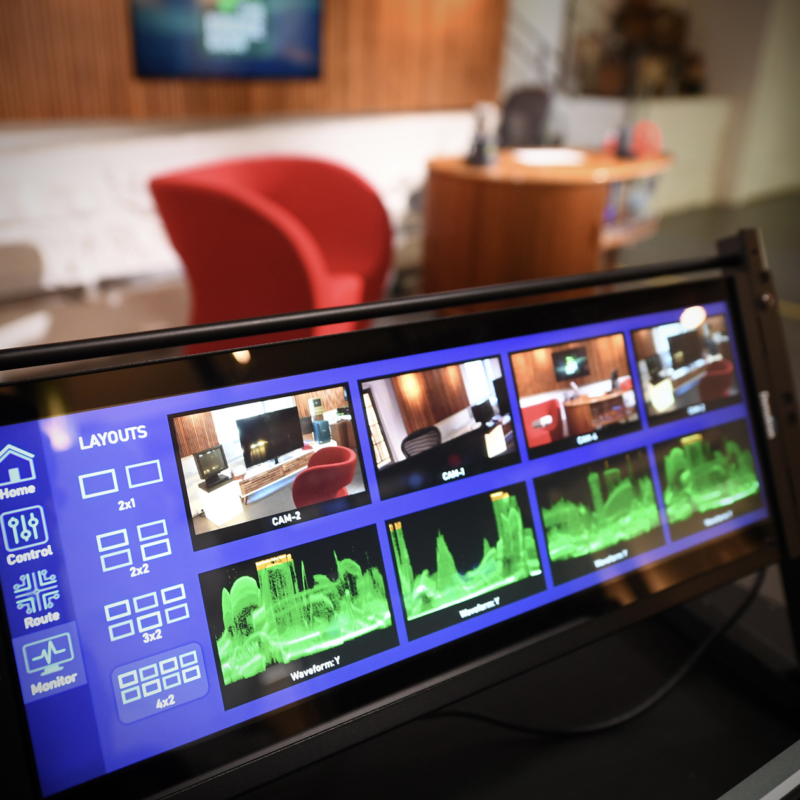
    for sync comparison across multiple delivery paths of the same service   OSLO, Norway — 7 January 2026 Read more
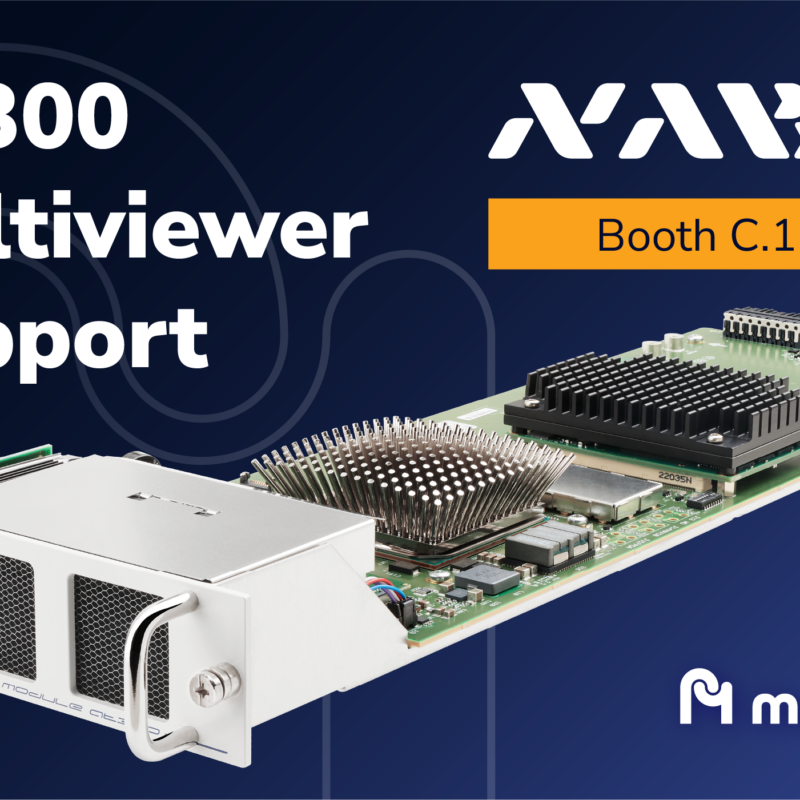
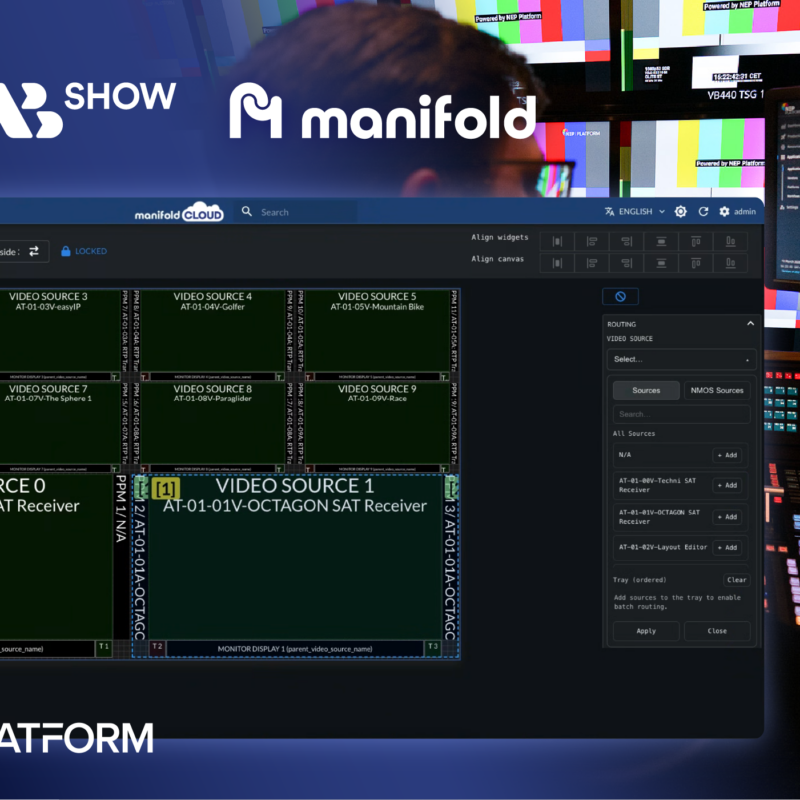
arkona-ISE2026-manifold-it-hardware-enterprise-press-release-xpressocommunications
Case studies for global tech companies highlight arkona’s reach and reputation    Frankfurt, Germany — 7 January 2026 Arkona technologies Read more
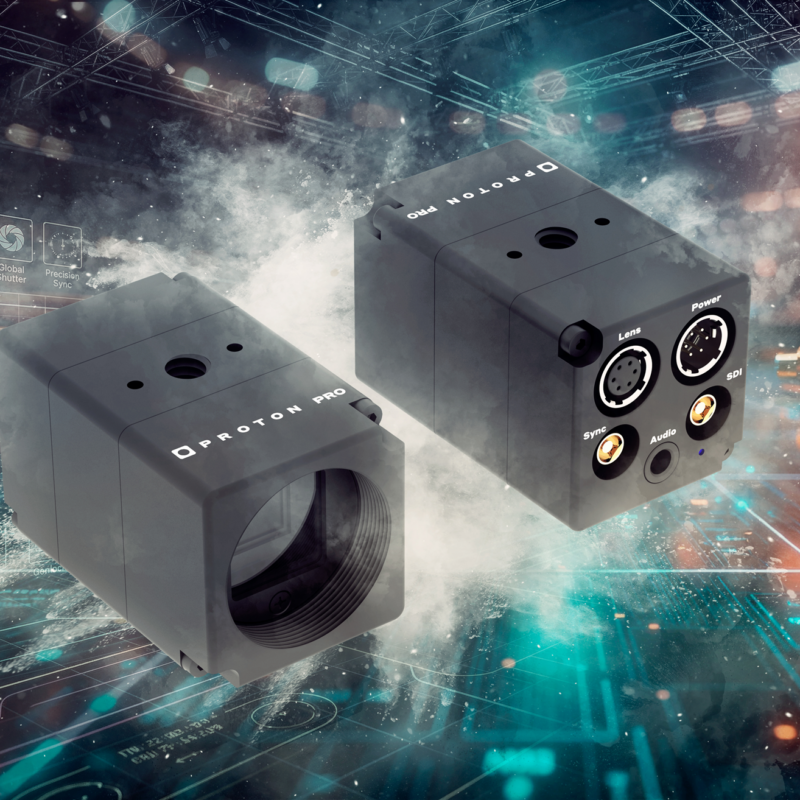
Proton-adds-zoom-capability-to-4K-minicam-press-release-hamburg-open
And will showcase full product line-up enhancements at Hamburg Open   Garbsen, Germany — 7 January 2026 Proton - leading Read more
Bridge-Technologies-award-winning-team-2025
2025 in Review It may not be too long before the word ‘broadcast’ goes the way of terms like ‘multimedia’ Read more
ibc-2025-technology-people-story-xpressocommunications
article covered by SCTE  Journal Is IBC a technology show, or a business show? It’s a question that gets harder Read more
Proton-new-crop-tilt-pan-minicam-sports-broadcast-hamburgopen-xpressocommunications
across its miniaturised camera range at Hamburg Open   Press Release Garbsen, Germany — 16 December 2025 Proton – the Read more
arkona-technologies-hamburg-open-bladeRunner-easyIP-xpressocommunications
    will focus on ultra-low-latency media processing platform BLADE//runner  Press Release   Frankfurt, Germany — 16 December 2025 Arkona Read more
Beyond the Engineer’s Office More than a handshake When we talk about APIs in broadcast, we often focus on the Read more
arkona-netorium-partnership-pressrelease-hamburgopen-2026
    Set for representation at Hamburg Open 2026   Frankfurt, Germany — 25 November 2025 Arkona technologies GmbH, a Read more
  (Counter?) Intuitive Visualisation   Human instinct is a powerful thing – powerful enough that sometimes it can even overrule Read more
norway-bridge-technologies-monitoring-fjord-precision-fjrods-monitoring-xpressocommunications
  Monitoring from system roots to canopy view It’s amazing how much technological terminology borrows from the natural world – Read more
network-electronic-japan-business-partner-arkona-technologies-interBEE-2025
and will exhibit at upcoming InterBEE   Frankfurt, Germany - 4 November 2025 Arkona technologies GmbH, a developer of ultra-low-latency, Read more
web-ui-probes-bridge-technologies-article-xpressocommunications-inbroadcast
    Across Its Probes article covered by InBroadcast   Why design matters Good design has always had the power Read more
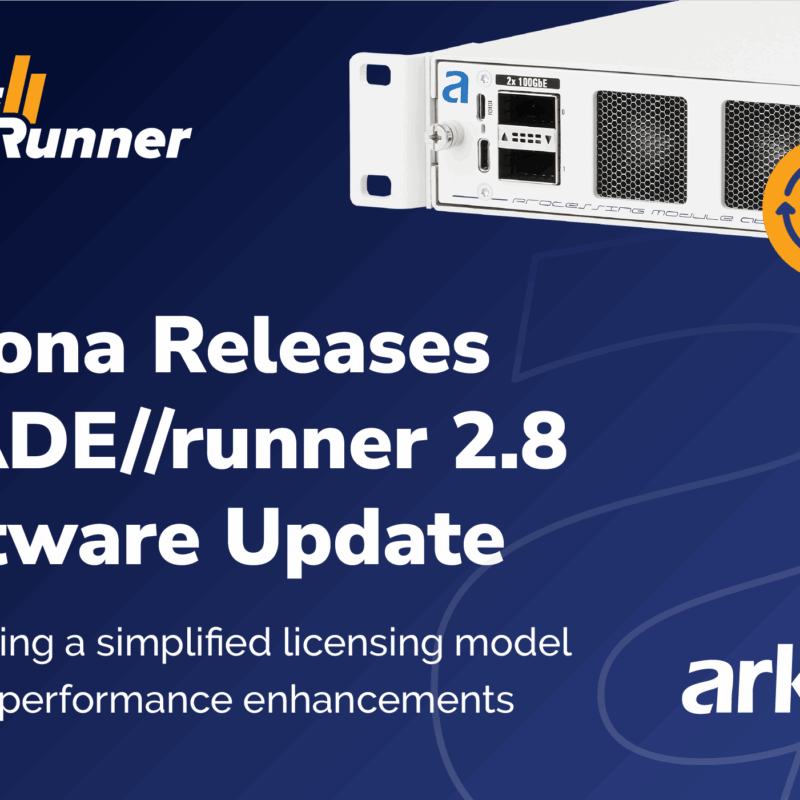
Blade//runner-2.8-release-new-license-st2110-ip-production
  Introducing a simplified licensing model and key performance enhancements   Frankfurt, Germany — 20 October 2025 Arkona technologies GmbH Read more
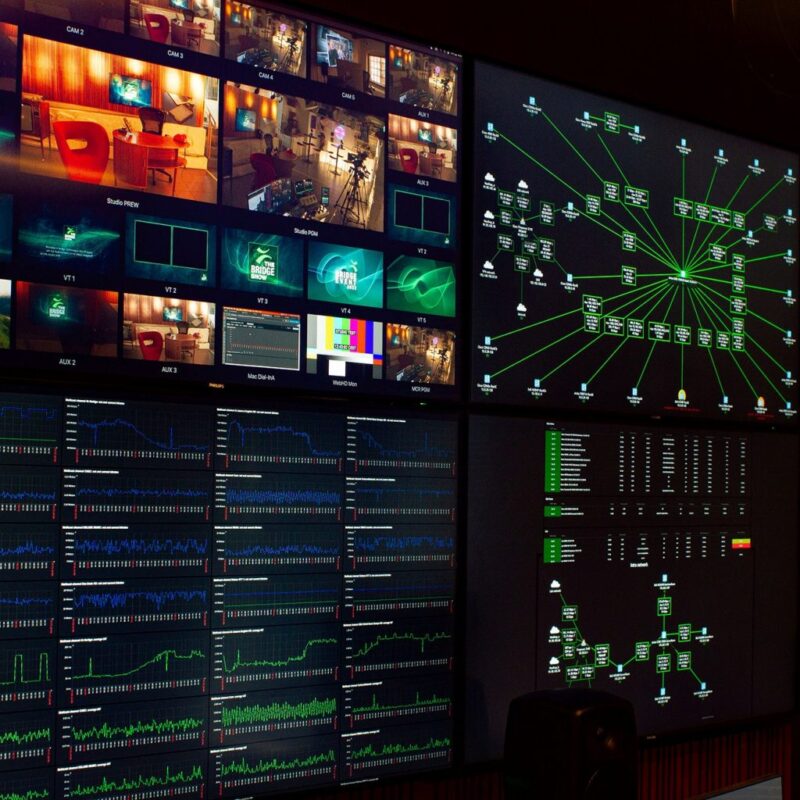
conversation-intelligence-ai-article-technology-fiorenza-mella-in2dialog-thematchbox
as a result of a technology integration in recruitment   As collaboration in technology-driven markets continues to grow, new opportunities Read more
A Brief History of APIs and the Future of Broadcast Collaboration Article as seen in InBroadcast Sept 2025 When the Read more
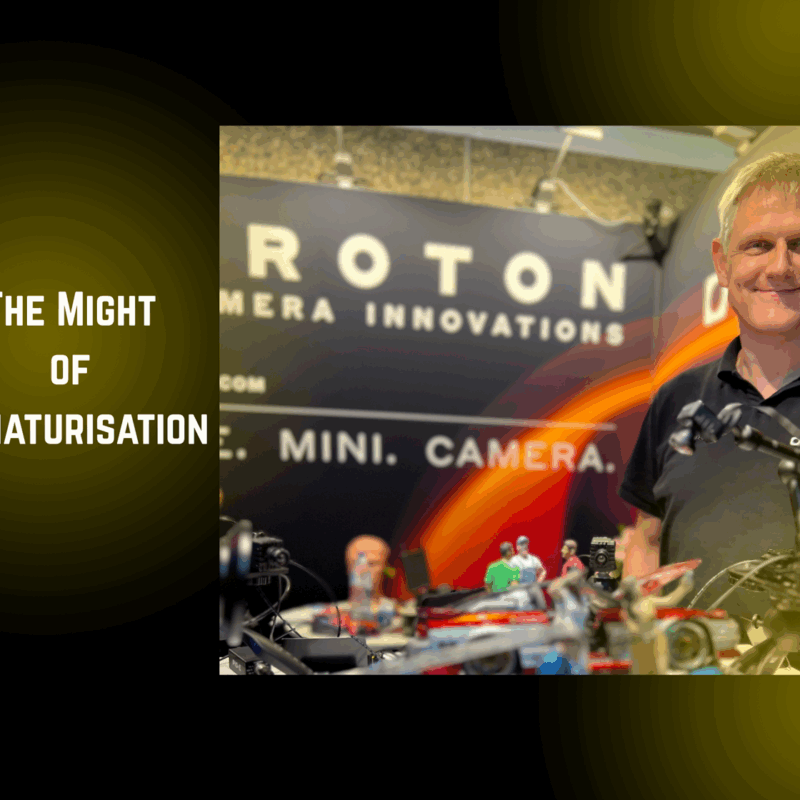
Proton's minicams give operators maximum flexibility with minimum fuss   If cinema has taught us anything, it’s that size doesn’t Read more
Syncronisation is the linchpin of production success As seen InBroadcast August 2025 There was a time when metadata used to ride Read more

Silence-does-not-sell-communication-before-during-after-tradeshows-xpressocommunications
How to communicate before, during and after tradeshows   At IBC (and other tradeshows), every company wishes to attract potential Read more
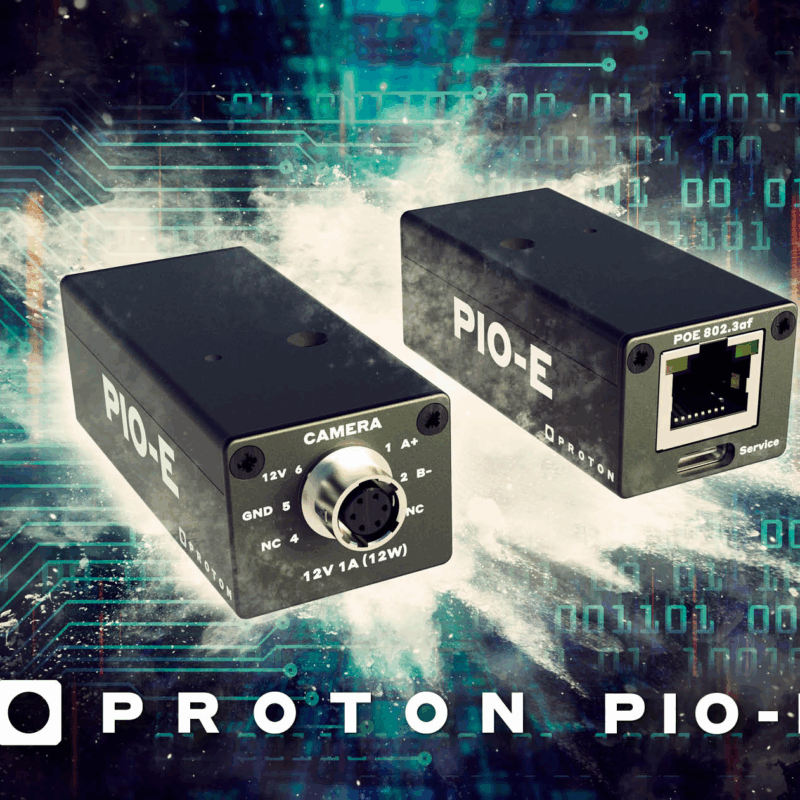
PROTON-Introduce-PIO-E-Control-Interface-IBC2025
    New PIO-E box adds IP and Bluetooth control for PROTON mini cameras   Garbsen, Germany — 27 August Read more
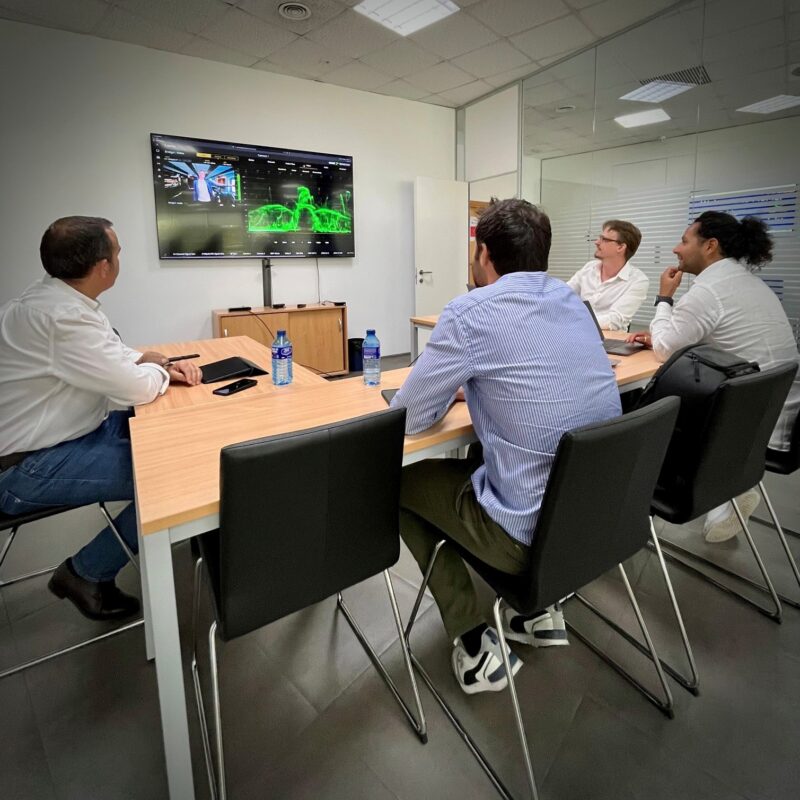
Bridge-Technologies-MoMe-Spainsh-Business-partners-monitoring-broadcast
    to support IP transition across production and distribution workflows    Press Release  OSLO, Norway — 26 August 2025 Read more
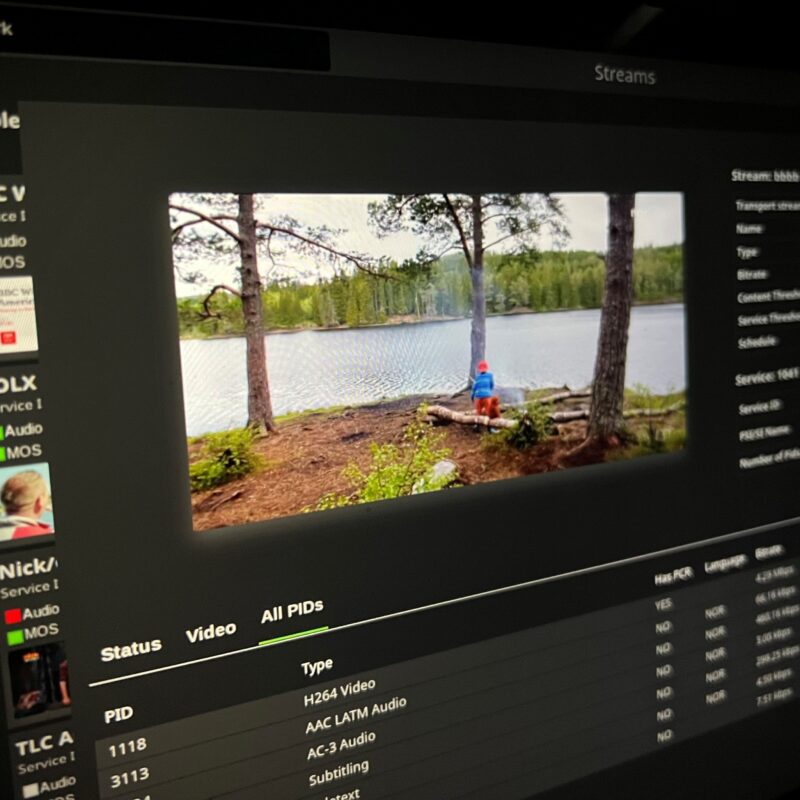
Bridge-Technologies-new-UI-monitoring-probes-IBC2025
    Harmonised UI design and intuitive layout across the entire probe range   Press Release  OSLO, Norway — 19 Read more
in2dialog-velde-case-study-xpresso-communications-writing-ai-interview-intelligence
how to retain the human element of recruitment while enriching it with data-driven precision   Customer Background Velde is a Read more
and how the Bridge Technologies VB440 Keeps It Tied Down It’s a curious fact of modern broadcasting: audiences are surprisingly Read more
Bridge-Technologies-Ancillary-Data-Synchronisation-Metadata-IBC2025
    Enhanced functionality also includes HDR colour bars for production workflows   OSLO, Norway — 29 July 2025 Bridge Read more
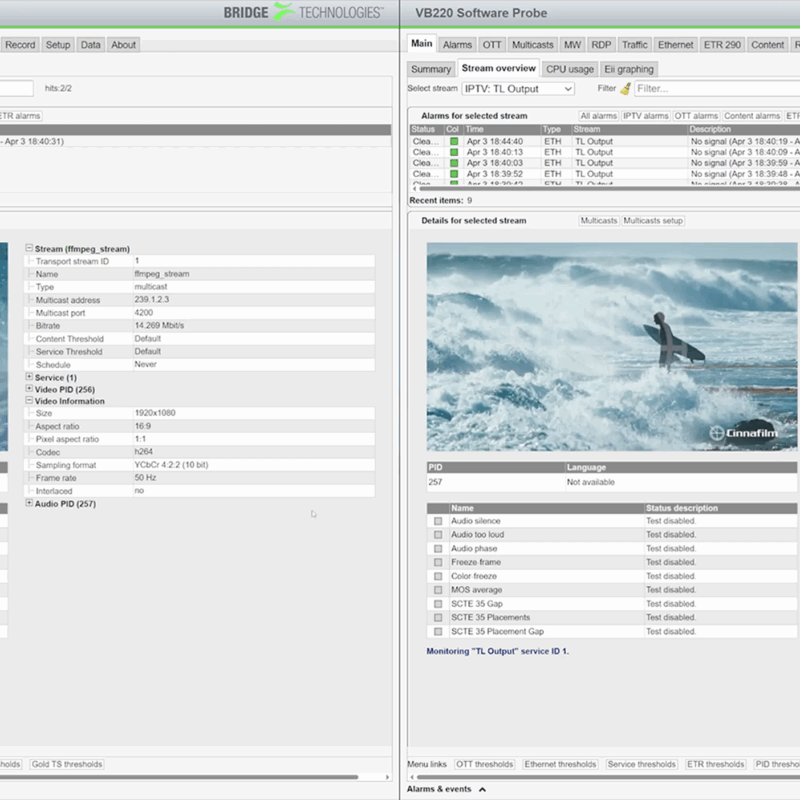
Rethinkinbg-cloud-technology-broadcast-workflows-Bridge-Technologies-Swxtch
It’s Not Just a Move — It’s a Mindset Shift   As the broadcast industry edges ever deeper into the Read more
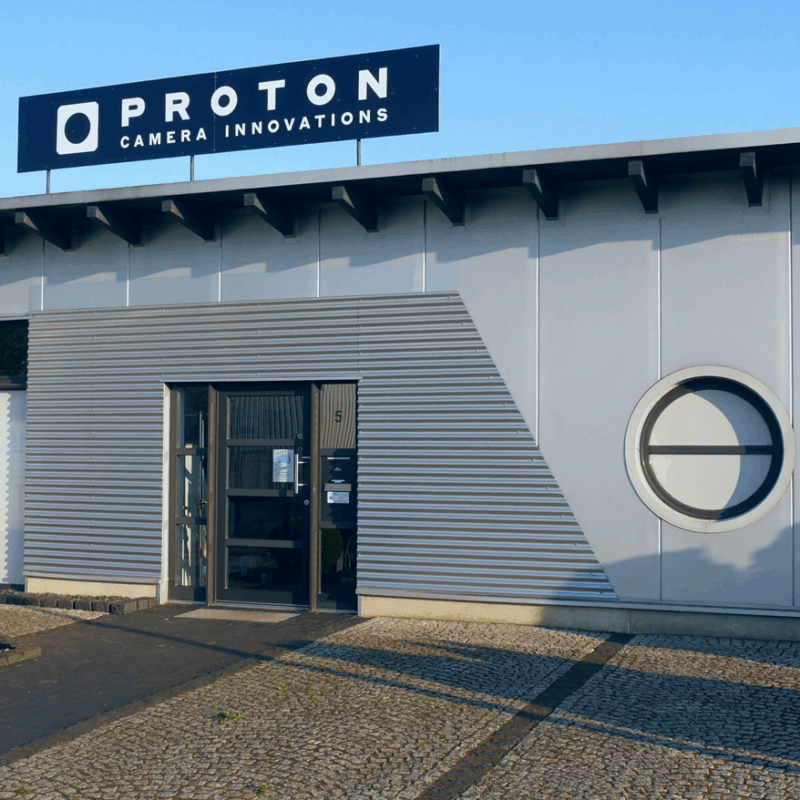
Proton-new-production-facility-german-minicams-awardwinning-IBC2025
Finalised Proton Zoom and HFR minicams to make European debut     Garbsen, Germany — 15 July 2025 Alongside its expanding Read more
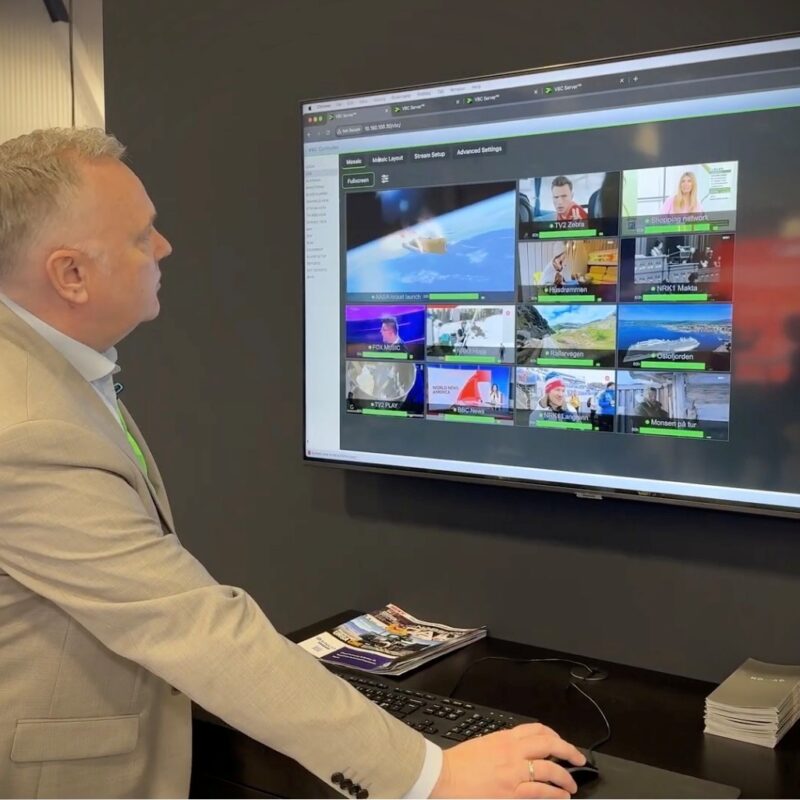
VBCLive-bridge-technologies-article-analytics-engineers-broadcast
  When It Never Rains but It Pours: Why Broadcast Engineers Need a Unified Umbrella If you’ve spent any time Read more
Bridge-Technologies-2025-awards-technology-business-partners-blog-xpresso-communications
Champagne, Cables and Codec Errors Every year – just about – Bridge Technologies puts on a show. It’s loud. It’s Read more
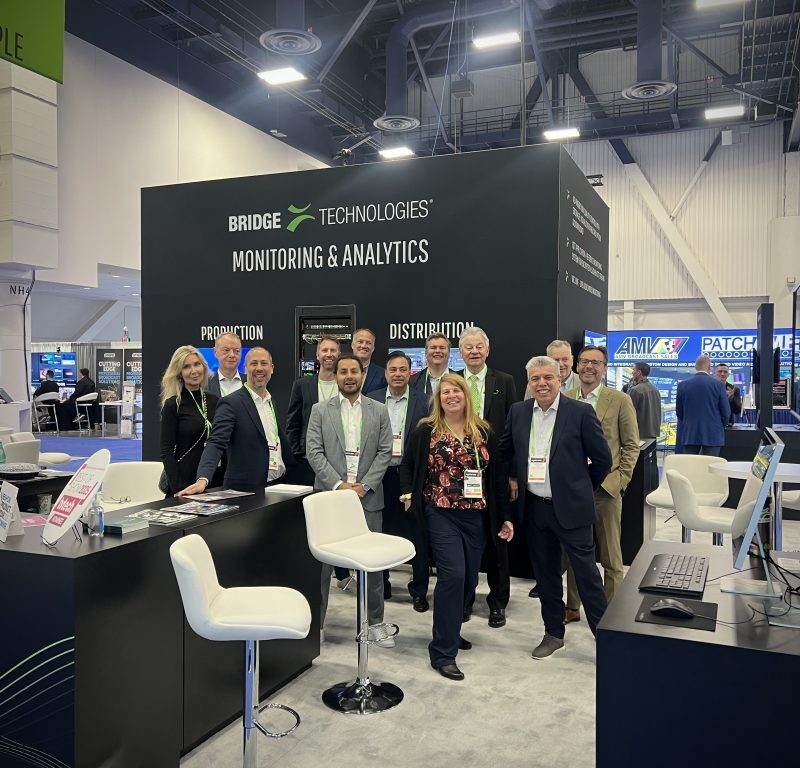
nab-SHOW-2025-bridgetechnologies-article-xpressocommunications-monitoring-av sync-qtt
Bridge Technologies are no longer the curious oddity or the hidden gem There’s a strange kind of magic that happens Read more
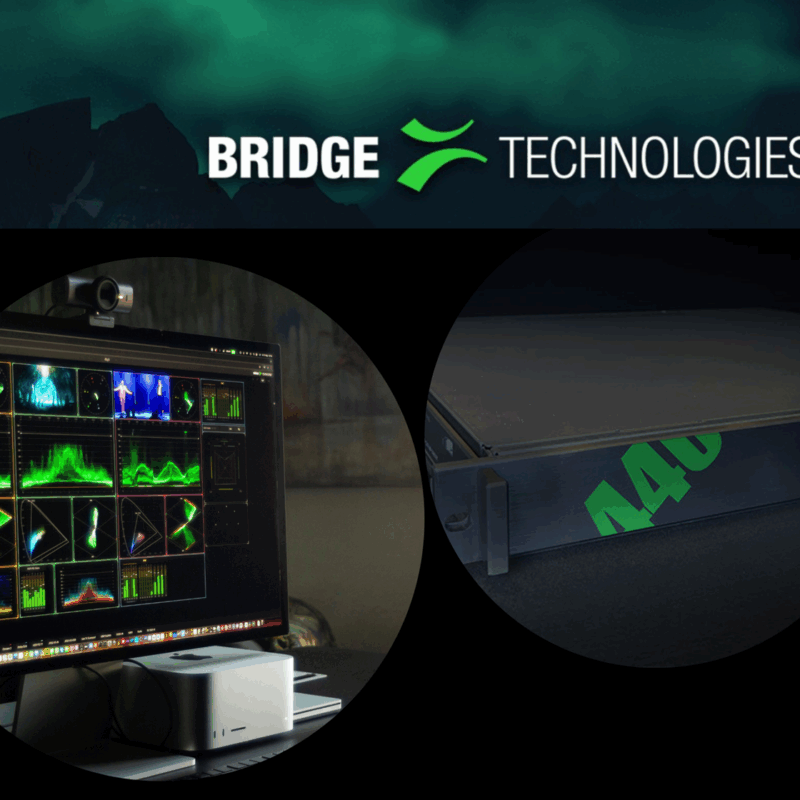
VB440-Bridge-Technologies-article-INbroadcast-labs-innovation-XpressoCommunications-ghostwriting
The VB440 helps engineers validate IP workflows and accelerate product development Article Pushing IP Forward: one lab at a time Read more
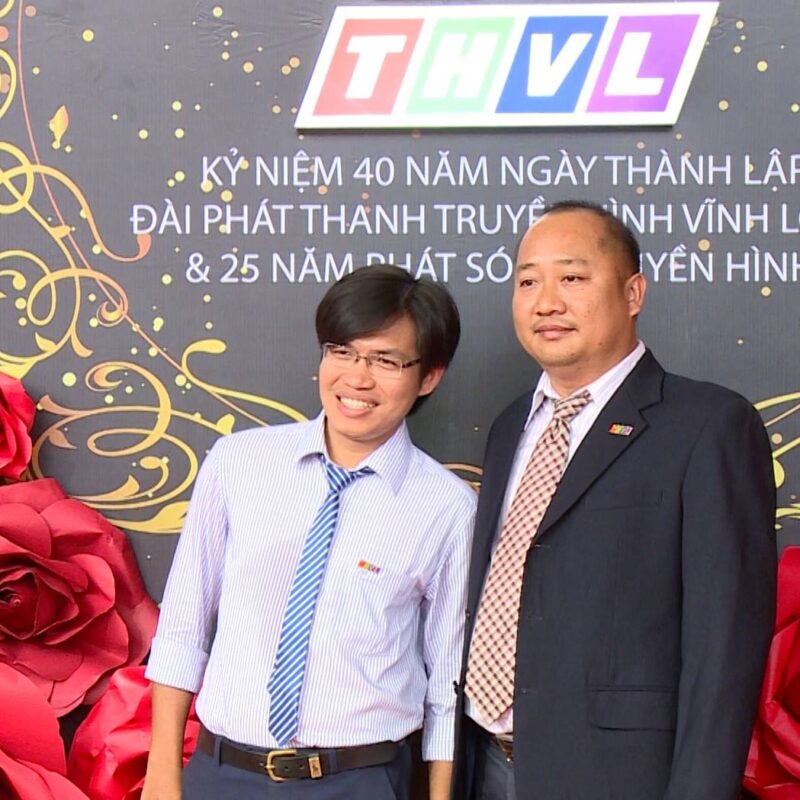
TVHVL-Phuong-Nam-Director-buys-Bridge-Technologies-monitoring-technology
  to support Quality of Service for its expanded facilities  Press Release OSLO, Norway — 7 May 2025 In collaboration Read more
In2Dialog-new-COO-Rene-Zwijnenburg-Diddo-van-zand-growth
        to accelerate growth and strengthen Partnerships   Press Release   Utrecht, The Netherlands — 18 April Read more
nab2025-bridgeTechnologies-swxtch-cloud-monitoring-collaboration-demo
  for broadcast production and distribution in a cloud environment    Press Release  OSLO, Norway — 31 March 2025 Bridge Read more
Bridge-Tec hnologies-announce-AV-Sync-Generator-NABshow-broadcast-VB440-PR-Xpressocommunications
  while setting a new standard in live production workflows   Press Release OSLO, Norway — 19 March 2025 In Read more
Proton-world-smallest-slow-motion-minicam-NAB2025
    New High Frame Rate minicam meets future production needs   Press Release Garbsen, Germany — 18 March 2025 Read more
proton-minicam-nab2025-nabshow-innovation
including new 4K Flex minicam   Press Release Garbsen, Germany — 7 March 2025 Proton Camera Innovations will demonstrate its Read more
Bridge-Technologies-NABShow-2025-QTT-monitoring-press-release
  a reference monitoring system for encrypted HLS/M-DASH streams​   OSLO, Norway — 5 March 2025 Bridge Technologies – a Read more
the-devil-is-in-detail-briadge-technologies-article-xpressocommunications-writing-technology
Monitoring of multicast ABR – MSYNCv3 as fronted by Broadpeak Innovation comes in many forms. While radical innovation often captures Read more
Bridgetech-article-xpressocommunications-broadcast-ip-VB258-ghostwriting
    The transition to IP and hybrid technology environments   Article published by INBroadcast   Moving Beyond the Surface-Level Read more
ai-bias-recruitment-hr-algorithms-article-in2dialog-2025-xpresso-communications-ghostwriting
How In2Dialog Tackles Bias in Recruitment AI Practice doesn’t necessarily make perfect, but it does make permanent It’s often said Read more
BridgeTechnologies-skyline-collaboration-award-article-inbroadcast-january-2025-xpressocommunications
Article covered by INBroadcast   Competition or Collaboration: where lies the future of broadcast? A little competition never hurt anybody, Read more
Microbursts-BridgeTechnologies-inbroadcast-article-nomad-microburst-analytics-2024
Dealing with extremes: the highs and lows of broadcast networks Microbursts are the stealth destroyers of good network health. In Read more
Microtech-gefell-NAMM-2025-PressRelease-generation4
  and announces new facility in New York   Press Release Gefell, Germany — 13 January 2025 Microtech Gefell, a Read more
bridgetechnologies-svgeurope-article-technology-broadcastproduction-dec2024-xpressocommunications-ghostwriting
Article covered by SVGEurope   The Democratisation of Production For decades, the world of broadcast production has been shaped by Read more
Merry-Christmas-2024-samurai-moral-code-xpresso-communications
      As we enter the season of giving, we are reminded of Oseibo, the Japanese tradition of expressing Read more
The Iceberg-of-AI-blog-in2dialog-xpressocommunications-recruitment-HR
  How Artificial Intelligence is Transforming Recruitment AI (artificial intelligence) has now become an entirely mainstream concept. With the constant Read more
proton-4k-smallest-camera-world-open-hamburg-xpressocommunications-
    Sets New Standards in Resolution, Size, and Accessibility  Garbsen, Germany — 9 December 2024 Proton Camera Innovations, a Read more
In2Dialog-new-sales-reports-recruiters-clients-Xpresso-communications
    Press Release Utrecht, The Netherlands — 27 November 2024 Leading the way in AI-driven recruitment tools, In2Dialog today Read more
  to preserve an extensive video archive of approximately 60,000 Betacam cassettes   Press Release Vienna, Austria — 25 November Read more


for sync comparison across multiple delivery paths of the same service


OSLO, Norway — 7 January 2026

Bridge Technologies has announced a significant new enhancement to the AV Sync function contained within its award-winning VB440 production probe. The new multi-service AV sync comparison feature enables frame-accurate synchronisation assessment across multiple delivery paths of the same service. Designed for live IP production environments where redundancy is critical, but applicable in a range of contexts, the new capability allows engineers to assess and compare multiple flows carrying the same service – for instance, across satellite, SRT, or other IP routes – so that seamless, glitch-free switching can occur when it matters most.


This added functionality builds upon the core of the VB440’s AV Sync Generator feature, which was introduced at the beginning of the year. Its original function was to act as an innovative ‘first line of defence’ approach to synchronisation between audio and visual components within a single service. In this function, rather than relying solely on packet timestamps, the system embeds machine-readable electronic markers directly into the audio and video signals themselves. When the complete service is reconstructed at the client, these physical markers are analysed to assess frame-accurate alignment between audio and video in real time. This ensures that synchronisation is measured on the content itself, not just the transport layer. More recently, this capability was expanded to include ancillary data synchronisation, allowing the client to precisely visualise the delta between video and audio and the metadata, including immersive audio. Additional visualisation tools such as rolling shutter simulation, blink-and-beep reference cues, enhance ease-of-use and confidence in synchronisation. This is all critical for accessibility, compliance, and consistent start and end points across complex workflows.


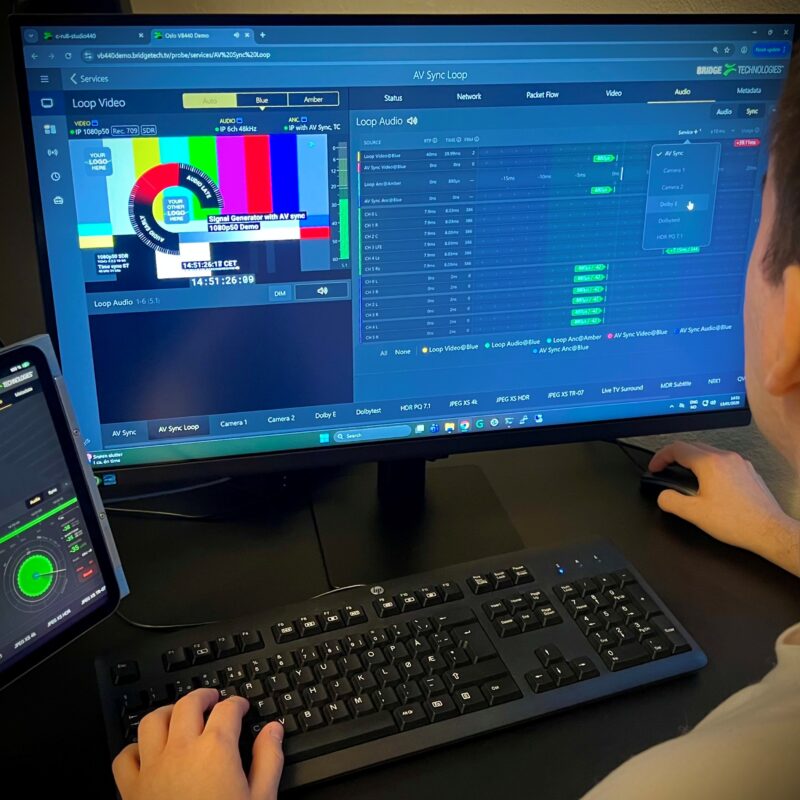
The newly introduced multi-service comparison capability builds on this foundation. In scenarios common to live sport and premium broadcast – where the same service may be delivered via multiple, genuinely independent paths for resilience – those paths inevitably arrive with different timing characteristics. With the VB440, users can now place multiple incoming services onto a shared timeline within the sync client, visually stacking and comparing them against a chosen reference. Engineers can instantly see frame-accurate offsets between flows, and use this information to adjust delays accordingly, ensuring that switching between sources can happen without interruption. As with all of the VB440, the UI has been designed to facilitate in-the-moment decision making with a seamless, smooth workflow: new services can be added to the timeline with the click of a button, where they are stacked in a highly intuitive workspace so that engineers can undertake even complex multi-path alignment quickly and easily. The addition of APIs also means that users can develop further automation tools to perform alignment, drawing frame-accurate data from the probe to facilitate other sync-related processes.


Commenting on the development, Bridge Technologies Chairman Simen K. Frostad said: “Multiple transport methods carrying the same service is a practical reality in modern IP production, particularly when expenditure and resilience are both priorities. What matters is not eliminating that reality, but giving engineers the tools to manage it precisely and predictably, so that there is no compromise to end delivery”.

He continued: “This development is yet another example of our commitment to building the most comprehensive multifunctional production probe on the market. In the VB440 we bring together an ever-increasing range of functions and capabilities within a single platform, all designed to represent best-in-class examples of their type. By consolidating what were once multiple standalone tools for audio, video and engineering into one browser-accessible system, the VB440 reduces the cost, space, energy use, and operational complexity associated with maintaining disparate single-function appliances, along with their screens and cabling”.


More information about Bridge Technologies and its products is available at www.bridgetech.tv or by phone at +47 22 38 51 00.


# # #

About Bridge Technologies

 Bridge Technologies creates advanced solutions for protecting service quality in the digital media and telecommunications industries. The company’s award-winning monitoring/analysis systems, intelligent switchers and virtual environments help deliver over 25,000 channels to more than 1.2 billion subscribers in 96 countries.

From live uncompressed production for end-to-end IP environments, satellite ingress, terrestrial and cable distribution, OTT measurement right down to the home network, Bridge offers patented innovation and true end-to-end transparency, developing technologies that have helped ignite the IP and IT transformation of the broadcast industry. A privately held company headquartered in Oslo, Norway, Bridge Technologies has worldwide sales and marketing operations through a global business partner network.

Case studies for global tech companies highlight arkona’s reach and reputation


 Frankfurt, Germany — 7 January 2026

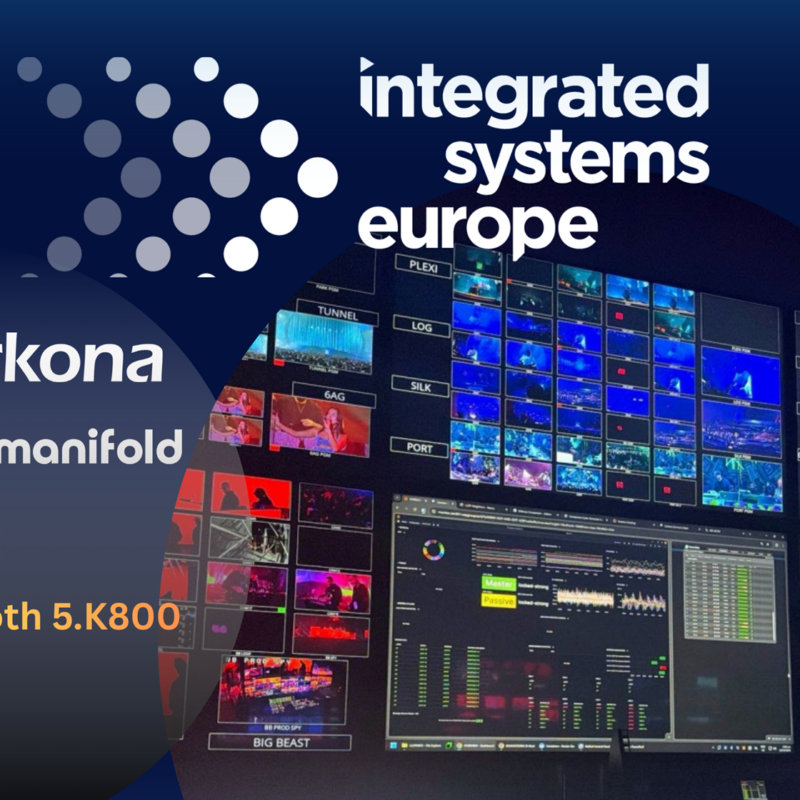
Arkona technologies GmbH, a developer of ultra-low-latency, high-density IP processing solutions, today announces its upcoming attendance at ISE (Booth 5.K800), where the company will demonstrate how its software-defined media infrastructure extends well beyond traditional broadcast environments. At the show, they will present a range of case studies which highlight how the same core technologies trusted by broadcasters are increasingly being adopted by some of the world’s largest IT-led, ProAV and enterprise technology companies.

One example will be that of a recent deployment at a client’s Los Angeles facility. There, arkona – together with technology partner manifold – delivered a highly complex IP system built around 24 AT300 Programmable Acceleration Cards, supporting extensive video and audio processing. The installation includes a manifold multiviewer and UDX processing with more than 250 unique input sources displayed across 54 UHD monitor outputs, alongside 64 simultaneous up, down and cross-conversion services. The project was delivered in conjunction with two industry-leading providers of switching and orchestration, with manifold multiviewers powered by FPGA accelerator cards across three servers. Following the success of this deployment, the same architecture is now being replicated in the client’s London studio for podcast and content production.

The project highlights why organisations outside the broadcast sector (or for whom broadcasting is only one part of their wider operation) are increasingly turning to arkona and manifold technologies, not only for their reputation and reliability, but for the rich feature set that accompanies their high-capacity processing solutions. This includes native support for 2160p at 23.98p, exceptionally high audio handling capacity, and built-in PTP and MSC capabilities for stage-box connectivity. These features, combined with the density and flexibility of the manifold multiviewer platform, were all decisive factors in meeting the demands of their LA client in a modern, IT-driven production environment.

Visitors to the stand will also be able to explore arkona’s full product range in person. This includes BLADE//runner, the company’s flagship software-defined platform for routing, processing and signal management across SDI and ST 2110 infrastructures. Also on display will be solutions from technology partner manifold, including manifold CLOUD, which extends ultra-low-latency multiviewing, conversion and processing into virtualised and distributed environments. Together, the two platforms demonstrate how broadcast-grade performance can be delivered in flexible architectures suited to enterprise, ProAV, gaming and IT-centric deployments.


Commenting on arkona’s presence at ISE, Rainer Sturm, CEO of arkona technologies GmbH, said: “ISE is an important opportunity for us to show that the challenges faced by broadcasters are increasingly shared by enterprise and IT organisations producing large volumes of high-quality content. Our solutions are designed to deliver the same reliable, predictable outputs regardless of source fluctuations, and regardless of whether they are deployed in a broadcast centre, a corporate studio or a global content hub”.

He added: “Working with technology partner manifold, we are proud to see our platforms being adopted by some of the world’s largest and most demanding organisations. These deployments underline that arkona is no longer a niche broadcast specialist, but a trusted infrastructure provider for large-scale, IP-based media operations across multiple industries”.


More information about arkona technologies and manifold technologies and their solutions is available at www.arkonatech.com and www.manifoldtech.tv.


# # #


About arkona technologies

Arkona technologies GmbH is a Germany-based leader in IP core infrastructure for professional broadcast and ProAV applications. They focus on media infrastructure, signal processing, and hardware–software integration – creating an ‘engine room’ for modern media flows. Their flagship BladeRunner suite provides ultra-low latency routing, compression, processing, video and audio mixing tools purpose-built for live production. Combining open standards with an API-first philosophy, arkona’s modular solutions give broadcasters, service providers, and live production companies the agility to design infrastructures that are flexible, scalable, and future-proof.

About manifold technologies

Manifold Technologies GmbH provides high-performance cloud infrastructure for live broadcast production. Its flagship platform, manifold CLOUD, leverages COTS FPGA acceleration hardware to deliver ultra-low latency routing, multiviewing, conversion, and other media processing services at massive scale while using up to 90% less power than CPU-based systems. With auto-scaling, self-healing clusters and an open, vendor-agnostic approach, manifold empowers broadcasters and service providers to build flexible, resilient, and future-ready IP production environments.

Logo-proton

And will showcase full product line-up enhancements at Hamburg Open


Garbsen, Germany — 7 January 2026

Proton – leading developers of ultra-miniaturised cameras, including the world’s smallest broadcast-grade camera, the Proton CAM – will use their presence at Hamburg Open (Hall B6, Stand 419) to showcase three new feature developments that further expand the creative and operational flexibility of its camera range. Together, these updates reinforce Proton’s philosophy of delivering highly specialised cameras that excel in their intended roles, while remaining adaptable enough to support a wide variety of production environments and creative visions.

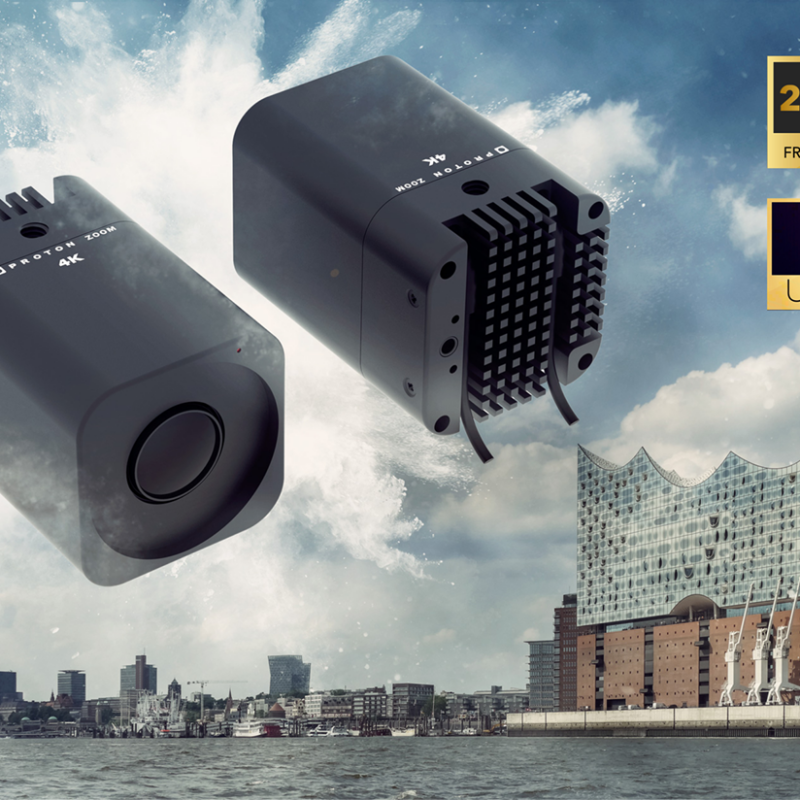
First among the new developments is the evolution of Proton’s 4K camera into the Proton 4K Zoom. By introducing zoom functionality to the compact 4K model, Proton significantly increases the camera’s versatility, allowing operators to adjust framing and emphasis without changing lenses or camera positions. For productions working in confined spaces with limited accessibility, this provides a powerful new way to refine composition while preserving the immersive image quality that defines Proton’s 4K offering.

Proton is also expanding lens compatibility across the range with the addition of C-mount options, complementing the existing S-mount ecosystem. This gives users access to a broader selection of lenses, opening up greater control over depth of field, focal length and visual character. The result is enhanced creative choice, particularly for productions that wish to match Proton cameras more closely with other systems on a shoot, or to experiment with distinctive visual styles.

The third feature focuses on deployment flexibility and robustness. Proton cameras will now be available also with connector-based cable interfaces, rather than permanently fixed connections. This approach allows users to tailor cabling to specific installations, simplifies replacement or reconfiguration, while enabling more confident placement in challenging environments.

These new capabilities will be shown alongside Proton’s recently announced pan, tilt and crop feature, which enables resolution-perfect reframing within the image, as well as the wider Proton lineup. This includes the flagship Proton Cam, Proton Flex and 4K Flex, Proton Rain for extreme conditions, Proton Zoom, and the high-speed Proton HFR – all designed to deliver broadcast-grade performance in an exceptionally compact form.

Speaking on the new announcements, CEO Marko Höpken said: “Each of these developments is about giving our users more freedom – creatively, technically and operationally – while staying true to the compact, purpose-built nature of Proton cameras”.

He continued: “By expanding zoom capability, lens choice and deployment flexibility, we’re pushing ever further in crafting a camera range which doesn’t just meet the realities of modern production, but actually pushes the boundaries of creative potential, all without adding complexity or compromising image quality”.


More information about PROTON and its products is available at http://proton-camera.com/ and https://doc.proton-camera.com/.


# # #

About PROTON Camera Innovations GmbH

Proton – a new entrant in the field of miniature cameras – leverages its team’s extensive experience in camera miniaturisation to deliver the industry’s smallest and lightest broadcast-standard cameras currently on the market. Incorporating its own chip technology with a larger sensor than competitor models, the Proton’s cameras deliver wider shots, higher dynamic range, improved low-light performance and lower energy draw. With the addition of stereo audio, tally light, exchangeable lenses these cameras are perfect for sports broadcast, live events, drone attachment, PoV and body-mounting or any number of other creative and immersive live production applications where versatility, robustness and space are key determinants of success.


2025 in Review

It may not be too long before the word ‘broadcast’ goes the way of terms like ‘multimedia’ or ‘web 2.0’: terms which were once revolutionary but which now feel limiting, almost quaint. Just as multimedia has descended into irrelevance – subsumed into a wider, integrated digital world – broadcast’ has also been absorbed into a larger, dynamic ecosystem driven by IP: a convergence of media, IT, gaming, Pro-AV and live events. To call it broadcast, with legacy connotations of linear, passive, TV-focused viewing, risks putting focus and thinking in the wrong place.

Fortunately, despite what the industry might rightly be called, there was strong evidence in 2025 to suggest that major market players have been forward-thinking in the way they address these market convergences. Indeed, it’s not just traditional technological boundaries that are breaking down to galvanise into something new: individual players in the market are adjusting the way they deal with technologies and each other, leveraging collaboration over competition in order to span across what previously constituted discrete, delineated markets. Both technology and mindset combine in developments such as IPMX, JPEG XS, SRT, advanced multiformat audio workflows and a whole host of new collaborative initiatives to deal with the ever-evolving challenges of progress.

Milestones from Bridge in 2025

With these wider industry themes in mind, it’s interesting to review the progress we’ve made at Bridge Technologies over the past twelve months, both technologically and commercially.

Tech Changes

Across the year, Bridge’s technology developments have centred on giving media organisations the flexibility and precision needed to serve audiences across an ever-expanding range of formats, platforms and global live events. The VB440’s new AV Sync Generator – enhanced with embedded metadata that travels with the content itself – provides a far more adaptable method of maintaining alignment across diverse delivery paths, allowing productions to repackage, repurpose and redistribute material well beyond the constraints of traditional linear broadcast.

This sits alongside the introduction of containerised VB440 deployments, which lets users scale capacity or add functionality on demand, democratising access to top-tier production tools for operations of every size. This development grants greater agility than ever in the field of live production – something recognised by TVTech when they awarded us their Best of Show Award.

Meanwhile, a fully refreshed Web UI for the full range of probes brings clarity and speed at moments when engineers need it most, and the launch of the VBC Live feature that transforms the controller into a fully customisable video mosaic that was followed by the introduction of the QTT application for OTT adds deep, real-user insight to distribution monitoring by spinning up virtual players that continuously verify CDN performance and service integrity. Together, these developments reflect a single direction of travel: solutions that are lighter, smarter and more adaptable, designed for a media landscape that spans continents, delivery modes and creative ambitions.

Partnerships across the world

Expanding on that idea of continent-spanning performance, Bridge has continued to strengthen its international reach, both internally and externally. Inside, we’ve seen significant team growth, both on our engineering team and with new regional sales managers for some of our key international markets. We’ve also been promoted from within, developing the new position of ‘strategic partnerships’ to leverage the expertise and vision of one of our favourite Finns. And that sits alongside our nomination and finalist position for a recent Corporate Stars Award, which focused on one of our most integral team members as an example of the way we promote internal growth and expand our employee’s professional development beyond singular, narrowly defined job roles.

Our annual Bridge awards continue to recognise the vital role that our international business partners play: this year saw Sunteq take home Innovator of the Year, and 2110 Solutions collect our Business Partner of the Year award. Teleste Poland, SHM Broadcast, Danmon Group Norway, Nordic Software Developers and Techex were also merited with key awards.

Externally, we continue to see our products installed in some of the largest broadcast operations in the world – from household name streaming providers to the world’s most important international sporting events. But we continue to work to support broadcasters of all sizes and all stages of market development. For instance, we supported our business partner Vietcoms as they facilitated a major IP and RF distribution upgrade for Vietnamese broadcaster THVL. Adopting our ‘build it in don’t bolt it on’ philosophy, it represents an important example of Bridge’s ‘monitoring-first’ philosophy, showcasing how built-in visibility makes for more reliable, future-proof systems, regardless of the underlying infrastructure being used.

Looking Forward: Maturing with Purpose

As IP continues to mature, Bridge’s position feels more relevant than ever. We focus on signal not noise – both in our probes and in the market, building systems that scale, that interoperate, and that give real insight. Our Web UI refresh, AV sync innovations, and OTT testing application are part of a broader philosophy: build from engineering truth, not hype.

We also remain deeply invested in open ecosystems. Bridge’s success in 2025 was not just technical, it was social. Whether through local partners or global collaborations, our growth is powered by trust and shared goals. And as the lines blur between traditional broadcast, media, and IT, we believe true innovation will come from working together, not going it alone.

All of which means we’re looking forward towards 2026: a year that will see more connection, more clarity, and more tools that bring the future of media into focus – reliably, intelligently, and with purpose.

Article covered by InBroadcast December 2025

logo-dark-xpresso-communications

article covered by SCTE  Journal

Is IBC a technology show, or a business show?

It’s a question that gets harder to answer every year. The event floor is lined with innovations that push the limits of broadcast, production, and streaming – but the conversations that take place there rarely stay within the bounds of pure technology. They’re about trust, partnership, understanding, and the shared commitment to shaping what comes next.

This year, Amsterdam didn’t make it easy on the attendees. The weather had a mind of its own: bursts of rain arriving without warning, followed moments later by clear skies and sudden sunlight in the chill air. Typical Dutch weather: unpredictable, dramatic, and somehow charming. As one Xpresso colleague dryly observed, ‘There’s no such thing as bad weather, just bad clothing’.

It turned out to be a fitting metaphor for the show itself. Attendance numbers may have been lower than previous years, but for those who came prepared – not just with technology to showcase, but with stories, relationships, and human insight to share – the halls were full, the stands busy, and the conversations rich.

Those who dressed for the right show – the business show, the human show – felt none of the chill.

Business in the rain

IBC-2025-visitors-rainIf there’s one lesson the industry has learned in recent years, it’s that a live demo is no longer the draw it once was. Not to say that they don’t still hold importance, it’s just that increasingly, moat solutions can be explored remotely: customers can take a virtual tour, stream a product launch, or book an online demo any day of the week. But what you can’t replicate online is the atmosphere of connection – the quiet moments that build trust, spark curiosity, and turn partnerships into collaborations.

That’s the real show.

When visiting Xpresso clients, old and new, and meeting industry peers at their booths, we found that they had no shortage of visitors to their stands, despite the overall dip in foot traffic. Every conversation was an exchange, not just a presentation. Engineers, broadcasters, and technologists came not only to see what was new, but to talk about what mattered – to compare experiences, explore use cases, and share insights face to face. The discussions were practical, nuanced, human.

For Xpresso, that reinforces a truth we’ve long recognised: technology communication isn’t only about specs and features. It’s about how people use those technologies to solve real problems, and how trust and understanding shape every layer of that process. 

A century of television – and of change

This year’s IBC took on an extra layer of reflection, marking ‘100 years of television’. In 1925, John Logie Baird gave his first public demonstration of mechanical TV: an invention so novel that the concept of ‘broadcast’ itself had barely been coined. The show’s celebration of that milestone was a timely reminder of how much the medium – and the industry around it – has evolved.

It also ran as an interesting contrast to the show’s Future Zone and Student Forums: an idea of looking backwards and forwards, not just with nostalgia, but with an understanding of the common thread: that it is curiosity and experimentation which are the real engines of progress.

AI-google-innovation-IBC-2025And yet, walking through IBC’s Innovation Hall, one question lingered in the air: what really counts as ‘innovation’ in 2025? Artificial intelligence featured prominently – its potential, its pitfalls, its integration into nearly every aspect of production. But perhaps, ironically, that’s the point. AI is no longer an outlier. It’s mainstream, both in how we talk about it and in how we implement it.

Maybe the Innovation Hall is no longer where AI belongs? It’s not an experiment – it’s infrastructure. It’s the new normal, not the next frontier. That’s not to diminish its significance, but to recognise how fast it has moved from hypothetical to habitual. The hall that once celebrated AI’s novelty might now be better used to showcase what comes after – those emerging technologies still on the edge of imagination, the ones that make us stop and think ‘I’ve never seen that before’.

Connection as the constant

Across all the conversations, one idea came through clearly: whether we’re talking about John Logie Baird’s hand-built discs or AI-augmented production, what defines progress isn’t just invention – it’s communication. How we share ideas, how we collaborate, and how we build trust in the process.

That’s what makes events like IBC not just relevant, but vital. They’re not relics of a pre-digital age. They’re the living forum where ideas meet interpretation, where data meets dialogue. The physical space still matters, not because it can’t be replicated online, but because it shouldn’t be. Some conversations need time, eye contact, and the hum of a busy hall to take shape.

This year’s rain might have kept the crowds a little smaller, but those who came understood what the real weather was doing: testing how well we’d all dressed for it. The right preparation wasn’t a thicker coat or sturdier shoes – it was coming with openness, readiness to listen, and willingness to connect.

In the end, IBC 2025 reminded us of a simple truth. Technology might be the headline, but people are the story.


across its miniaturised camera range at Hamburg Open


Press Release

Garbsen, Germany — 16 December 2025

Proton – the German-based producer of ultra-miniaturised broadcast cameras – will be using its attendance at Hamburg Open (Hall B6, Stand 419) to showcase a major new feature being rolled out across its camera range: a crop, pan and tilt function that gives operators far greater control over framing, without any loss of resolution. The crop/pan/tilt function will be made available at no cost to users across the Proton Full HD (1080p60) range, reinforcing the company’s commitment to continuous improvement and accessible innovation.

The new capability takes advantage of Proton’s larger-than-HD sensors, allowing users to ‘zoom’ into an area of the image while retaining full image integrity. Unlike a traditional digital zoom, no interpolation or algorithmic compensation is involved; the camera simply makes use of a wider sensor area than is ultimately output. And because this enhancement is delivered through firmware rather than optics, it provides new levels of framing flexibility without affecting the camera’s famously compact form factor.

Users can choose between 11 crop factors, from 1.0 to 1.6, and can offset the crop anywhere within the full image using pan and tilt controls. This allows operators to pre-position a shot virtually before switching to the feed, giving Proton cameras a degree of creative adaptability that was previously the preserve of manned, full-size systems. While rolling-shutter behaviour limits real-time movement on air, upcoming global-shutter announcements will significantly expand the versatility of live repositioning within this feature.

The business value of the update is substantial. Proton cameras are typically deployed as supplementary, unmanned units – delivering distinctive, hard-to-achieve angles in sports, live events, and entertainment formats. Whilst they provide creative shots that could not be matched by standard broadcast cameras, once mounted, Proton cameras generally had a lower scope for reframing, making composition a fixed decision. With this new feature, operators can refine shot selection throughout the production, ensuring every angle contributes actively to the narrative.

The new upgrade also offers a practical advantage in scenarios where housings, mounts or artefacts may intrude on the edge of the image. A modest crop can now be applied to eliminate those elements cleanly, with no penalty to picture quality. The result is a more polished, intentional output that preserves the creative intent of the shot.

Speaking on the new feature, CEO Marko Höpken said: “Our camera range has been developed to give production teams more freedom in how they capture the world – from our flagship Proton camera, the smallest broadcast-grade camera on the market, to our Zoom -for extendable zoom with no quality loss – Flex and Rain models, the aim has always been to maximise creative potential, even in challenging conditions. This update expands even further on that mission – granting users more control, more precision, and more creative opportunity”.

He continued: “By extending the capabilities of our sensors and offering flexible, resolution-perfect reframing, we’re making our cameras even more powerful tools for storytelling, without adding complexity or cost for our users”.

More information about PROTON and its products is available at http://proton-camera.com/ and https://doc.proton-camera.com/.


# # #

About PROTON Camera Innovations GmbH

Proton – a new entrant in the field of miniature cameras – leverages its team’s extensive experience in camera miniaturisation to deliver the industry’s smallest and lightest broadcast-standard cameras currently on the market. Incorporating its own chip technology with a larger sensor than competitor models, the Proton’s cameras deliver wider shots, higher dynamic range, improved low-light performance and lower energy draw. With the addition of stereo audio, tally light, exchangeable lenses these cameras are perfect for sports broadcast, live events, drone attachment, PoV and body-mounting or any number of other creative and immersive live production applications where versatility, robustness and space are key determinants of success.


will focus on ultra-low-latency media processing platform BLADE//runner 

Press Release


Frankfurt, Germany — 16 December 2025

Arkona technologies GmbH, a German developer of ultra-low-latency, high-density IP processing solutions for live broadcast production, will return to Hamburg Open in January (Hall B6 – Booth 632) with a full slate of demonstrations focused on practical, deployable IP infrastructure for modern production environments. Visitors to arkona’s stand will be able to explore the company’s powerful routing, processing and audio solutions, as well as discovering how the company works closely with technology partner manifold to deliver full, turn-key offerings, incorporating multiviewing and cloud-enabled workflows.

At the heart of the exhibit is BLADE//runner, arkona’s software-defined broadcast infrastructure platform built on the AT300 FPGA Programmable Acceleration Card. BLADE//runner delivers consistent, ultra-low-latency media processing for SDI and ST 2110 environments, providing high-capacity routing, clean and quiet switching, colour and HDR/SDR workflows, mixing, downstream keying, and JPEG-XS encode/decode.

Arkona will also use the opportunity to spotlight their most recent software release for the BLADE//runner – version 2.8 – which introduces a redesigned licensing model aimed at making large-scale IP infrastructure simpler, more flexible and far more cost-efficient to deploy. The new licensing structure offers users the choice between either a CORE or MAX license, which allows them to tailor their licensing scope to their specific functionality and capacity needs. In this way, it consolidates previously fragmented licences into a clear, predictable framework and allows users to scale processing power, add new capabilities and reconfigure their systems without disruptive relicensing cycles. The net result is greater agility, flexibility and efficiency for users.

Visitors will also be able to experience EASY-IP, arkona’s turnkey, certified broadcast-infrastructure package jointly developed with technology partner manifold, who will also have products present on the arkona stand. EASY-IP unites the power of BLADE//runner with the agility of manifold CLOUD to deliver routing, multiviewing and processing in a single system.

The package includes high capacity switching, automatic audio/video alignment, advanced audio routing and DSP, and a distributed multiviewer capable of sub-frame latency and large-scale expansion. Designed for fast deployment and integration with existing control systems such as NMOS, Ember+ and TSL, EASY-IP gives broadcasters a practical and future-proof path toward IP operation without the overhead of building an IP facility from the ground up.

Also present at the Hamburg Open will be arkona’s new German business partner, systems integrator netorium who will be delivering a masterclass session on the subject of ‘How to: Cloud-native TV Remote Production’, a theme at the core of arkona’s production philosophy.

Speaking of their upcoming attendance at Hamburg Open, Wiggo Evensen, Sales & Partner Manager at arkona technologies GmbH said: “Our attendance is always a highlight of our calendar, because we are proud to be at the centre of Germany’s rapidly evolving IP production landscape”.

He continued: “Most particularly, the Hamburg Open gives us the opportunity to show visitors to the booth the importance of our ongoing relationship with technology partners manifold, who themselves will be demonstrating some impressive new capacity upgrades. With manifold, and through EASY-IP, we are able to support production companies of all sizes, whether they are building full IP facilities, expanding hybrid SDI/IP workflows or rolling out remote and distributed production models. Regardless of whether a company is at the beginning of their IP journey or well-established within the field of 2110-driven workflows, together with technology partner manifold, and through experienced system integrators like netorium, we are ideally positioned to deliver solutions which fully meet the performance, scalability and interoperability demands of today’s productions”.


More information about arkona technologies and manifold technologies and their solutions is available at www.arkonatech.com and www.manifoldtech.tv.


More than a handshake

When we talk about APIs in broadcast, we often focus on the engineering side: the flow of data between systems, the sharing of network measurements, and the elimination of silos. But APIs don’t just move information around – they define what that information means, and how it can be used. And knowledge of that fact needs to be at the forefront of developers’ minds when creating effective APIs.

That’s particularly true in the world of broadcast monitoring. Data from monitoring probes across the full broadcast chain has the ability to watch, analyse, and translate what’s happening at any and every given point: bitrates, packets, PIDs, alarms, and everything in between. And in many cases, the best place to view and understand that is within the ecosystem of the probe range itself – where UIs have been designed to meet the needs of engineers in the moment, putting what they need, where they need, at the right time.

But what if you aren’t an engineer? Or you’re an engineer working in a slightly different context to the broadcast norm? (In-so-far as one can even say there’s a norm…). Or your team of engineers have been bred and fed on a specific ecosystem or workflow? That’s where the idea of APIs for meaning becomes so important. Anybody building monitoring probes needs to also build doors into that data – gateways to understanding, in a way that can shape decision-making far beyond the racks.


From signal to strategy

At Bridge Technologies, we’ve been integrating that thinking into both the data our probes gather, and the APIs we develop to help push that data out into the field, where it can become the specific types of knowledge that users need.

Take our API for SCTE-35 data. On the surface, it’s an engineering function: a way to identify and list all SCTE-35-compliant streams, track every signal cue, and ensure ad-insertion triggers are firing when and where they should.

But through the API, that same data becomes a strategic asset.

When a broadcaster’s analytics platform pulls that SCTE-35 data, it can start to map exactly how advertising inventory performs in the real world – when breaks actually occur, how they align with audience peaks, and where revenue opportunities might be slipping through the cracks.

Suddenly, the API isn’t just helping to keep a transport stream compliant. It’s helping to write a boardroom report.

That’s the quiet power of a good API: it takes information that was once confined to the machine room and makes it meaningful to everyone from engineering to management.

One language, many dialects

Of course, SCTE-35 is just one example of that. We’ve split our APIs into distinct, usable areas of data – from the raw engineering layer to higher-level data that informs business decisions. For instance, the PID Export Data and OTT Export Data APIs give users a comprehensive view of the services and profiles being monitored, along with metadata that can be easily extracted, integrated, and repurposed. This means that whether you’re mapping multicast streams or tracking OTT delivery quality across adaptive profiles, the information is accessible and ready for use in other systems.

Similarly, the Alarm Event and Alarm Synchronisation APIs allow third-party platforms to ingest both real-time alerts and active fault states, enabling automated responses, consolidated dashboards, and historical analysis – all without having to manually query the probe itself.


Beyond these headline capabilities, the APIs also open up more nuanced operational intelligence. The MediaWindow™ Export Data API, for instance, provides second-by-second insight into every monitored stream, allowing operators to rebuild and analyse a full picture of bitrate, error and component-level performance over time. That level of granularity transforms the probe from a monitoring tool into a source of valuable trend data.

Together, these APIs turn the Bridge probe into what it was always meant to be – not an isolated monitoring endpoint, but a rich and open source of broadcast intelligence.


Why openness matters

It would be easy to treat APIs as just another checkbox feature – a way of ticking ‘interoperable’ on a spec sheet. But for Bridge Technologies, openness isn’t a side effect; it’s the point. Our probes don’t exist in isolation. They sit inside complex ecosystems where every component, vendor, and operator has their own preferred interface and toolset. Rather than forcing anyone into a single way of working, APIs let each organisation design workflows that match their own rhythm.

That requires a fair degree of work. API development isn’t just a case of saying ‘OK, I’ve done it’ – it’s far more a question of how it’s done. A good API needs to be developer-friendly, well-documented and browser-accessible, whether you’re integrating with a management system, building a custom analytics layer, or creating something entirely new. And for us at Bridge that’s been key, because we don’t just want to make our own data accessible – we want to make it useful.

Article covered by  InBroadcast November


Set for representation at Hamburg Open 2026


Frankfurt, Germany — 25 November 2025

Arkona technologies GmbH, a Germany-based provider of ultra-low-latency IP processing solutions for live broadcast production, today announces a new strategic partnership with netorium AG. Under this agreement, netorium will act as arkona’s local reseller and support provider across Germany and Austria, representing both arkona and manifold technologies’ product lines. The partnership will be officially introduced at Hamburg Open 2026, where netorium (Hall 6 – Booth B6.4) and arkona (Hall B6 – Booth 632) will have the opportunity to coordinate ongoing projects and discuss new requests with broadcasters and production companies.

In the German market, netorium brings deep expertise in media systems integration, hybrid IP/SDI workflows, cloud adoption, and long-term support services. They consult with major broadcasters and system integrators on architecture, design, and implementation for on-premises, cloud, and hybrid infrastructures – guiding customers through their transition to IP. With established system integrators such as Qvest and BFE, arkona already has a strong foothold in Germany; netorium will further deepen this engagement with leading technology providers and strengthen arkona’s positioning in the local market through dedicated marketing support and comprehensive SLAs.

Speaking of the partnership with netorium, Wiggo Evensen, Sales & Partner Manager at arkona technologies GmbH said: “We are delighted to partner with netorium in Germany, whose reputation and experience in the broadcast-systems domain will help us strengthen our footprint in one of Europe’s most advanced and competitive markets. Germany remains a key region for innovation – and as our home market, it is also the one closest to our hearts”.

Speaking of their combined attendance at the Hamburg Open, he continued: “German broadcasters are shifting fast from legacy SDI infrastructures to IP-native systems, and with netorium’s local presence and support capability, we are confident this partnership will make that migration smoother and more reliable for end-users”.

Expanding on these ideas, CEO Frank Herrmann, speaking for netorium, said: “The shift to IP is the foundation for a scalable, future-proof broadcast environment. For us, arkona is a clear choice: their technology enables customers to build an open, standards-based architecture that grows with their needs, delivering both flexibility and security. Combined with netorium’s expertise, we can guide broadcasters and production facilities through every stage of their transformation process – from architecture design to implementation”.


More information about arkona technologies and manifold technologies and their solutions is available at www.arkonatech.com and www.manifoldtech.tv.

# # #


About arkona technologies

Arkona technologies GmbH is a Germany-based leader in IP core infrastructure for professional broadcast and ProAV applications. They focus on media infrastructure, signal processing, and hardware–software integration – creating an ‘engine room’ for modern media flows. Their flagship BladeRunner suite provides ultra-low latency routing, compression, processing, video and audio mixing tools purpose-built for live production. Combining open standards with an API-first philosophy, arkona’s modular solutions give broadcasters, service providers, and live production companies the agility to design infrastructures that are flexible, scalable, and future-proof.

About manifold technologies

Manifold Technologies GmbH provides high-performance cloud infrastructure for live broadcast production. Its flagship platform, manifold CLOUD, leverages COTS FPGA acceleration hardware to deliver ultra-low latency routing, multiviewing, conversion, and other media processing services at massive scale while using up to 90% less power than CPU-based systems. With auto-scaling, self-healing clusters and an open, vendor-agnostic approach, manifold empowers broadcasters and service providers to build flexible, resilient, and future-ready IP production environments.


(Counter?) Intuitive Visualisation


Human instinct is a powerful thing – powerful enough that sometimes it can even overrule intellect. Even when we know something to be true, our brains are wired to respond first to what feels true. That’s why, in data visualisation, design choices can have a profound – and misleading – psychological impact: from colour choice to graph size, from the order of information to the truncation of an axis, we can read the data labels attached to graphics and understand them, and our overall impression is swayed just by the way the data has been visualised.

These effects aren’t necessarily malicious – sometimes they’re just artefacts of how human perception works – but they highlight how easily intuition can override reason, and how important it is to design interfaces that present truth, not persuasion. For Bridge, this is central to our philosophy of measurement and visualisation: to translate complex network realities into representations that inform, not influence.

Always getting better

That task is one of constant incremental improvement. When Bridge Technologies set about creating the VB440 – a single, comprehensive production tool which incorporates an unparalleled number of audio, video and network visualisations to inform every part of the production process, we took nothing for granted. The aim was to provide production specialists (from anywhere in the world, through any HTML-5 browser) with best-in-class waveform monitors, vectorscopes, LUFS, Gonio and Room metres, HDR on SDR screen previews, audio downmixes and channel isolation, signal generation and AV sync capabilities, along with graphs and flows to show all aspects of network performance, packet flow and timing behaviour.

But the concept of best-in-class isn’t a static one – it’s evolutionary. Take the VB440’s LUFS meter, for instance. Its initial format was easy to use and an effective way of communicating a key aspect of audio production. But that didn’t mean there wasn’t room for improvement: particularly in how visualisations shape the intuitive understanding of data.

LUFS refinements

One particularly elegant example of this principle in action comes from a recent refinement to the VB440’s loudness visualisation – the LUFS meter. Traditionally, loudness has been represented in a circular, radar-like pattern (sometimes referred to as a polar loudness graph), where users can zoom in or out to view finer or broader variations in the signal. On earlier versions of the VB440, adjusting this granularity changed the apparent size of the ‘loudness bloom’, which could give the misleading visual impression that the sound itself was louder or softer. Of course, experienced engineers know that isn’t the case – but instinct often overrides intellect, and our eyes can influence our interpretation faster than our analytical mind can correct it.

The latest version of the VB440 resolves this by decoupling scale adjustment from the visual footprint of the graph. The shape remains constant, even as the level of detail changes, ensuring that what users see always corresponds precisely to what the data means.

A similar refinement has been made to the LUFS meter’s time-based loudness display – the running line graph that tracks loudness variation over time. Previously, adjusting the measurement window effectively reset the graph, erasing historical data each time the scale was changed. The same would occur if a user navigated away from the LUFS view and returned later. While this didn’t affect the underlying measurements, it interrupted the continuity of visual context – that intuitive sense of how loudness had been evolving over time. Now, that entire context is preserved – from 10 seconds to 30 minutes – regardless of how the user navigates.

 One part of many

It’s a small change in principle, but it required some clever front-end engineering, as well as a design ideology which puts the user’s ‘cognitive rhythm’ front and centre, enabling them to think and work in the natural flow of time, rather than in isolated snapshots. (Though that snapshot need is also accommodated by the ability to reset the period over which minimum and maximum values are recorded).

The net result is an exceptionally usable LUFS meter that gives intuitive, at-a-glance insight: visualisation that aids rather than undermines understanding. And this updated LUFS meter constitutes just one tiny element of the VB440. In the field of audio alone, the new LUFS meter sits alongside support for a virtually unlimited audio flows with up to 64 channels each, across formats from mono and stereo to immersive 7.1.4 and Dolby Atmos®. Users can access and control signals remotely through a browser interface, solo individual channels, downmix to stereo for headphone monitoring, and visualise loudness, phase coherence, and room balance in real time. Not to mention support for RAVENNA, Dante, full SMPTE 2110-31 and -41 compliance, and sADM metadata for next generation audio workflows.

But just like the LUFS meter, each aspect of the VB440’s audio performance receives the same level of minute attention when it comes to usability design. Because in broadcast technology, good design is just about what you can do, but how effectively you can do it.

article covered by Production 360


Monitoring from system roots to canopy view

It’s amazing how much technological terminology borrows from the natural world – ecosystems, seeds and leeches, trunks and backbones, clouds, streams… The list goes on. They provide a simple visual metaphor that communicates complex ideas in a manner which is almost intuitive. And when it comes to progress, we harness the profound power and scale of nature to communicate just how big the changes we’re making are: we talk about watershed moments, evolving technological landscapes, blue-sky thinking, and seismic shifts.

If you’re looking for both a land of stunning natural beauty and the epicentre of ground-breaking broadcast technology (there’s those nature metaphors creeping in again…) you needn’t look much further than Norway. Here, fjords cut deep into the land, carved by ice and time. Mountains rise where tectonic plates once collided. Rivers thread their way to the sea through valleys smoothly polished over millennia. This landscape is not static; it is the product of countless converging forces – pressure, time, shifting conditions, and moments of upheaval – that have created something both beautiful and resilient.

Bridge Technologies – born in the heart of Oslo next to the raging Akerselva river – has taken inspiration directly from its natural surroundings. They have shaped their monitoring solutions through careful evolution, constant adaptation, and the ability to thrive in a changing environment.

Indeed, just as ecosystems adapt to climate and geography, Bridge’s products have grown in response to the contours of modern broadcast. The technological landscape is no less dynamic than the natural one: IP-based workflows replacing legacy systems, UHD and HDR pushing data rates, immersive formats reshaping how we experience content. In this environment, the ability to monitor, measure, and adapt isn’t a luxury – it’s survival. Bridge’s monitoring platforms, much like a species in a competitive biome, have developed highly specialised capabilities that allow broadcasters to flourish even in challenging conditions.

Bridge’s development path has followed the same slow-build, breakthrough-moment rhythm found in natural evolution. First came Bridge’s ‘bedrock’ of IP-based expertise, setting a base from which the industry could monitor contribution and distribution. Then came the VB440. When it was first released, it erupted like a volcano onto the scene – changing the shape of the broadcast landscape and carving out new paths of IP-based production potential. Slowly, a layering of new capabilities came upon this fertile ground: audio analysis tools that match the complexity of modern immersive workflows; visual mosaics that turn data into immediate, actionable insight; PTP timing and AV sync verification to keep everything in perfect alignment. Each feature addition was not an isolated invention but part of a larger adaptive strategy – much as a river delta expands over centuries, each new channel building on the pathways carved before it.

Norway’s natural heritage also has a way of making people think long-term. In a country where landscapes are measured in geological time, the idea of steady, purposeful progress is ingrained.

Bridge has approached its technology in much the same way – designing monitoring solutions that are robust, enduring, and flexible enough to withstand not just today’s broadcast challenges, but those still forming on the horizon.

Nature’s metaphors run deep in the way we talk about technology for good reason: they remind us that systems are interconnected, that resilience comes from diversity, and that adaptation is constant. In the broadcast world, the ‘ecosystem’ is built from devices, formats, protocols, and people, all interacting. Bridge’s range – from the VB220 and VB330 probes that form the ‘root system’ of network monitoring, to the VB440 at the ‘canopy level’ of production visibility – ensures that no layer of the broadcast environment is left unobserved.

And like any thriving ecosystem, these tools work in harmony. The data they gather is surfaced through intuitive web interfaces accessible from anywhere – a feature that feels like standing on a mountain summit and being able to see the entire valley below, spotting both opportunities and hazards in real time. The integration of advanced analytics acts like a weather forecast, predicting potential disruptions before they happen and giving engineers the chance to act early.

And the congruence between Norway’s natural environment and its technological one doesn’t end there. In Norway’s fjords, water finds the most efficient path from glacier to sea. In broadcast, signal paths can be just as intricate, and the need to trace them with precision is equally vital. Bridge’s monitoring platforms follow these flows, detecting bottlenecks, packet loss, and timing issues with the same inevitability that a river finds its course. Over time, this ability to track and understand the flow ensures the system’s health and longevity – just as balanced ecosystems sustain themselves over centuries.

But of course, broadcast technology will continue to face its own environmental changes – shifts in standards, leaps in resolution, new demands for latency and interactivity. The companies that endure will be those that, like the species and landscapes of Norway, can adapt without losing their core identity. Bridge Technologies has shown that the key is to pair innovation with stability, and precision with flexibility.

In the end, nature isn’t just a source of metaphor for technology, it’s a reminder of how to build it: interconnected, adaptive, and resilient. From the glacially-carved valleys of Norway to the finely-tuned packets of a 2110 video stream, the principles are the same. Bridge Technologies understands that monitoring is not a static function but a living process – one that must evolve in step with the environment it serves. In this landscape, survival isn’t just about weathering change. It’s about shaping it.


This article was covered by TVTech Japan:

TVTech-Japan-article-bridgetechnologies-xpressocommunications-monitoring-japanese

and will exhibit at upcoming InterBEE


Frankfurt, Germany – 4 November 2025

Arkona technologies GmbH, a developer of ultra-low-latency, high density IP processing solutions for live broadcast production, today announces a new strategic partnership with Network Electronics Japan (NEJ). Under this agreement, NEJ will act as arkona’s local reseller and support provider, representing the full arkona product line, which has been developed to deliver the core routing, mixing, and conversion power behind next-generation IP studios and OB workflows. The partnership will be formally unveiled at InterBEE 2025 where NEJ will host arkona’s technology on Booth 3205, Hall 3.

In the Japanese market, NEJ brings deep experience in broadcast and telecom systems, with a client base that includes major broadcasters, networks, and government bodies. A particular focus on their booth will be arkona’s BLADE//runner, the company’s flagship software-defined broadcast infrastructure platform. Built around the AT300 FPGA acceleration cards, it delivers ultra-low latency routing, processing, and audio/video management over SDI and IP domains, resulting in better density, simpler hardware deployments, and smooth transition toward IP workflows.

NEJ will also introduce the Japanese market to arkona’s EASY-IP: a complete, ready-to-deploy IP broadcast infrastructure jointly developed by arkona technologies and technology partner manifold, combining the power of arkona’s BLADE//runner platform with the flexibility of manifold CLOUD. Designed as a certified, turnkey package, EASY-IP unites routing, processing, and multiviewing within a single, software-defined system – eliminating the complexity of building IP from scratch. It delivers clean and quiet switching, automatic audio/video alignment, and advanced audio routing with integrated DSP, all controlled through familiar industry protocols. In essence, it provides broadcasters with a high-performance, future-proof path to IP production that’s as simple to integrate as a traditional baseband router.

Alongside EASY-IP, NEJ will also highlight arkona’s 2.8 software release, which introduces a redesigned licensing scheme to give users more flexibility and value. The new CORE + MAX licensing model dramatically reduces complexity: and at InterBEE, NEJ and arkona specialists will present how this model permits users to scale and adapt their systems without frequent re-licensing burdens.

Speaking of the upcoming partnership, Tomoo Takahashi, Technical Director at NEJ, stated: “We are excited to exhibit at InterBEE 2025, and keen to demonstrate arkona’s range of production-focused solutions, all designed to make a transition from SDI to IP smooth, easy and seamless, delivering an end result that is as powerful and flexible as it is reliable”.

Adding to this, Wiggo Evensen, Sales & Partner Manager at arkona. “It is with great pleasure that we have signed a Preferred Solution Partner Agreement with NEJ, whose experience and expertise we value immensely”. He continued: “Their proficiency in IP infrastructure and their long-term presence in Japan will be vital as more end users seek to migrate from legacy SDI/UHD systems to ST 2110 IP environments, and with their representation we can finally bring our full vision to the Japanese market”.

More information about arkona technologies and manifold technologies and their solutions is available at www.arkonatech.com and www.manifoldtech.tv.


# # #


About arkona technologies

Arkona technologies GmbH is a Germany-based leader in IP core infrastructure for professional broadcast and ProAV applications. They focus on media infrastructure, signal processing, and hardware–software integration – creating an ‘engine room’ for modern media flows. Their flagship BladeRunner suite provides ultra-low latency routing, compression, processing, video and audio mixing tools purpose-built for live production. Combining open standards with an API-first philosophy, arkona’s modular solutions give broadcasters, service providers, and live production companies the agility to design infrastructures that are flexible, scalable, and future-proof.

About manifold technologies

Manifold Technologies GmbH provides high-performance cloud infrastructure for live broadcast production. Its flagship platform, manifold CLOUD, leverages COTS FPGA acceleration hardware to deliver ultra-low latency routing, multiviewing, conversion, and other media processing services at massive scale while using up to 90% less power than CPU-based systems. With auto-scaling, self-healing clusters and an open, vendor-agnostic approach, manifold empowers broadcasters and service providers to build flexible, resilient, and future-ready IP production environments.


Across Its Probes

article covered by InBroadcast


Why design matters

Good design has always had the power to change the way we live and work. From the first GUIs found in DNLS and Xerox’s PARC Alto, through to Microsoft’s eventual breakthrough into the mainstream with Windows 3.0 (third time’s the charm), there has been a recognition that what matters is not just what our technologies can do, but how they allow us to do it. We’ve seen the mouse, click wheels, touch screens… and BCI (Brain Control Interface) is –  somewhat alarmingly – just around the corner.

But all of these mechanisms of interaction are just part of the equation. What matters as much as the physical mode of interaction is the underpinning logic of the layout. The challenge in mainstream  design has always been how to allow a user to complete complex, multi-stage operations without an instruction manual. Achieving this requires careful observation and understanding of people’s instinctual and natural behaviour patterns: what they need, when they need it, and how the expect it to appear. When this understanding is properly harnessed, intuitive design doesn’t just make life easier, it makes technology more powerful, because it allows people to navigate complexity without being overwhelmed by it.

The engineer’s perspective

Of course, this principle applies as much in broadcast engineering as it does for the general consumer. In fact, in the control rooms of live sports, news, or event production, it’s even more critical. Engineers working in these environments need to process vast amounts of information under pressure. They can’t afford to sift through pages of menus or hunt for a single metric buried three screens deep. They need tools that provide clear oversight in the moment, with the option to dig down into the detail only when the situation demands. In other words, the interface has to work at the speed of live broadcast.

But that’s a serious challenge. Anyone who has ever stepped into a network operations centre during a live broadcast knows that it’s not a quiet place: banks of monitors, readouts, scopes, graphs, feeds. It’s a chaotic cacophony of data that represents a particular kind of Schrodinger’s cat: at once both noise and invaluable information, with the distinction between the two resting on how quickly a user can harness that information to spot an issue, understand its impact, and act.

This is why user interface isn’t just a cosmetic choice. It’s not about whether the screen looks good (though the value of a sleek aesthetic to sooth the eye should never be underestimated), it’s about whether it makes sense in the heat of the moment. Done well, it provides reassurance and efficiency; done poorly, it risks turning vital insight into irrelevant distraction.

For decades, Bridge Technologies has recognised this. Their tools have always been built not only to deliver deep data but also to present it in a way that makes sense to the people who need it. The patented MediaWindow™, for example, was created to allow engineers to visualise network behaviour instantly at a glance. Later innovations such as StreamOverview and the VBC Live video presentation layer continued the theme: taking mountains of data and expressing them with elegance, clarity, and context.

 A new era of usability

At IBC 2025, Bridge unveiled the next chapter in this story: a completely redesigned user interface across its family of distribution-focused probes.

The overhaul – met with a strongly positive response from visitors to the show – is significant. Years of incremental functionality had created a rich but complex environment within Bridge’s distribution-focused probes. Bridge recognised that the time had come to rethink how all of this capability was organised, prioritised, and surfaced. The result is a UI that feels more modern, streamlined, and dynamic: one that makes daily operation smoother and more efficient.

web-ui-bridge-technologies-article-inbroadcast-monitoring-probes-xpressocommunications

Key highlights:

  • Vertical top-level navigation bar: Quick access to core monitoring data summaries, meaning less time searching for the essentials.
  • Aggregated thumbnail, MediaWindow™, and microETR views: Faster scanning of multiple streams, helping operators get the big picture instantly.
  • Dark and light mode: Adjustable to operator preference and room conditions, ensuring comfort during long shifts.
  • Penalty Box stream sorting: Critical feeds can be flagged and prioritised, ensuring the most important problems rise to the surface.
  • Faster, more responsive tables: Data updates feel immediate, reducing lag and boosting confidence in live decision-making.
  • ETR290 configuration and status in-context: No more flipping between screens to get the full picture – everything needed for compliance checks is in one place.

Each of these changes may sound modest on its own, but together they transform the day-to-day experience of using Bridge probes. Engineers can move seamlessly between devices and focus their attention where it matters most, all while knowing they can dive deeper when necessary.


More than just a facelift

It’s tempting to think of UI updates as surface-level. But in the world of broadcast monitoring, they’re much more than that. They’re about building a working environment that supports accuracy, speed, and confidence. Bridge’s redesign reflects an understanding that visual clarity and usability are every bit as important as technical precision. The probes themselves – the VB330, VB220, VB120, NOMAD – remain as powerful as ever, delivering insight across IP, OTT, RF, satellite, and hybrid environments. But now, with the refreshed UI, they’re also faster, more intuitive, and more comfortable to use. It’s a reminder that in broadcast, as in consumer technology, good design isn’t a luxury – it’s the difference between stumbling in the dark and seeing everything clearly.


Introducing a simplified licensing model and key performance enhancements


Frankfurt, Germany — 20 October 2025

Arkona technologies GmbH – a German-based provider of IP core infrastructure solutions for professional broadcast – announces the recent release of version 2.8 for its flagship BLADE//runner suite, which delivers ultra-low latency audio/video routing, compression and processing tools in live production environments. The new release continues arkona’s commitment to delivering agile, high-performance control across software-defined broadcast infrastructures, and will introduce several important enhancements that increase efficiency, interoperability, and creative flexibility. Chief amongst these changes is the introduction of a new licensing fee structure, designed to make user access simpler, easier and more cost effective.


BLADE//runner

Arkona’s BLADE//runner platform delivers a complete, software-defined ecosystem for real-time broadcast infrastructure, combining routing, processing, and conversion within a single, scalable framework. Built on powerful FPGA hardware such as the AT300, BLADE//runner enables broadcasters to perform demanding tasks like colour correction, HDR/SDR conversion, audio processing, and JPEG-XS compression with ultra-low latency and high channel density. Its modular architecture allows users to dynamically deploy and reconfigure processing APPs on demand, bridging SDI and IP domains with seamless interoperability through open standards such as ST 2110 and NMOS. By collapsing traditionally separate hardware functions into a unified, software-defined platform, BLADE//runner gives broadcasters, live production companies, and OB providers the flexibility to scale and adapt workflows in real time whether managing hybrid infrastructures or migrating fully to IP. The result is greater efficiency, reduced rack space and power use, and a future-proof production environment that responds instantly to changing operational needs.


Changed Licensing Structure

One of the most significant changes occurring under the 2.8 update is a restructuring of the underpinning licensing model, now overhauled to give users simple, comprehensive and flexible access to the functionality they need, when they need it, in a more cost-effective manner. Previously, users would purchase licenses for each of the various APP functions available on BLADE//runner. Now, with version 2.8, arkona simplifies access by offering a ‘buffet’ of functionality which users can access without unnecessary impediment or administrative barriers. Access is offered on two tiers: CORE and MAX. The former facilitates access to arkona’s primary applications; AVP, IPA, and JPEG-XS, allowing users the freedom to reconfigure their AT300 blades in accordance with their own workflow and need, while the MAX license unlocks advanced functionality such as DSPs and effect delays, colour correction and format conversion, video mixing and keying, and loudness metering across all applications. While JPEG-XS licensing stays as it was, the CORE and MAX licenses make it easier, cheaper, and more adaptable for broadcasters to access the full performance potential of arkona’s BLADE//runner ecosystem.


Improved functional enhancements

As well as a fundamental overhaul of the licensing structure, version 2.8 also significantly expands BLADE//runner’s capabilities while making it easier and more intuitive to use. A reorganized RTP memory subsystem makes previously underused audio packet memory available to video receivers, thus raising the latency differential ceiling for UHD-heavy uncompressed video workflows. As a side effect of this change, microburst absorption capabilities have improved, allowing the system to better handle bursty transmitters.


A new local loopback feature lets the system automatically forward locally generated media traffic from its transmitters to its receivers, which enables users to build non-blocking distributed routing matrices regardless of the network’s support for Multicast loopback.


Audio DSP improvements are another major focus of the 2.8 update, including but not limited to the introduction of reverb effects, a gain-sharing auto-mixer, and considerably extended GPI support.

A full list of changes including a range of bug fixes, performance improvements and user interface enhancements is provided alongside the software download.

Speaking on the release, Erling Hedkvist, Sales & Business Development for arkona technologies, said: “Most important to our 2.8 update is our change to the licensing structure, which serves to reinforce a key arkona concept: the idea of flexibility at the CORE. But across the board our advancements serve to improve the capacity, functionality and usability of BLADE//runner – cementing us as a key player within the broadcast market”.


He continued: “And that’s crucial, because arkona products are ones that the market is already intimately familiar with – even if they don’t yet realise it. We’ve been the driving force behind some of the most advanced live production architectures of the past decade, operating quietly on an OEM basis. Now, under our own name and with full operational control, we are able to shape the user experience and product development roadmap directly, while still supporting our legacy systems”.


More information about arkona technologies is available at https://arkonatech.com/ .


# # #

About arkona technologies

Arkona technologies GmbH is a Germany-based leader in IP core infrastructure for professional broadcast and ProAV applications. They focus on media infrastructure, signal processing, and hardware–software integration – creating an ‘engine room’ for modern media flows. Their flagship BLADE//runner suite provides ultra-low latency routing, compression, processing, video and audio mixing tools purpose-built for live production. Combining open standards with an API-first philosophy, arkona’s modular solutions give broadcasters, service providers, and live production companies the agility to design infrastructures that are flexible, scalable, and future-proof.


as a result of a technology integration in recruitment


As collaboration in technology-driven markets continues to grow, new opportunities arise for specialisation in areas like automation and AI-powered data. As an example, In2Dialog and theMatchBox have recently joined forces by integrating their software solutions to strengthen and streamline the data-based recruitment process, where accuracy and in-depth information make all the difference.

What does theMatchBox do?

theMatchBox is a Belgian tech company specialising in Assisted and Automated Matching solutions for recruitment. Their technology works like a digital assistant that automatically searches, suggests, and matches candidates to jobs – whether you’re actively sourcing in your database (Assisted Matching) or receiving automatic alerts about new matches (Automated Matching).

“Our solutions are like Google Alerts for talent matching – but smarter and integrated into your own ATS or CRM,” says Jan Govaerts, CEO of theMatchBox.

Where does In2Dialog come in?

In2Dialog specialises in automatically recording, transcribing, and analysing conversations – from intake interviews to client calls or candidate meetings. Thanks to these AI-generated summaries and linguistics analysis, recruiters quickly gain insight into conversations without wasting time on administrative work.

Through integration with theMatchBox, data from In2Dialog – such as transcripts of job interviews and conversation analysis – can now be used as an additional input source in the matching process. This enriches the match with insights that you won’t find in a CV or cover letter.

“Matching becomes much more complete when you combine multiple data sources: the CV, the letter, and the conversation,” says Diddo van Zand, co-founder of In2Dialog.

Highlights from AI Research

This integration aligns with the latest research trends and challenges in AI-driven recruitment, as highlighted in the recent academic study “The Influence of Artificial Intelligence in Talent Acquisition (Bedi et al., 2024). Some key insights include:

  • Data Depth Drives Better Decisions
    The study emphasises that traditional methods, relying only on CVs and cover letters, miss crucial context. By including data from interviews and real-time conversations—exactly what In2Dialog offers—the recruitment process becomes more holistic and accurate.
  • AI Increases Efficiency and Reduces Bias
    AI tools significantly streamline hiring processes. With technologies like theMatchBox’s matching engine and In2Dialog’s automated transcription and summarization, recruiters can process more candidates faster—while also mitigating human bias by relying on objective data.
  • Quality of Hire Improves with Multi-Source Data
    Combining structured data (CVs, assessments) with unstructured data (interview transcripts, preferences discussed in dialogue) leads to more accurate predictions of job fit, performance, and retention.
  • AI Adoption Drives Competitive Advantage
    Companies that integrate AI systems into their hiring workflows report a reduction in time-to-hire by up to 30% and cost savings of up to 40%, according to the study’s comparative analysis.

“Recruiters now need to go beyond resumes: AI helps surface insights that were previously hidden in notes or forgotten conversations,” the paper concludes.

This makes the In2Dialog integration with theMatchBox a textbook case of how advanced AI can unlock value by using conversation intelligence as a data source in the matching process.


Ready for the Future of Recruitment

With this integration, the two innovative companies, are taking a big step toward context-driven matching. Recruiters get a more powerful, smarter system that not only works faster, but also better understands who the candidate is and what they’re really looking for.


A Brief History of APIs and the Future of Broadcast Collaboration

Article as seen in InBroadcast Sept 2025

When the general public watches Star Wars, what they probably yearn for is a lightsaber. But when an engineer watches Star Wars, what they yearn for is R2-D2’s ability to interface with the Death Star without so much as a driver update. No unsupported file format issue, no fundamental hardware incompatibility, just genuine plug and play.

No, when it comes to sci-fi films you can keep your holographic displays, swishy hand controls and megalomaniacal mainframes, what every engineer really wants is seamless interoperability. (OK, we admit, they might also want a lightsaber as well…)

To be fair, as a society we are getting closer. Praise be to the bureaucrats who had the vision to push for harmonised USB power cables with the Common Charger Directive: for all our talk of artificial intelligence or quantum computing, few things have improved everyday life more than being able to grab any old cable from the back of a drawer and trust it will fit. (A small step for humankind, a giant leap for desk drawers everywhere.)

But perhaps the deeper, more transformative step toward that sci-fi dream has not been cables at all. It has been APIs.

From Odd Acronym to Invisible Infrastructure

Application Programming Interfaces – APIs – began life as a somewhat arcane concept. Early in the 2000s, a few pioneering companies saw the potential of exposing part of their systems to the outside world. Salesforce opened its CRM tools to developers. Amazon allowed external programmers to access its vast e-commerce engine. eBay followed suit, realising that empowering third-party applications would grow the ecosystem faster than anything it could build alone.

The principle was simple but radical: instead of keeping data and functionality locked inside a company’s four walls, you provided a structured doorway. Developers could come and go, creating new services, extending value, and fuelling innovation.

It was the beginning of a quiet revolution.

The API Economy

By the 2010s, the idea had exploded. Social networks, mapping services, financial systems – all offered APIs. Instead of isolated platforms, the digital world became a web of interconnections. A ride-hailing app could pull your GPS location, integrate with a payment service, update your calendar, and send you a receipt in seconds – all because a host of APIs stitched the experience together.

The Broadcast Dimension

The same is true in broadcast and media – an industry built on the rapid movement of complex signals, often under extraordinary time pressure. Historically, the field has been marked by a mix of bespoke systems, proprietary standards, and tightly controlled workflows. Each piece of technology was brilliant in its own right, but persuading them to cooperate could be a battle.

The shift to IP-based production has transformed that equation. Now, every camera, switcher, graphics system, and monitoring probe can – in principle – speak a common language. But in practice, it is the API that makes this possible. APIs allow devices from different vendors to share data, coordinate functions, and provide operators with coherent, unified control – even when the underlying systems are diverse.

Bridge’s Role

At Bridge Technologies, this ethos of interconnection has always been central and the Eii API for 3rd party integration, is a glowing example. Long before the buzzwords took hold, the company designed its probes with browser-based access and open interaction in mind. Whether monitoring compressed distribution streams or uncompressed production feeds, Bridge’s systems are built not as islands, but as participants in a larger ecosystem – integrating huge swathes of both proprietary and open protocols and standards, from Dolby to JPEG XS, SRT to NMOS. From Syslog to user interfaces like Dataminer, Slack, Splunk, Zabbix and Grafana, Bridge allows access to rich and unique datasets that customers can use for the benefit of their overall operations.


Bridge’s motivation comes from recognition that true progress comes not from building walls, but from opening doors; evolving the industry towards openness, flexibility, and shared innovation. In practice, that means ensuring every probe can slot smoothly into existing workflows, interoperate with other vendors, and give engineers and creatives the freedom to shape operations to their needs. It means supporting the idea that technology should not dictate the boundaries of collaboration, but instead expand them. And for Bridge, APIs are just the beginning of how Bridge intends to keep pushing for joined-up operations…

The Road Ahead

Strange as it sounds, at their heart APIs are about people: about enabling human beings to work together more effectively by allowing their tools to do the same. They are about reducing friction, creating freedom, and unlocking creativity.

That is the future worth pursuing. Not dazzling special effects or flashy gimmicks, but the quiet magic of things working together in harmony. That’s the sci-fi future we’d really like. And we might just be close to getting it.

Proton’s minicams give operators maximum flexibility with minimum fuss


If cinema has taught us anything, it’s that size doesn’t necessarily equate to strength. From David and Goliath to Frodo Baggins and the One Ring to bind them, stories remind us that strength lies not in size, but in vision, purpose and power.

Proton has built its reputation on proving that compact form factors can deliver uncompromised broadcast quality. From cinematic close-ups to rugged, high-speed sports coverage, the company’s range of miniature cameras has consistently shown that flexibility and creative potential are no longer limited by the dimensions of the device. Broadcasters and filmmakers alike have embraced Proton’s approach: smaller, lighter, and with absolute image integrity – all delivered in a unit that is intuitive and easy to deploy, giving operators maximum flexibility with minimum fuss.

At IBC2025, Proton (Booth 11.A04) takes this ethos one step further with the launch of the new PIO-E box, a control interface designed to streamline workflows and give operators even greater control. If Proton cameras represent the might of miniaturisation, then PIO-E is the power behind it  – a device that unifies power and data management in one compact hub, making complex, multi-camera deployments simpler and more adaptable than ever.

The PIO-E (Proton Input/Output Ethernet) unit is small enough to fit in the palm of a hand –  just 22 x 27 x 60mm, and offers 100Mbit Ethernet connectivity with PoE support. Through this, the device can convert IP or Bluetooth data into 485 protocol, enabling seamless integration with existing workflows and third-party systems such as Cyanview. In practical terms, this means broadcasters can now power, control, and manage Proton’s full range of minicams via a single interface –  minimising cabling, reducing setup time, and adding the flexibility of Bluetooth for quick, on-the-fly adjustments.

For sports production in particular, where speed, precision, and coverage angles make all the difference, this streamlined approach is invaluable. Compact Proton units can be mounted in goalposts, on helmets, or trackside, and with PIO-E, operators can adjust and manage them from anywhere in the production chain. The ability to unify power and control over a single link doesn’t just simplify logistics – it opens the door to new creative possibilities, freeing directors and crews to focus on storytelling rather than setup.

Proton’s growing line-up – including the flagship Proton Cam, weatherproof Proton Rain, Proton 4K, flexible Proton Flex and 4K Flex, zoom-capable Proton Zoom, and the high-frame-rate Proton HFR – will all benefit from this new addition to the ecosystem. Together, they represent a compact toolkit designed for the most demanding live environments.

So with PIO-E, it’s less a case of one ring to rule them all, and more a case of one miniature  box to power, control, convert, and unify them all. But that’s not quite as snappy.


Article covered by InBroadcast

Syncronisation is the linchpin of production success

As seen InBroadcast August 2025

There was a time when metadata used to ride in the margins, embedded in the background: far from meta, it felt a little… incidental. But the way we consume content has changed: non-linear, on-the-go, with subtitles, in fluctuating formats and framerates – metadata has stepped into a starring role. It’s the backbone of accessibility, the engine of automation, and the enabler of content monetisation. From captions and ad triggers to immersive audio positioning and multi-screen coordination, metadata is no longer the footnote to the payload – it is the payload.

But with IP-based workflows on the rise, the way metadata streams interweave with video and audio has changed: they travel independently, sometimes arriving with just enough lag to disrupt the flow. This separation introduces a new and critical complexity: synchronising not just sight and sound, but the timing instructions that drive the entire production experience. Aligning AV is still vital – but aligning everything else is becoming just as mission-critical.

Think of it this way: live production is like an orchestra. There are strings, brass, percussion – each playing a different part, each essential to the performance. But it’s the baton of the conductor that brings coherence. In an IP production environment, that conductor is metadata. It carries the cues that keep everything in time: from the moment captions appear to when a sponsor bumper is triggered. If the baton is late, the music still plays, but it doesn’t make sense.

And in that analogy lies the problem. Syncing audio and video alone is like keeping the violin and cello in step while ignoring the conductor’s timing. The production might function – but it won’t impress the audience. It won’t deliver the precision today’s automated, distributed, and immersive productions demand. Without metadata synchronisation, it all starts to drift – and drift in production can mean disaster.

You could call it the domino effect. If metadata is even a frame off, the whole downstream workflow starts to tilt. Captions appear before dialogue. Advert insertion triggers misalign. Loudness corrections mistime. One misstep at the start, and the consequences ripple outward- technical, editorial, legal, financial, and, of course, experiential. This is where true synchronisation – not just of AV, but of everything – becomes non-negotiable.

That’s why Bridge Technologies has expanded its award-winning AV Sync Generator within the VB440 to include ancillary data synchronisation, bringing real-time alignment of metadata streams into the same intuitive, browser-based environment used for underlying AV sync. That AV Sync aspect – already present in the VB440 – was innovative enough: providing a ‘first line of defence’ form of monitoring which embedded physical audio markers directly into the content itself at the point of production: markers which could then be read for alignment later to ensure perfect delivery. Now, the same approach is applied to metadata elements, meaning aspects such as timecode, captions, and signalling can now be monitored, aligned, and managed with the same precision as audio and video, ensuring consistency across complex, multi-stream workflows.

The innovation inherent in this approach is – as Bridge aim to stress in all of their product developments – underpinned by two key concepts: can they not just expand the suite of tools embedded in the VB440, but also ensure that each one is best-in-class? And can they do that in a way that widens access beyond Tier One providers, democratising access to industry leading tools?

As regards the first point, Bridge have aimed to build upon the fundamental innovation of using physical, machine-readable markers and a sync client that visualises deltas in real time, by adding intuitive visual tools like blink-and-beep cues and HDR-compatible colour bars. By adding these small but meaning visual features, Bridge grants operators a full-spectrum, at-a-glance overview of production alignment, even across immersive audio groups and multi-language caption sets. This is synchronisation not as an add-on, but as a foundational principle.

And as regards the second point, regarding the widening of access to these tools, the very concept of industry-wide access is built into the heart of the VB440.  Unlike legacy sync solutions (and legacy multiviewers, and legacy audio controls, and legacy signal generators, and legacy production tools in general…), which required bespoke hardware, complex cabling, and dedicated engineering expertise, the VB440 operates entirely under a standard HTML5 browser control. No proprietary infrastructure. No steep learning curve. With up to eight users able to monitor in parallel from anywhere in the world, the VB440 brings a level of agility and collaboration that legacy solutions simply can’t match.

The net result is a true ‘democratisation’ of production. Where once precision synchronisation of AV and metadata was the preserve of Tier One broadcasters with deep pockets and deep benches, now – with the VB440 – Bridge Technologies is breaking down those barriers. Whether you’re producing a global live event or a regional esports stream, the same tools – the same quality of tools – are now within reach. This isn’t about stripping down functionality for mass use. It’s about elevating standards across the board.

In a world where content is more complex, distributed, and automated than ever, synchronisation is no longer a niche technical challenge, and metadata is no longer an afterthought. These days, it’s the linchpin of production success. And with the VB440, it’s finally accessible to everyone.

How to communicate before, during and after tradeshows


At IBC (and other tradeshows), every company wishes to attract potential buyers, system integrators, existing customers, journalists, and analysts.

But here’s the real question: did you align your sales goals with your marketing communications? Do visitors, partners, clients, and press know about your latest features and more importantly, the benefits they bring to users?

At Xpresso Communications, we specialise in making your innovation resonate across multiple audiences. From sparking curiosity before the show, to driving conversations during it, to keeping engagement alive long after, we ensure your message is heard, seen, and remembered.

Because marketing communication is a continuum: it’s not confined to four days in Amsterdam. It’s the momentum you build before, during, and after that creates lasting impact.

In the end, it’s always about finding the right balance in communications. We can suggest a harmonic strategy that attracts audiences without pushing them away.

Connect


Logo-proton


New PIO-E box adds IP and Bluetooth control for PROTON mini cameras


Garbsen, Germany — 27 August 2025

At IBC2025 (Booth 11.A04), Proton Camera Innovations will introduce a powerful new hardware accessory for its miniaturised camera ecosystem: the Proton PIO-E. Developed in direct response to customer demand for enhanced camera management and remote access workflows, the PIO-E brings IP and Bluetooth control to the full Proton camera range, further expanding the creative and technical possibilities of Proton’s compact broadcast-grade minicams.


The PIO-E (Proton Input/Output Ethernet) unit is a compact, lightweight device measuring just 22 x 27 x 60mm (66mm with Hirose connector) and weighing 60g. It provides 100Mbit Ethernet connectivity with PoE support and converts IP or Bluetooth data to 485 communication protocol for flexible, futureproof integration. Offering compatibility with Cyanview’s systems and automatic network discovery within Proton’s proprietary software, the PIO-E enables remote camera control across multi-camera installations, powering and managing multiple Proton units through a single interface. Power delivery of 12V/1A allows for streamlined cabling and configuration, while Bluetooth integration adds further convenience for quick field deployment, something that will be enhanced yet further with the addition of the forthcoming Proton Bluetooth applications.


The PIO-E joins Proton’s growing lineup of compact, high-performance broadcast cameras – all of which will be on display at IBC2025. Proton’s core camera line-up now features five purpose-built models, each engineered to tackle specific production demands while staying true to the brand’s hallmark of ultra-compact design. Leading the range is the Proton Cam: a flagship unit that remains the smallest broadcast-grade camera available on the market, delivering Full HD resolution, 12-bit processing, and outstanding low-light performance in a chassis just 28mm wide. The Proton Flex extends this imaging capability with a flat ribbon cable layout, separating lens and sensor to enable installation in confined or high-mobility setups. For outdoor and high-impact environments, the Proton Rain reinforces the platform with full weather sealing and shock resistance. The newly released Proton Zoom adds remote-adjustable optical zoom to the line-up, giving operators the ability to reframe shots dynamically without physically moving the camera. Rounding out the range is the Proton HFR, which brings high-frame-rate global shutter capture at up to 240fps, designed for continuous slow-motion output in live workflows.


Across all models, Proton maintains its commitment to 12-bit imaging, interchangeable lenses, and a production-focused blend of uncompromised image quality, cinematic versatility and seamless, reliable workflow. Whether for high-speed sports coverage, cinematic close-ups, or rugged outdoor shoots, Proton’s ecosystem enables broadcasters and filmmakers to push visual boundaries with tools that are smaller, lighter, and smarter. The new PIO-E harnesses all of the potential of Proton cameras and maximises their intuitive usability and flexible deployment, allowing camera management from both near and far.


Speaking of this new addition to the line-up, Marko Höpken, CEO of Proton, commented: “The interest and momentum we’ve experienced since IBC last year has been extraordinary — and it’s driven not only product innovation, but also operational growth. We’ve recently opened a dedicated new production facility for custom component manufacturing, allowing us to meet the rising demand for client-specific configurations. Developments like the PIO-E and the release versions of Proton Zoom and HFR are the direct result of this progress. We’re thrilled to bring these tools to IBC and to continue delivering on our mission to make world-class image capture more accessible, adaptable, and inspiring.”


Pre-orders are open now, with general availability beginning end of September 2025.

More information about PROTON and its products is available at http://proton-camera.com/ and https://doc.proton-camera.com/docs/products/cameras/.


# # #


About PROTON Camera Innovations GmbH

Proton – a new entrant in the field of miniature cameras – leverages its team’s extensive experience in camera miniaturisation to deliver the industry’s smallest and lightest broadcast-standard cameras currently on the market. Incorporating its own chip technology with a larger sensor than competitor models, the Proton’s cameras deliver wider shots, higher dynamic range, improved low-light performance and lower energy draw. With the addition of stereo audio, tally light, exchangeable lenses these cameras are perfect for sports broadcast, live events, drone attachment, PoV and body-mounting or any number of other creative and immersive live production applications where versatility, robustness and space are key determinants of success.


to support IP transition across production and distribution workflows


 Press Release

 OSLO, Norway — 26 August 2025

Bridge Technologies today announces a new partnership with MoMe, a leading Spanish consultancy and systems integrator specialising in monitoring and measurement solutions. With over 25 years of experience in the broadcast sector, MoMe will now offer Bridge’s full suite of IP and broadcast monitoring tools, as part of their portfolio for production and distribution customers across Spain and surrounding regions.

MoMe (short for Monitorización y Medidas) brings an extensive background in both DVB-T distribution and IP-based production, supporting broadcasters as they make the transition toward hybrid and fully IP workflows. Their involvement in OB van deployments, streaming services, and system upgrades places them in a strong position to deliver Bridge’s advanced monitoring technologies into real-world, high-demand production scenarios.


The partnership is further strengthened by MoMe’s established expertise in platforms that integrate seamlessly with Bridge’s probes, such as Dataminer. With a team of highly skilled engineers, MoMe is equipped to provide advanced consulting and custom development for comprehensive monitoring and analytics solutions.

In keeping with their commitment to knowledge-sharing, MoMe plans to support the partnership through roadshows, technology days, and training events, helping to equip broadcasters with the tools and understanding needed to deploy IP infrastructure effectively and confidently.

Simen Frostad, Chairman of Bridge Technologies, commented: “MoMe’s technical insight and longstanding presence in the Spanish market makes them an ideal partner as we continue to support customers in making the transition to IP-based workflows. Their deep understanding of both production and distribution monitoring allows them to deliver our solutions with a high degree of expertise and added value”.

Jaime Herbada, Chief Operating Officer at MoMe added: “We’ve always seen ourselves as a bridge between technology and operations – helping clients turn complex requirements into intuitive workflows. Our partnership with Bridge Technologies enhances that mission. Their products offer the visibility, precision, and usability that broadcasters need today – not just to monitor, but to elevate every stage of their delivery chain”.

Together, Bridge Technologies and MoMe aim to empower broadcasters with resilient, flexible monitoring tools that support both creative freedom and technical reliability, across every format, standard, and workflow.


More information about Bridge Technologies and its products is available at www.bridgetech.tv or by phone at +47 22 38 51 00.


# # #

 About Bridge Technologies

Bridge Technologies creates advanced solutions for protecting service quality in the digital media and telecommunications industries. The company’s award-winning monitoring/analysis systems, intelligent switchers and virtual environments help deliver over 25,000 channels to more than 1.2 billion subscribers in 96 countries.

From live uncompressed production for end-to-end IP environments, satellite ingress, terrestrial and cable distribution, OTT measurement right down to the home network, Bridge offers patented innovation and true end-to-end transparency, developing technologies that have helped ignite the IP and IT transformation of the broadcast industry. A privately held company headquartered in Oslo, Norway, Bridge Technologies has worldwide sales and marketing operations through a global business partner network. Learn more – www.bridgetech.tv

About MoMe

MoMe is an engineering company delivering high-value technology solutions and services across the media and telecommunications sectors, covering the full lifecycle of each project.

With over 20 years of experience in signal monitoring, control, and management, MoMe specializes in Broadcast environments, IP production, and Satellite Communications, providing tailored solutions and close technical support to its clients.Learn more – www.mome.es


Harmonised UI design and intuitive layout across the entire probe range


Press Release

 OSLO, Norway — 19 August 2025

Bridge Technologies will use IBC2025 (Booth 1.A71) to debut a major upgrade to their web-based user interface, which will be deployed across their full range of IP probes. The new design represents the next chapter in Bridge’s long tradition of delivering not just powerful monitoring tools, but ones that are as intuitive and visually insightful as they are technically advanced. By enhancing the interface across the VBC, VB330, VB220, VB120 and NOMAD product range, the update makes it easier than ever for engineers and operators to work seamlessly between devices – and to access the information they need with ease and clarity.

For decades, Bridge has led the way in creating visual representations of complex data – from the patented MediaWindow™, that reveal network patterns at a glance, to VBC Live video presentation layer and StreamOverview that blend a clean, uncluttered view with the ability to drill into deeper insight instantly. Now, those same principles have been applied across the full probe ecosystem, making every model easier to navigate, more responsive, and more visually precise.

Key enhancements include a modernised, simpler and more dynamic interface, a vertical top-level navigation bar for quick access to essential monitoring data summaries, and aggregated thumbnail, mediaWindow and microETR views for faster visual scanning. A dark or light mode – set by the user – ensures comfort in any environment, while content thumbnail search and sort with Penalty Box functionality allows instant location of critical streams. Faster, more dynamic tables improve responsiveness, and ETR290 configuration and status in the same context means no more switching between screens to get the full picture.

Every detail of the redesign reinforces Bridge’s guiding principle: give users exactly what they need, where they need it – and make it effortless to dig deeper when the situation demands. The new UI prioritises menu options and visuals that matter most, without burying complexity. It’s an upgrade that streamlines day-to-day operations while maintaining the precision and depth required for expert analysis.

Simen Frostad, Chairman of Bridge Technologies, commented: “Bridge probes are so powerful and deep-reaching in the insight they generate about a network that it can at times be overwhelming to the user. We recognised at the beginning that deep data is only valuable if it is also usable and intuitive: monitoring tools need to make sense to the person using it, in the moment they need it. That idea is what drove our core philosophy: ‘make the complex simple’.”

He continued: “As such, as our range of functionalities, instruments and insight-generating tools  has continued to grow across our full range of probes, we recognised a need for a UI overhaul. This redesign is part of our ongoing commitment to ensure that every Bridge product combines world-class engineering with a user experience that compliments – because visual clarity and usability are as critical to good decisions as the data itself.”


More information about Bridge Technologies and its products is available at www.bridgetech.tv or by phone at +47 22 38 51 00.

# # #


About Bridge Technologies

Bridge Technologies creates advanced solutions for protecting service quality in the digital media and telecommunications industries. The company’s award-winning monitoring/analysis systems, intelligent switchers and virtual environments help deliver over 25,000 channels to more than 1.2 billion subscribers in 96 countries.

From live uncompressed production for end-to-end IP environments, satellite ingress, terrestrial and cable distribution, OTT measurement right down to the home network, Bridge offers patented innovation and true end-to-end transparency, developing technologies that have helped ignite the IP and IT transformation of the broadcast industry. A privately held company headquartered in Oslo, Norway, Bridge Technologies has worldwide sales and marketing operations through a global business partner network. Learn more – www.bridgetech.tv


how to retain the human element of recruitment while enriching it with data-driven precision


Customer Background

Velde is a specialist in recruitment for commercial, financial, and executive functions as well as leadership assessment, operating across the Dutch, Belgian and German markets for over 35 years.

With a focus on long-term return on investment rather than short-term placement, Velde works across sectors such as Private Equity, family businesses, and SMEs.

But Velde aims to set itself apart from the market with something they call the ‘Velde Method’ – an approach to recruitment which challenges convention by shifting focus away from transactional placements, instead focusing on long-term organisational alignment. Instead of simply matching candidates to job descriptions, Velde begins with a deeper set of questions: Who is the organisation at its core? Which needs does it meet? And what kind of individual is needed to realise its long-term vision?

This forward-looking, purpose-led model is especially resonant within public and non-profit sectors, where success is often rooted not just in performance, but in alignment with organisational values and social contribution – though its advantages are clear across almost every industry. In essence, Velde helps their clients attract professionals whose motivations and personal DNA reflect the organisation’s collective ambition. The result is not just a good hire, but a lasting relationship that builds impact over time.

For Velde, recruitment is not about filling vacancies — it’s about building future-ready teams. Their motto, “Start with the end in mind,” speaks to this orientation toward purpose, longevity, and leadership continuity.


Challenge

Velde fills approximately 400 vacancies annually with a team of 35 colleagues. Despite their structured process, they encountered a common issue: the intangible aspects of a candidate – such as motivation, character, and communication style – were being lost between the live interview and the internal sharing process. While core competencies, CVs, and salary expectations were easy to capture, the nuanced personality traits that often emerge during free-flowing conversation didn’t always make it into formal reporting. As a result, opportunities to fully align candidates with the deeper cultural and strategic needs of the client were sometimes missed, leading to potential mismatches that cost time and erode trust.


Solution

Velde adopted In2Dialog to support a more structured interview process, but most crucially, a holistic one, which captured all dimensions of the candidate in both a quantitative and qualitative form. They leverage In2Dialog’s AI-powered tool to record live candidate conversations and automatically generate detailed, structured reports. These include psycholinguistic insights and soft skill indicators – even latent qualities that may only emerge in informal parts of the interview. The tool not only preserves critical nuances, but makes it visible and shareable across the recruitment team.


Results

In2Dialog has enabled Velde to retain the human element of recruitment while enriching it with data-driven precision. Recruiters no longer lose the qualitative richness of interviews, and collaboration between colleagues is now supported by consistent, objective summaries. For clients, the benefits are clear: stronger alignment between candidate and company culture, fewer mismatches, and long-term success in leadership placements. Velde’s motto, “Start with the end in mind,” is now even more achievable – because the recruitment journey begins with a full understanding of both the candidate and the organisation’s future vision.


Future Plans

Velde plans to deepen its integration of In2Dialog across all recruitment teams, rolling the tool out across the board. But what will be of particular importance to Velde in their future implementation is ‘the flip side of the coin’, where In2Dialog takes its powerful analytical tools and turns them inward, using its analytical capabilities to assess interviewer style and leverage this for team development, setting benchmarks and harmonising strategy. As the company scales its operations and expands advisory services, In2Dialog will support its mission to provide not just recruitment, but lasting leadership impact.


Why In2Dialog Was Chosen by Velde

For Velde, In2Dialog was not primarily about saving time – though this proved to be an important benefit for the company. It was about capturing meaning. The platform allows them to retain and share the full picture of a candidate’s potential, especially soft skills and motivational indicators that are difficult to quantify. As CEO Paul Bettonviel indicates, even hobbies can be crucial in making a determination –  not because of the hobby specifically – but how the candidate talks about it, what skills they take from it, and what passion they hold for it. With In2Dialog, this vital information is not lost, but instead summarised into a digestible and relevant form. Ultimately, In2Dialog was able to support Velde’s long-term, values-led approach — and aligns with their belief that successful placements come from understanding the human behind the CV.


Velde Quote

“A lot of the most important things about a candidate – their mindset, their energy, the way they connect — can be lost if you’re just reading notes. Indeed, our analysis of the market shows that as much as 50% of working relationships in the Netherlands can fail within the first year – sometimes because expectations weren’t communicated clearly enough, sometimes because the candidate’s ambition didn’t match entirely with the role.

A lot of this can fall to simply issues of miscommunication – taking facts at their face value rather than understanding their nuance and underlying meaning. In2Dialog allows us to capture these more complex elements, whilst still retaining the efficiency and objectivity that’s needed from a good report, which can be easily disseminated to key decision makers.

Ultimately, we have a strong belief at Velde that ‘people buy from people’. With In2Dialog, we can share the whole person, not just the summary. That helps us and our clients make better decisions.”

— Paul Bettonviel, CEO, Velde

It’s a curious fact of modern broadcasting: audiences are surprisingly forgiving when it comes to video. A momentary blur, a buffering wheel – even the occasional frozen frame – most viewers will let it slide. Not ideal. But not necessarily a deal-breaker.

But sound? Sound is sacred.

Audio hiccups – out-of-sync dialogue, muffled commentary, ear-straining ambience – are among the top reasons viewers switch channels or shut down a stream altogether. In a world of endless content choice and near-zero switching cost, that’s not just a momentary glitch. It’s a lost audience. A lost customer.

Which makes it all the more remarkable that, for years, audio has often played second fiddle in production environments. Complex, temperamental, and technically demanding, it’s been something of a dark art – not due to lack of care, but lack of the right tools. This is particularly true in the live production space, where compressed timelines, distributed teams and increasingly immersive formats all conspire to make flawless audio delivery a major engineering and creative feat.

It’s a challenge Bridge Technologies has long recognised – and embraced. In fact, audio is in Bridge’s DNA. Many members of the founding team hail from pro-audio backgrounds, and that pedigree has shaped a development ethos built not only around robust network engineering, but also around supporting the creative precision of the audio professionals who hold the audience’s emotional connection in their hands – or rather, their ears.


Picture: Loudness meter with start/stop recording duration and scaling of time from 10 sec to 30 min

That ethos is embodied most clearly in the VB440: Bridge’s flagship production tool and the heart of modern IP broadcast workflows. While the VB440 is renowned for its visual scopes, HDR previews, and deep packet analytics, it’s in the audio domain that its latest advancements shine. Designed to eliminate hardware sprawl while multiplying insight, the VB440 replicates and enhances a whole suite of dedicated tools – all through one appliance, accessible remotely by up to eight users via a browser.

And in audio? It’s quietly rewriting the rulebook.

Start with monitoring. The VB440 supports practically unlimited audio flows per service, each with up to 64 channels. These can be configured into any grouping – mono, stereo, immersive 7.1.4, and beyond – with full support for Dolby® standards, including Dolby Atmos®. Visual tools include LUFS metering, gonio phase analysis, room meters, and now, both multichannel downmixes for stereo headphone listening, along with individual channel soloing for hyper-focused audio dissection – essential when issues arise mid-broadcast. And it all plays directly through your browser. No external gear needed. Moreover, the VB440’s new audio control panel lets users toggle audio on/off and preview audio live – even while juggling video scopes and network metrics.

Kit reduction remains the name of the game with the VB440’s signal generation feature. Need to test an entire setup from scratch? With signal generation across both video and audio domains, engineers can generate 64 channels of audio – including Blits, Glits, tones and more, and test the entire chain without unpacking a single piece of kit. It’s an immense time-saver for remote production teams under pressure. And with its coming speaker control, users can manage AES67-based speaker setups (up to 9.1.4) directly from the probe, eliminating the need for intermediary control devices and reducing the usual nest of cables, rack units and specialist hardware.

Picture: Tactile volume control with an elegant aluminum PoE controller, with LED indicators of volume

Critically, the VB440 isn’t just about capability – it’s about synchronisation. With immersive audio becoming standard across high-end live productions, synchronising sound and vision is essential. Traditional sync methods rely on packet timing or manual correction – approaches that falter under live conditions. The VB440 addresses this with a new AV sync generator solution that embeds synchronisation data into both audio and video content. This allows real-time, visual-led detection and correction of sync issues, drastically reducing latency, drift and delay – and doing so at the content level, not just the packet layer.

The VB440 also leads the way in Next Generation Audio monitoring, with recent updates incorporating support for SMPTE 2110-31 and 2110-41. This enables the VB440 to monitor immersive audio metadata alongside live audio streams – a game-changer for live productions relying on SADM rather than traditional ADM files. Crucially, it doesn’t just detect issues – it anticipates them. Thanks to Bridge Technologies’ renowned network insight capabilities, the VB440 can identify packet anomalies that signal downstream sync risks, enabling proactive intervention before a single note goes awry.

Picture: Monitoring of Dolby Atmos® for the effective transmission of immersive audio

So, where does this leave us?

It leaves us with a product that’s not just reacting to industry demands – it’s helping shape them. This can be seen in part through Bridge’s commitment to wider industry standards and collaborative organisations, including RAVENNA. RAVENNA’s open standard ensures seamless integration with existing IP networks and full AES67/SMPTE ST 2110 compatibility and addresses the growing demand for simplified, scalable audio transport across production facilities. As members, Bridge can contribute as a crucial part of the wider conversation in the industry.

Why?

Because in the end, it’s not just about what the audience sees.

It’s about what they hear. And what they remember.

article published by PRODUCTION360

Logo R


Enhanced functionality also includes HDR colour bars for production workflows


OSLO, Norway — 29 July 2025

Bridge Technologies will use IBC2025 (Booth 1.A71) to announce a new set of enhancements to its innovative AV Sync Generator toolset, an award-winning component of its wider VB440 production probe. In addition to frame-accurate synchronisation for audio and video, the functionality has now been expanded to include synchronisation for ancillary data – a function particularly beneficial for ensuring alignment of metadata such as captions, timecode, and signalling, and thus critical for maintaining consistent video length, accurate start and end points, and precise triggering across complex production workflows.

In addition, HDR colour bars have been added to give users yet another layer of intuitive, at-a-glance visualisation when managing production workflows. These enhancements will be demonstrated live at IBC 2025, where attendees will see how the VB440 continues to redefine the possibilities of IP-based production monitoring – not just through the breadth of its functionality, but the depth of innovation within each feature.

Precise AV sync is mission-critical in live production, and in IP-based workflows, where audio, video, and metadata are transported in discrete streams, maintaining that synchronisation becomes significantly more complex. Historically, frame accurate management of this issue has largely been the preserve of Tier One broadcasters with specialist hardware and significant budgets. The VB440’s AV Sync Generator challenges that status quo by delivering a browser-based solution accessible to any production environment – large or small, from anywhere in the world.

The VB440’s AV sync feature works by embedding machine-readable electronic markers directly into the audio signals and using a built-in sync client to visualise, in real time, the delta between video and a virtually unlimited number of audio channels or groups – including immersive audio formats. This provides operators with immediate, granular insight into alignment, allowing for swift and accurate correction. Additional visualisation tools such as rolling shutter simulation, blink-and-beep reference cues, and now HDR-compatible colour bars enhance ease-of-use and confidence in synchronisation.

What truly sets the tool apart, however, is its flexibility. Running entirely within an HTML-5 browser interface, the VB440 allows multiple users – anywhere in the world – to access and monitor production-critical AV sync data in real time, without specialist training or localised setups. And with the recent addition of ancillary data synchronisation, the tool continues to demonstrate how every member of the production team is supported across a full spectrum of technical and creative roles – from video engineers and audio technicians to those managing captions, timecode, and other metadata streams.

Beyond live monitoring, the VB440 also allows for third-party integration via API, paving the way for proactive sync management. In essence, the AV Sync Generator doesn’t just solve today’s problems – it’s built with tomorrow’s automation in mind.


Commenting on the expansion, Bridge Technologies Chairman Simen Frostad said: “When we build a new feature into the VB440, that’s never the end of the story. We’re constantly evolving each tool to expand its potential and address the real-world challenges of IP production”.

He added: “The result is not only a platform that delivers an extraordinarily wide range of functionalities for all members of the production team – accessible anywhere, in real time – but one in which every individual feature is, in itself, industry-leading in both design and capability.”


More information about Bridge Technologies and its products is available at www.bridgetech.tv or by phone at +47 22 38 51 00.

It’s Not Just a Move — It’s a Mindset Shift


As the broadcast industry edges ever deeper into the cloud, the conversation has moved well beyond ‘if’ and firmly into ‘how’. The benefits are well documented: scalability, elasticity, remote collaboration, reduced hardware costs – but as many have learned the hard way, simply picking up an on-prem toolkit and dropping it into a cloud instance rarely delivers the magic expected. A lift-and-shift mindset often results in a clunky hybrid that’s neither fish nor fowl: expensive, complex, and full of jitter.

When considering cloud-based services, the first question to ask isn’t ‘what can be moved to the cloud?’ but rather, ‘how should the workflow be rethought to make the most of what the cloud offers?’. Because while the cloud can replicate many of the technical behaviours of a facility – IP switching, multicast routing, signal monitoring – it does so with fundamentally different infrastructure. Replicating the behaviour is not the same as replicating the architecture. And ignoring that distinction can lead to significant operational headaches.

A second key consideration is integration. Very few workflows are fully cloud-native – most exist in some hybrid state, with live production elements, routing, or signal management still tied to the ground. So, the true challenge becomes one of seamless communication between the on-prem and cloud elements: synchronised in performance, predictable in behaviour, and transparent in control. In other words, not a workaround, but a unified extension.

That’s where recent collaboration between SwXtch.io and Bridge Technologies has opened up genuinely interesting possibilities. SwXtch’s platform enables full multicast functionality in the cloud by creating a virtual switch and bridge overlay across the infrastructure of a data centre. This allows any endpoint in the cloud to dynamically request any on-prem multicast using the same addresses and behaviour expected on the ground. If a cloud-based multiviewer needs to pull a feed from an on-prem camera, it can do so in milliseconds. No duct tape, no exotic protocols – just a virtualised extension of the facility network.


Within this extended cloud fabric, Bridge Technologies’ monitoring probes are able to operate in exactly the same way they do in a traditional environment. In one recent demonstration, a VB440 was installed on-prem, connected via SwXtch to a cloud instance, and used to monitor an uncompressed SMPTE 2110 stream as it passed through the cloud and returned on a new multicast address. The probe locked to both the native and round-tripped signals without issue: same framerate, same resolution, only 1–2 frames of latency for the entire roundtrip. On reserved bandwidth, latency dropped to just milliseconds.

Crucially, this was achieved without proprietary formatting or compression. JPEG XS, uncompressed, compressed, it made no difference. Bridge Technologies’ tools function across the board, offering high-precision insight with minimal disruption to existing workflows. It’s this ability to operate as a natural extension of the production infrastructure – rather than a special-case workaround – that sets the integration apart.

And for compressed stream monitoring or transformation tasks, the VB220 performs just as comfortably. In another demonstration, a 50-fps stream was converted to 59.94 fps using Tachyon Live, multicast through the cloud, and verified in full using the VB220. The combination of multicast integrity and media visibility meant the entire operation remained both traceable and trustworthy – an essential factor in fast-paced live environments.

Another key strength lies in control. Because Bridge scopes are NMOS-compatible, existing router panels on-prem can communicate directly with devices across the cloud – addressing, discovering, and commanding them just as if they were local. That means operational workflows remain intact, even as the infrastructure stretches into the cloud.

For many broadcasters, multicast in the cloud has long sounded like a contradiction in terms. But the SwXtch and Bridge Technologies integration proves otherwise. It delivers one-to-many IP-based workflows using standard functionality: no proprietary transport layers, no multiple compressions, and no compromises on latency. This is cloud done on broadcast’s terms.

And while the proof lies in the performance, the attitude behind the project is equally telling: a willingness to challenge assumptions, build open partnerships, and rethink the very foundations of how live production operates. If the cloud is going to be a true part of broadcast infrastructure, it will be through this kind of work – not by throwing out everything that came before, but by building smart extensions of it.


Article published by InBroadcast

Logo-proton

Finalised Proton Zoom and HFR minicams to make European debut 


Garbsen, Germany — 15 July 2025

Alongside its expanding range of miniaturised, high-performance, broadcast-grade cameras, Proton Camera Innovations will be using IBC2025 (Booth 11.A04) to announce a new operational expansion, which will see the company open a dedicated production facility to accommodate the rapidly expanding demand Proton have seen for their camera range over the past year. Complementing Proton’s existing manufacturing site, which will be retained for R&D and allow for more agile and flexible prototype development, the new purpose-built facility will house a new suite of high-speed precision machinery, which will not just accommodate a significantly higher throughput of orders, but will allow for tailored component modification across the company’s mini camera portfolio.


IBC2025 will also mark the European debut of the fully-finalised Proton Zoom and Proton HFR (High-Frame-Rate) models – both initially previewed in prototype form at NAB2025. The Proton Zoom is the company’s first model to incorporate optical zoom, delivering a 2.2x zoom range with viewing angles from 50° to 115°, and a wide F1.4 aperture for low-light excellence. Despite the inclusion of motorised optics, it retains a compact 50mm x 50mm x 68mm footprint, making it one of the smallest broadcast zoom cameras available.


Meanwhile, the Proton HFR brings ultra-slow motion capture to the line-up, combining a global shutter 2/3” sensor, 240fps output, and flexible architecture with Proton’s signature miniaturisation. Thanks to its multi-phase SDI output system, the Proton HFR enables seamless, server-assembled slow-motion workflows without interrupting live capture – a breakthrough for sports and fast-action coverage.


Both of these new additions exemplify Proton’s dual commitments to innovation and miniaturisation, and will be available to demo on site in their production-ready versions. They are joined on the booth by the core Proton camera range, with each model designed to meet specific production challenges whilst maintaining an exceptionally compact form factor.


At the heart of the range is the flagship Proton Cam – the smallest broadcast-quality camera on the market – delivering Full HD resolution, 12-bit processing, and low-light performance in a unit just 28mm wide. The Proton Flex offers the same imaging power with a flexible ribbon cable design that separates lens and body for installation in tight or dynamic environments. The rugged Proton Rain adds shock resistance and full weatherproofing to the mix, ideal for extreme sports and outdoor use. Across the range, users benefit from 12-bit image depth, interchangeable lens systems, and designs optimised for cinematic flexibility, broadcast durability and creative freedom.


The ongoing expansion to the Proton range reflects an increasing appetite among broadcast and cinematic users for cameras that can be adapted to their unique creative or technical environments – whether through alternative lens fittings, housing configurations, or interface modifications. The ability to meet this demand in-house with the new production facility not only accommodates higher order quantities and accelerates delivery times, but ensures Proton’s hallmark standards of build quality and integration are maintained across all custom requests.


As CEO Marko Höpken explains: “As demand for our cameras has surged, we’re seeing a shift in the market – not just towards smaller, higher-performance cameras, but towards systems that fit specific use cases. Our new facility allows us to meet the rapidly increasing demand for our core range, as well as offering small-scale tailored modifications for individual users, supporting our clients with rapid, precision customisation at scale.”

He continued: “This is the next stage in Proton’s growth – both in terms of turnover and product evolution: providing not only the smallest and most capable broadcast cameras on the market, but also the flexibility to adapt them to every production scenario.”


More information about PROTON and its products is available at http://proton-camera.com/ and https://doc.proton-camera.com/.


# # #


About PROTON Camera Innovations GmbH

Proton – a new entrant in the field of miniature cameras – leverages its team’s extensive experience in camera miniaturisation to deliver the industry’s smallest and lightest broadcast-standard cameras currently on the market. Incorporating its own chip technology with a larger sensor than competitor models, the Proton’s cameras deliver wider shots, higher dynamic range, improved low-light performance and lower energy draw. With the addition of stereo audio, tally light, exchangeable lenses these cameras are perfect for sports broadcast, live events, drone attachment, PoV and body-mounting or any number of other creative and immersive live production applications where versatility, robustness and space are key determinants of success.


When It Never Rains but It Pours: Why Broadcast Engineers Need a Unified Umbrella

If you’ve spent any time in broadcast engineering, you know the old saying: ‘It never rains but it pours’. Problems rarely arrive one by one – more often, a single glitch signals a flood of issues threatening to overwhelm systems and teams.

When multiple alarms start piling up, when streams start dropping packets here and audio drifts out of sync there, engineers need more than just a collection of isolated monitoring tools. What they really need is an umbrella – a way to cover every part of the broadcast chain under one protective system that gathers all the scattered signals into one clear, manageable view.


Seeing Clearly Through the Storm

The importance of monitoring is increasingly recognised by broadcasters of all sizes, not just Tier-One providers or those with the luxury of operating on a fully IP system. Deploying probes and sensors at every critical point – from ingest to playout – is key to this. These devices keep a watchful eye on streams, measuring packet loss, latency, jitter, and a host of other vital parameters including signal strength, black and freeze frames, audio levels, and service availability in terrestrial and cable environments. Yet, while each probe excels at monitoring its own corner of the network, the challenge is in the complexity of bringing all this data together.

Engineers find themselves juggling multiple dashboards, alerts coming from different systems, and streams of data that don’t always talk to each other. The risk? Real problems can hide in the noise or go unnoticed until they become viewer-impacting failures.

What’s needed is a way to correlate and visualise all these inputs in real time – a unifying umbrella that shows the health of the entire broadcast workflow at once. Because in the storm of live broadcast, seconds count. The best monitoring solutions don’t just present raw data on a live, real-time basis – they make that data accessible and actionable in the moment, without delay. That means intuitive interfaces where live steams, alarms, and event logs coexist seamlessly.

The VBC: An Umbrella for All Your Probes

This is exactly the principle behind Bridge Technologies’ Video Bridge Controller (VBC). Acting as an umbrella system, the VBC brings together every probe and monitoring device deployed across a broadcast facility into one central platform. Accessible through a browser-based interface, the VBC aggregates real-time data, alarms, event logs, and device statuses from all points in the chain.

Whether monitoring IP streams, multicast feeds, or even SRT sources, the VBC provides a cohesive view that lets engineers stay on top of the entire workflow – no more switching between tools or piecing together fragmented information.

Instead of forcing operators to hunt through rows of numbers or toggle between tools, modern systems can display multiple video feeds simultaneously, overlaying alarm statuses directly onto the content. This visual approach helps engineers quickly spot the source of a problem and understand its impact in context – essential when every moment matters.


VBC Live: Turning Monitoring into a Video Mosaic

Taking this further, the VBC Live feature transforms the controller into a fully customisable video mosaic. Operators can configure their own layouts, streaming multiple live feeds simultaneously – each overlaid with real-time alarm indicators.

This isn’t just a nice-to-have visual; it’s a vital operational tool. By seeing the health of all key streams at once, with immediate visual cues about any issues, engineers can rapidly identify where the flood is coming from and take swift action.

Designed to handle multicast and SRT streams alike, VBC Live fits smoothly into modern IP and hybrid broadcast environments. It’s a powerful example of how combining rich visual monitoring with deep data correlation can help broadcast teams weather any storm – no matter how hard it pours.

Article published by InBroadcast

Champagne, Cables and Codec Errors

Every year – just about – Bridge Technologies puts on a show. It’s loud. It’s glamorous. There are tuxedos. There’s Tim, Gry and Philip doing their level best to keep the whole thing on cue, on time and entertaining. And of course, there’s the Bridge team in the green room and our Heads of Regional Sales in the award winner’s lounge, frequently acting as the main agents of mischief.

But don’t be fooled by the sparkling champagne and sparkling wit. Behind the sequins and the streaming overlays lies something far more fundamental to who Bridge Technologies is: a deep commitment to developing tools not in isolation, but in contact—with our partners, with our products, and with the unpredictable atmosphere of the real world.


Not Just Awards

This year marked the 19th (give or take) Bridge Awards – a tradition that gives us a chance to celebrate the amazing work done by our partners around the world. From Slovakia’s Sunteq, named Innovator of the Year, to our friends at 2110 Solutions in the US, taking home Business Partner of the Year, these awards recognise the value of collaboration, openness and long-term trust.

Of course, we could simply email them a certificate. But where’s the fun in that?

Instead, we choose to turn our appreciation into an actual event. A proper, live-streamed, multi-camera, ST 2110-endorsed, nerve-wracking, bell-ringing production. And why? Because it’s the perfect excuse to put our own equipment to the test.

2110-Soulutions-Joe-lograsso-winner-US

Testing by Firelight (and Stage Light)

This year’s show was produced using the full might of our own VB440 and extensive range of distribution monitoring probes. We captured, analysed and quality-controlled the show using the same gear our customers rely on: whether they operate in Tier One broadcast environments, or in smaller, niche operations: though we know of none quite as niche as the Bridge HQ basement, which we’re fairly certain was never designed for live video production (as quaint and cosy as it is).

And that’s the point. All manufacturers test their tools. All of them claim their kit works – ‘in real-world conditions’. But there’s a difference between testing in simulation, and testing for real – when someone forgets to switch the audio feed, when your Head of Marketing is about to miss their cue because they’ve run downstairs for more champagne, or when your producer accidentally stumbles into the rack (which, blessedly, with a VB440, now contains significantly fewer pieces of expensive equipment for them to mangle).

Of course we’re kidding, Damian, Denise (directing), Martin (on audio) were all consummate professionals, and there were no missed switches or destruction of equipment. But the point is that there could have been, because these aren’t technological tests. They’re psychological ones.

Can you find the waveform whilst trying to clear last year’s expense reports and 52 Bridge Tech mugs full of half-drunk coffee from your desk? Can you trust your AV Sync tools when your adrenaline is at 140 bpm and someone’s shouting “We’re live in five”? Can you use your own UI instinctively, without thinking about it? That’s what we’re measuring.

Bridge-Technologies-IP-probes-production-broadcast

The Serious Side of Play

Among the many feats pulled off during this year’s Bridge Awards was our live use of the VB440’s latest party trick: AV Sync. Now, syncing audio and video might sound like a fairly basic task – we’ve all clapped in front of a webcam before – but in the world of live, distributed IP production, it’s less ‘tap and go’ and more ‘tap and pray’.

Traditionally, AV synchronisation has been one of broadcasting’s great fiddly frustrations. Between SDI workflows (where signals are constantly being pulled apart and put back together) and ST 2110 setups (where audio and video packets wander off like teenagers at a music festival), it’s hard to know exactly when things are supposed to land. Broadcasters have been relying on manual cues, packet timestamps, or just squinting at lip movement and hoping for the best.

Not anymore.

This year, the VB440 debuted its content-driven AV Sync feature. Instead of relying on packet timestamps or ‘just eyeball it’ guesswork, the VB440 sync tool embeds clever little markers directly into the content – visual and audio cues that say “I belong here, not three frames to the left.” There’s a rolling shutter pattern, a blink-and-beep signal, plus support for logos and various colour bars, not to mention an interface that somehow manages to be both technically advanced and logical to navigate. And it worked perfectly – even as Olli and Oliver embarked on a victory dance on stage in their best efforts to hoard awards. The on-screen patterns showed us exactly where sync was landing, and the system constantly tracked every frame – and could have done across more than 40 supported resolutions and frame rates, though with the production we stuck with what makes YouTube happiest.

The result? Flawless sync. No lip-flap, no guesswork, no. Just perfectly aligned video and audio, even from the basement.

Thank You, Partners and Customers

Of course, the whole thing wouldn’t be worth doing if we didn’t get to recognise the amazing companies we work with. Whether it’s SHM Broadcast winning Communicator of the Year, or Burst Video taking home the award for Technology Project Implementation, our partners are the reason we get to play, test, invent, refine – and do it all with a glass of something fizzy in hand.


In Conclusion: Long Live the Basement

We know we’re not a production house. That’s not our bread and butter. Indeed, our job is to actually build the bread slicing machines. But once a year, we set the table anyway – and use the occasion to push our tools, challenge our assumptions, and remind ourselves that innovation isn’t something you do to the world. It’s something you do in it.

And sometimes, that means tuxedos.

Watch the Bridge Awards 2025 – Bridge Technologies YouTube Channel 

Bridge Technologies are no longer the curious oddity or the hidden gem

There’s a strange kind of magic that happens when you finally stop trying so hard. Not stop working – our sore feet were very much testament to how hard we worked in Vegas – but when the work begins to seem… seamless. Natural. Unforced. Because this year at NAB, it felt different. Like we’d finally landed in the right place, or right side of the Las Vegas Convention Center.

In previous years, finding our ‘true home’ at NAB has been difficult, because as a company we have a fair few strings in our bow. We feel at home in many different places: in with the distribution gang, the monitoring crew, the IP evangelists, the hybrid network tinkerers and troubleshooters who need end-to-end monitoring over complex, legacy and evolving infrastructure, be that satellite, cable, terrestrial, IP or OTT (West Hall).

So yes, after a few years of strategic stand-hopping, trying to find the right habitat for a company that does a lot of everything, we seem to have cracked the code. And it seemed that this perfect positioning meant that for the first time, we didn’t need to lure people in with the usual array of cables, coffee, and charisma. They just came. Like moths to a high-end, low-latency flame.

And no, it’s not because we suddenly got more charming (though our team certainly is that). It’s because Bridge’s place in the broadcast ecosystem has become, well… obvious.

Once upon a time, we were the IP evangelists shouting into the void about the nature of jitter and dropped packets. Then we became the guardians of the hybrid beast, showing the world how to monitor everything, everywhere, all at once – without bolting extra nonsense on. And now? Now people know us as the team quietly redefining remote and distributed production with the VB440 – making live workflows not only possible, but beautiful.

Of course, what makes Bridge hard to pigeonhole is also what makes us hard to ignore. Visitors turned up at our booth looking for next-gen production tools: software and cloud-based capabilities, VBC Live, Canvas, and the now award-winning (thank you, TVTech!) AV Sync generator. But they stayed for the entire portfolio: our IP probes (VB330, VB220, VB120), our compressed head-end monitoring, the QTT Application for OTT… the list is ever expanding.

It was a two-way discovery. Some came in for production and left wowed by our distribution capabilities. Others came for distribution and left mumbling something about “single-pane-of-glass camera shading” like they’d just seen fire for the first time.

And that’s the point. The booth wasn’t a pitch. It was a conversation. One we didn’t have to force. With booked meetings up, surprise visits from major US players, and a constant stream of demos, it was more “gathering of the tribe” than “sales hustle.” Bridge really is the kind of place where offering both coffee and tea is considered a tactical decision. Because obviously, the champagne is a given.

Special thanks to our engineering team who made fantastic software releases to display in our demos, and to Randy for his tireless work on the pre-build work. Also throwing some praise the way of our main technical build team, Damian and Rick for piecing it all together onsite. A warm welcome to our newest sales managers Olivier and Paolo, making their NAB debut and fitting right in with the team’s trademark wit and warmth.

Big shoutout to our industry friends – journalists, analysts, and editors alike – for showing real enthusiasm about our latest announcements, including AV Sync, QTT and the new Swxtch integration. And hats off to the engineers, integrators and other vendors who made a beeline to our demos, cus there’s nothing like peer validation to make the jet lag worthwhile. It feels nice to be able to say that this year, we didn’t chase the crowd – they found us. After all, that’s surely the best kind recognition: the kind you don’t have to ask for.

So what did NAB2025 prove? That we’re no longer the curious oddity or the hidden gem. We’re not trying to be heard anymore. We’ve arrived. In the right hall. With the right tools. And the right team.

And of course, it’s to that team that our biggest thanks goes out to. We’ve let you have a little breather over Easter, but now it’s right back into it – BroadcastAsia, IBC and beyond. We hope it will feel as good as NAB did. In fact, we know it will.

The VB440 helps engineers validate IP workflows and accelerate product development

Article

Pushing IP Forward: one lab at a time

As the broadcast world marches deeper into IP-based workflows, industry conversation tends to focus on high-profile deployments and on-air results. But quietly, behind the scenes, there’s another layer of activity that’s just as critical – and it’s happening in the labs. This is where future-facing technologies are built, tested and refined before ever reaching a production truck or broadcast chain. And increasingly, powering that testing is one of the industry’s best-kept not-so-secrets: the VB440 from Bridge Technologies.

The VB440 is already well established as a powerhouse in live production environments, delivering real-time, browser-based visibility across video, audio and network parameters – all over ST 2110. But beyond the studio floor or OB van, it’s finding a vital role in development labs, where engineers are stress-testing new gear, validating IP workflows, and preparing new products for market. These aren’t commercial deployments of the VB440 – they’re collaborative investments: lab units supplied by Bridge to select technology partners, supporting joint innovation that benefits the entire industry.

From encapsulation to audio processing systems to frame rate converters, every piece of IP production equipment has to prove it can walk the line – literally – when it comes to stream integrity and sync. That’s where the VB440 shines. It serves as the impartial referee and diagnostic toolkit, validating conformance and surfacing any issues in real time, across every domain of the signal path. Some Bridge partners are using VB440 units to ensure their frame rate conversion technologies work flawlessly with 2110 streams. Others are building audio tools and leveraging the VB440’s audio meters and AV sync readouts to verify accurate delivery. Some developers are using it to validate innovative technologies that represent the core of some of the globe’s largest performance venues. The applications for development are almost without limit.

It’s not just about specs and standards, though. It’s about visibility. What makes the VB440 indispensable isn’t just what it monitors, but how it presents it: a single tool, accessible via any HTML-5 browser, that gives up to eight users real-time, simultaneous access to video scopes, audio graphs, network metrics and more. Engineers value the probe because it replaces a rack’s worth of kit. Developers integrate it into their testing because it’s immediate and responsive. And teams find its central benefit in the collaboration potential it offers – not just internally, but with Bridge Technologies themselves.

Because the development process isn’t a one-way street, it’s an exchange. Often, Bridge and its tech partners trade units – a VB440 is swapped for a partner product – creating a feedback loop of mutual insight. It’s less of a vendor-customer relationship and more of a working circle: a collaborative ecosystem built on shared goals. And when these developers gather – at workshops, events, or just in the backchannel Slack chats – the VB440 is often the common reference point. A ‘secret weapon’ for those in the know.

Nowhere is this more evident than in the roll-out of VB440’s new AV Sync Generator. Audio-video synchronisation has long been one of the more painful aspects of IP production, particularly when video and audio are handled in separate streams. Tier One broadcasters have typically had the budget and hardware to keep it under control. But for everyone else, real-time, precise sync has remained elusive – until now.

The VB440 changes that with a software-based, browser-accessible AV Sync generator tool that’s accurate and scalable, and which takes a fundamentally different approach to sync monitoring, by physically embedding sync data in content as a ‘first line of defence’. In essence it embeds machine-readable electronic markers directly into audio signals and displays, in real time, the deltas between audio and video across potentially unlimited groups. Add in blink-and-beep indicators, colour bar tools, and API support for AI-driven sync management, and suddenly you’ve got a best-in-class sync platform built into a tool you already use. A crucial weapon in almost all ST2110 equipment development.

And that’s the point. The AV Sync generator is just one more example of how the VB440 brings extraordinary capability into a single, agile platform. Not a specialist box for one team, but a multifunctional production probe designed to support every stakeholder – from the colourist to the audio engineer, the network technician to the R&D developer.

Ultimately, Bridge Technologies’ aim isn’t just developing better tools. It’s creating conditions for better collaboration. By placing the VB440 into the hands of innovators and enabling them to build and test within real-world IP environments, Bridge is helping to raise the bar for everyone. Whether broadcasting live to millions or building the next-gen tools that will make that possible, it’s clear: the future of IP production doesn’t get built alone.


Logo R 

to support Quality of Service for its expanded facilities

 Press Release

OSLO, Norway — 7 May 2025

In collaboration with their Business Partner Vietcoms, Bridge Technologies – a leading provider of monitoring and analytics probes – are proud to announce completion of a program of support for Vietnamese broadcaster THVL (Vinh Long Television Station), which saw the station engage in significant service upgrades, including new video service preparation facilities, primary distribution and terrestrial broadcast systems.

THVL is one of Vietnam’s most established television and media companies, providing news and entertainment programs to over 15 million viewers across 13 provinces. Their vision was to deliver the highest quality video possible whilst still maintaining rigorous levels of reliability, ensuring that viewers experience not only exceptional QoS (Quality of Service) but also unmatched QoE (Quality of Experience).

It fell to Vietcoms, a Vietnamese systems integrator with offices in Hanoi and Ho Chi Minh, to deliver this vision. They worked closely with THVL to determine the initial design of the video playout and distribution systems, and then assisted in the evaluation of technology vendor offers, as well as overseeing system deployment and configuration.

The inclusion of Bridge Technologies’ monitoring solutions was a key part of Vietcoms’ overarching proposition for THVL. Bridge Technologies, a market-leading developer of video service monitoring systems, was chosen to provide the operational monitoring system; tracking the quality of services through processing and IP network and off-air RF distribution, as well as correlating service quality and alarm status at all points.

As Mr. Khang, CEO of Vietcoms described: “Selecting Bridge Technologies as the monitoring solution provider for the THVL service upgrade was an obvious choice. One of Bridge’s key propositions is ‘Build it in, don’t bolt it on’. This philosophy puts monitoring front-and-centre in the development of next-gen broadcast facilities: it becomes a foundational element that builds reliability, understanding, diagnostics and efficient service rectification right into the heart of the system”.

He continued: “Thinking from a ‘monitoring first’ perspective makes for a better designed system, smoother implementation, more intuitive workflow and – ultimately – a more effective, efficient service which represents a more competitive, commercially successful solution for our clients. Bridge Technologies completely meets our own philosophy in this regard”.

As James Chance, Regional Manager APAC at Bridge Technologies stated: “The alignment of Vietcoms’ thinking with our own is fundamental to the success of our ongoing partnership, and it’s this understanding which allows Vietcoms to deliver such successful projects on our behalf, for clients like THVL. Their understanding of customer needs and their ability to consider infrastructure projects strategically and from multiple angles is what helps them to deliver commercially successful, future-proofed solutions which don’t just meet the needs of the client, but anticipate and exceed them”.

He continued: “Their use of our ISM (Integrated Services Monitoring) approach gave THVL engineers a unified presentation of service quality at all points; enabling immediate identification of errors irrespective of location, format, standard or network setup. Our probes provide engineers with immediate analysis tools for in-the-moment diagnostics, as well as providing metrics upon which future strategic decisions can be made, at both the engineering and C-suite level”.


This case study and other applications will be presented at BroadcastAsia 2025 (Booth 5J2-5).


More information about Bridge Technologies and its products is available at www.bridgetech.tv or by phone at +47 22 38 51 00.


In2Dialog-ai-recruitment-logo


to accelerate growth and strengthen Partnerships


Press Release


Utrecht, The Netherlands — 18 April 2025

In2Dialog, an award-winning Dutch startup specialising in AI-powered recruitment tools, is proud to announce the appointment of René Zwijnenburg as Chief Operating Officer (COO). This strategic addition to the leadership team underscores In2Dialog’s ambition to accelerate its growth and deepen its collaboration with partners.

René brings a wealth of experience from the recruitment software industry, having held previous roles at Connexys, Bullhorn, and MrWork. His in-depth knowledge and extensive network make him exceptionally well-positioned to optimize In2Dialog’s operations and further expand its partner ecosystem.

In2Dialog is in a phase of rapid, organic growth. The company’s AI-driven technology enables recruiters to record interviews, generate automatic transcriptions, and perform in-depth conversation analysis—leading to more efficient and objective recruitment processes. The company’s value has recently been recognised through the RecruitmentTech Award 2024 for Best Tool and the Benelux Award 2024 for Best AI Application in Recruitment.

“We’re at an exciting stage in our development,” said René Zwijnenburg. “My focus will be on accelerating our growth, optimising internal processes, and strengthening strategic partnerships. Through smart integration of our AI technology with partner platforms, we empower recruiters to work more efficiently, deliver a smoother candidate journey, and gain meaningful insights to drive better decisions. Or, to put it simply: better interviews, better data, better actions.”

 “René brings the perfect combination of experience, vision, and drive for this stage of In2Dialog’s journey,” added Diddo van Zand, founder and CEO of In2Dialog. “His proven track record in scaling recruitment tech companies makes him the ideal person to help us realise our strategic and operational ambitions. We’re excited to welcome him to the team and confident in the impact he will make.”

The appointment of René Zwijnenburg as COO strengthens In2Dialog’s position as a leading provider of AI-driven recruitment solutions. His expertise supports the company’s mission to deliver innovative technologies that help organisations streamline and enhance their hiring processes.


More information about In2Dialog and its products is available at https://in2dialog.com/ or by phone at +31 853036330.


for broadcast production and distribution in a cloud environment


 Press Release 

OSLO, Norway — 31 March 2025

Bridge Technologies and swXtch.io have collaborated to demonstrate premium media workflows across global networks. The collaboration, which will be on display at NAB2025 – with demos available on the Bridge Technologies booth (N315), will demonstrate how together the two technologies facilitate seamless connectivity in the cloud, replicating local area network functionality of on-prem systems whilst helping cloud content match the original source. The result is improved reliability, full agility and unrivalled flexibility in the deployment of broadcast operations through the cloud.


cloudSwXtch operates as a virtual overlay network that runs in designated cloud locations. It creates a standards-compliant network by deploying virtual network switches and virtual Network Interface Controllers (xNICs) that allow software workloads running on virtual machines to distribute their information as if they were running on a physical network. As a result of its multicast, packet management and high-bandwidth capabilities, cloudSwXtch maintains native uncompressed SMPTE ST 2110 support, as well as providing support for compressed JPEG-XS (TR07 and TR08), making it ideal for the management of broadcast production and distribution in a cloud environment.


The collaboration will cover production streams, where Bridge’s VB440 will be used to monitor and validate uncompressed video directly from RED camera sources. The generated ST 2110 stream is sent to cloud by swXtch.io’s cloudSwXtch Bridge via public internet connection, and then made available by cloudSwXtch to all connected cloud endpoints. This means that software-based ST 2110 products can be lifted into the cloud with no special code or API changes. The VB440 will then be used to validate the quality of the ST 2110 stream, identifying any latency and performing checks to confirm that no compression or manipulation of pixels has occurred in transit. In productions which demand pristine video quality, this will be a crucial tool for ensuring exceptional QoE, whilst unlocking even greater potential in remote production.


Another focus of the collaboration between Bridge Technologies and swXtch.io is the seamless conversion of content in the cloud for distribution, using Bridge Technologies’ software-based VB220 to analyze transport streams from H.264 to JPEG XS. By connecting the VB220 to the cloudSwXtch network, the VB220 uses standard IGMP joins/leaves to subscribe to multicast streams (whether in cloud or on-prem via cloudSwXtch Bridge). Cinnafilm’s Tachyon LIVE is then used to convert the uncompressed ST 2110 to heavily compressed H.264 for distribution outside the system as SRT, and the VB220 analyses a copy of this compressed output, allowing engineers to monitor network quality just before the content exits the production workflow and goes on to distribution.


Speaking of the developing collaboration, Patrick McCoy, Head of Product for swXtch.io said: “Cloud-based production should never mean compromising on quality – but until recently that compromise has been a legitimate concern in the market. swXtch’s mission is to deliver true on-prem workflows – with all the reliability and confidence they hold, but with all the dynamism and flexibility of full virtualization. Our collaboration with Bridge Technologies provides broadcast engineers a robust, standards-based network infrastructure that seamlessly integrates on-prem and cloud workflows. By leveraging cloudSwXtch alongside Bridge’s powerful analysis tools, we’re delivering the reliability and performance needed for the next generation of live production and content distribution.”


Commenting further, Chairman of Bridge Technologies – Simen Frostad – said: “The industry has long debated whether the cloud can truly match on-prem performance. This collaboration proves that with the right tools, it absolutely can. By combining our VB440 and VB220 probes with swXtch.io’s innovative cloud networking solutions, we’re enabling broadcasters to work with uncompressed and compressed streams in the cloud, without compromising visibility or control.”

He continued, “For us, it’s not just about validating the cloud’s potential – it’s about ensuring engineers have the same level of insight, quality assurance, and confidence in their workflows, no matter where the content resides. This demonstration at NAB2025 is just the beginning of what’s possible.”


More information about Bridge Technologies and its products is available at www.bridgetech.tv or by phone at +47 22 38 51 00.

# # #


About Bridge Technologies

 Bridge Technologies creates advanced solutions for protecting service quality in the digital media and telecommunications industries. The company’s award-winning monitoring/analysis systems, intelligent switchers and virtual environments help deliver over 25,000 channels to more than 1.2 billion subscribers in 96 countries.

From live uncompressed production for end-to-end IP environments, satellite ingress, terrestrial and cable distribution, OTT measurement right down to the home network, Bridge offers patented innovation and true end-to-end transparency, developing technologies that have helped ignite the IP and IT transformation of the broadcast industry. A privately held company headquartered in Oslo, Norway, Bridge Technologies has worldwide sales and marketing operations through a global business partner network.

Learn more – www.bridgetech.tv


while setting a new standard in live production workflows


Press Release

OSLO, Norway — 19 March 2025

In anticipation of their presence at NAB2025 (Booth N315) Bridge Technologies today announces its transformative AV synchronisation solution with the VB440, addressing one of the industry’s most persistent challenges at the point of production. This innovation ensures that live broadcasts, especially those distributed across multiple networks from a centralised OB production point, maintain seamless, frame-perfect alignment of audio and video.


The issue of AV synchronisation has long plagued digital broadcasting – both through the process of de-embedding and re-embedding when using SDI, and through the separation of audio and video essences inherent in ST 2110 transport. Traditional approaches rely on manual cues or packet transport timestamps, both of which lack a content-driven methodology. Whilst the VB440 has for many years closely monitored and regulated packet-related sync issues, it now introduces a ‘first-line’ defence by embedding synchronisation data within the physical content itself, allowing for both intuitive manual alignment and UI client-driven correction. With the addition of Bridge’s APIs to allow third-party access to the technology, Bridge’s AV Sync Generator represents an advancement which introduces the potential for automated correction in the future, allowing other platforms to leverage this embedded sync data to power their own sync-capable tools.


The VB440’s AV Sync Generator features an on-screen rolling shutter with early and late zones, accompanied by a visual and auditory signal (‘blink and beep’) to facilitate manual synchronisation. It also displays a range of different colour bar types and allows for the insertion of broadcaster logos on the sync screen. However, its most significant advancement is in its visualisation of synchronisation. A built-in sync client in the VB440 displays, in real-time, the all-time deltas between video and individual audio channels or groups with high precision, enabling speedy correction of sync issues. With the ability to see up to 64 individual channels in a stream, and with stream groups which include immersive audio and even multiple streams, this means that there is no practical channel limit to resyncronisation of audio. In this way, rather than relying on packet-based timestamps, the VB440 embeds machine-readable electronic markers directly into the audio signals and uses a client to read the synchronisation points of the video, thus enabling real-time detection and correction, and ensuring frame-accurate synchronisation with minimal intervention.


Where content-sync correction in the industry has previously struggled with issues of update frequency (with frames being updated sporadically) and clarity (with sync errors presented as numerical values), the VB440 works to refine and improve this, delivering the information needed for seamless synchronisation on a constant basis. It continuously updates and presents the timeline coordinates and sync metrics visually. This real-time functionality brings perfect synchronisation within reach for day-to-day productions – eliminating the historical disparity where only the most high-profile productions could afford precise AV alignment. With support for more than 40 resolutions and frame rates, including PSF, the VB440 offers an adaptable and future-proof solution for broadcasters worldwide.


Crucially, as part of the VB440, this AV sync functionality – just one tool of a multitude designed to improve the performance of creatives and engineers alike – is entirely browser-based, and can be accessed by eight simultaneous users from anywhere in the world.


Speaking of the new development, Chairman of Bridge Technologies Simen Frostad said: “This content-based approach to AV sync is a true innovation, particularly in light of its precision and usability. The VB440 comes with an exhaustive list of tools and functionalities, all of which allow production professionals from a wide range backgrounds and job roles to work collaboratively on remote and distributed production tasks – from camera shading to audio mixing. whilst almost completely eliminating the need for additional hardware, complex cabling, and excessive power consumption. It allows production teams to do more with less – with higher precision, quality and creativity, in a shorter time frame, and with significantly reduced complexity and environmental impact”.


He continued: “By embedding synchronisation directly into the content, Bridge Technologies is setting a new standard in live production workflows, ensuring that broadcasters can deliver perfectly synchronised audio and video without guesswork or compromise”.


More information about Bridge Technologies and its products is available at www.bridgetech.tv or by phone at +47 22 38 51 00.


# # #

About Bridge Technologies

 Bridge Technologies creates advanced solutions for protecting service quality in the digital media and telecommunications industries. The company’s award-winning monitoring/analysis systems, intelligent switchers and virtual environments help deliver over 25,000 channels to more than 1.2 billion subscribers in 96 countries.

From live uncompressed production for end-to-end IP environments, satellite ingress, terrestrial and cable distribution, OTT measurement right down to the home network, Bridge offers patented innovation and true end-to-end transparency, developing technologies that have helped ignite the IP and IT transformation of the broadcast industry. A privately held company headquartered in Oslo, Norway, Bridge Technologies has worldwide sales and marketing operations through a global business partner network.

Learn more – www.bridgetech.tv


Logo-proton 


New High Frame Rate minicam meets future production needs


Press Release

Garbsen, Germany — 18 March 2025

Proton Camera Innovations will unveil the world’s smallest slow-motion mini camera at NAB2025 (Booth N314): the Proton High Frame Rate (HFR) camera. Designed to meet the growing demand for high-speed capture in sports broadcasting, the Proton HFR is the first global shutter minicam in Proton’s range and the first to feature a C-mount lens system.

Offering exceptional slow-motion capabilities, a compact and flexible design, and seamless integration with live production workflows, the Proton HFR is set to redefine high-performance sports cinematography. It joins their existing suite of miniaturised cameras, which include the flagship Proton – the smallest broadcast-quality camera currently available on the market, the Proton Flex and 4K Flex, the Proton Zoom, and the Proton Rain – all of which will be on display at NAB2025.

The Proton HFR has been engineered to provide outstanding image clarity in high-speed environments, with frame rates of up to 240fps – enabling smooth, super slow-motion capture. This is achieved by combining two, three or four phase SDI output which is then reassembled at the server, meaning that slow motion output is continuous. This dramatically simplifies the workflows associated with slow-motion capture, and allows for the camera itself to be smaller than many other slow-motion offerings on the market. From an image clarity perspective, the global shutter eliminates motion artefacts, ensuring crisp and accurate imaging of fast-moving action—an essential feature for applications such as goal-line technology and line-to-gain coverage in American football.

Despite its advanced technical specifications, the Proton HFR remains remarkably compact, addressing industry concerns about the bulk and stability of existing slow-motion minicams. Furthermore, for those who want even more mounting flexibility, the HFR is also available in a ‘flex’ format, a unique option allowing  the camera head to be separated from its processing unit. This means operators can mount the lightweight head unit in space-constrained environments—such as pylon cameras at key field markers—while positioning the processing unit elsewhere for optimal cable management and stability.

With its C-mount lens system, the Proton HFR offers compatibility with a wide range of high-quality lenses, providing operators with greater creative control over depth of field and focal length. Crucially, the HFR also represents one of the most cost-effective cameras on the market, offering comparable specs in a smaller size for a significantly lower price than major competitors. In this way, it represents Proton’s wider mission to democratise access to market-leading broadcast cameras, offering production specialists of all types and sizes almost limitless creative potential in the way they deploy cameras to capture the energy, emotion and excitement of their subject.


Speaking on this idea, CEO Marko Höpken said: “Proton continues to push the boundaries of what is possible in high-performance mini cameras. The Proton HFR delivers industry-leading slow-motion capture in a compact, adaptable package, ensuring that broadcasters and production teams can achieve the highest-quality footage in the most demanding environments.”

He continued: “Our philosophy has always been to balance miniaturisation with uncompromising image quality and practical functionality. The Proton HFR embodies this approach, providing a powerful, flexible tool that enhances storytelling and immerses audiences in the action like never before – an opportunity that can be seized not only by major sports broadcasters, but also by lower leagues and smaller, niche sports productions. Or indeed, by any filmmaker who values stunning, crisp, super slow-motion imagery.”


Visitors to Booth N314 at NAB2025 will be able to see the Proton HFR in action and experience its compact size and performance firsthand. For detailed technical specifications, visit https://doc.proton-camera.com/ or learn more at http://proton-camera.com/.


# # #


About PROTON Camera Innovations GmbH

Proton – a new entrant in the field of miniature cameras – leverages its team’s extensive experience in camera miniaturisation to deliver the industry’s smallest and lightest broadcast-standard cameras currently on the market. Incorporating its own chip technology with a larger sensor than competitor models, the Proton’s cameras deliver wider shots, higher dynamic range, improved low-light performance and lower energy draw. With the addition of stereo audio, tally light, exchangeable lenses these cameras are perfect for sports broadcast, live events, drone attachment, PoV and body-mounting or any number of other creative and immersive live production applications where versatility, robustness and space are key determinants of success.

including new 4K Flex minicam


Press Release

Garbsen, Germany — 7 March 2025

Proton Camera Innovations will demonstrate its expanded range of mini cameras at NAB2025 (Booth N314), highlighting how its compact, high-performance designs are redefining cinematography – particularly in the field of sports. With six models now in the lineup, Proton continues to push the boundaries of size, image quality, and creative potential – with NAB2025 seeing the first glimpse of Proton’s latest 4K model.


Core to the entire range and Proton’s central value proposition is the astoundingly small footprint of each camera, with their flagship PROTON CAM constituting the smallest broadcast-quality camera available on the market. But this small size does not mean a compromise on image quality, clarity, sharpness or versatility. With the exception of the adjustable-lens Proton Zoom, the rest of the range is based around a series of interchangeable, S-mount lenses with focal lengths from 2.2mm to 12mm, viewing angles from 35° to 124° and F-stops between 1.7 and 2.8. This means that – when combined with the remarkably small profile of each camera – broadcasters and cinematographers are able to achieve unprecedented levels of versatility and creativity in their applications, from wide-angle immersive shots to precise, focused framing.


Each camera maintains its own unique attributes which meet the specific needs of camera operators in a range of different applications:

Proton Cam

Measuring just 28mm x 28mm and weighing only 24 grams, the Proton Cam is the smallest broadcast-quality camera on the market, and delivers professional-grade imaging with 12-bit sensor technology, 60fps 1080p output, an ultra-low 2.5W power draw, and exceptional low-light performance. Its tally light and stereo audio capabilities—rare in cameras of this size—make it particularly suited for fast-paced sports capture and live event coverage.

Proton Zoom

The Proton Zoom is Proton’s first model to incorporate zoom optics, offering a 2.2x zoom range with viewing angles from 50° to 115°. Although it is the “biggest” Proton Camera with 50mm x 50mm x 68mm, it remains one of the most compact broadcast zoom cameras available. This combination of size and viewing angle makes Proton Zoom a perfect camera for commentators or in interview situation where a short distance is key. Beside that it can be hidden to give nice ambience shots with framing options. With an F1.4 aperture, motor iris and 12-bit colour depth it can challenge low light and high dynamic scenes.

Proton Flex

Designed for maximum adaptability, the Proton Flex separates the lens from the camera body via a long, flexible flat ribbon cable. This allows for lightweight helmet-mounted use in motorsports or integration into high-temperature environments – withstanding up to 75°C, whilst the divided capture/power construction allows for better weight distribution. Its Full HD 1080p resolution and 12-bit processing ensure high-quality images, even in complex shooting conditions.

Proton Rain

Built for resilience, the Proton Rain features a reinforced casing while maintaining a compact 30mm x 30mm footprint. Designed for extreme conditions, it is weatherproof (IP67) and shock-resistant, making it ideal for off-road motorsports, extreme sports, and high-impact environments. Its small form factor allows for unique and immersive angles, bringing audiences closer to the action.

Proton 4K

With its compact 28mm x 28mm x34.5mm build and feather-light 37g weight, it brings 4K resolution to spaces and setups previously thought inaccessible. It achieves superior image quality, featuring vibrant colour accuracy, exceptional dynamic range, and advanced low-light performance. The camera includes a 97° wide-angle view and offers additional lenses from 35° to 124°, enabling stunning, distortion-free visuals in a variety of shooting conditions.The camera represents the ideal solution for any application where the capture of stunning, immersive visuals from unique and creative angles is essential.


New at NABShow

Proton 4K Flex

Bringing ultra-high resolution to Proton’s lineup and new for NAB2025, the Proton 4K Flex introduces 4K image capture with the same flexible cabling as the standard Flex model. Its compact head unit (28x28x20mm) connects to the ECU (28x38x23mm, 46g) via a cable of up to 30 centimetres, ensuring discreet placement in stadium sports and large-scale productions. The camera offers up to a 120° ultra-wide angle, high 12-bit dynamic range with two unique additional stops and full HDR compliance (HLG, PQ, S-log3). Designed for high sensitivity and low noise, it performs exceptionally in low-light conditions, and draws just 6W of power. With both stereo microphone and tally light, it represents a versatile choice for demanding broadcast environments.

Proton will also be debuting a prototype of their latest addition to the range, exclusively at NAB2025.


Speaking on Proton’s showcase at NAB2025, CEO Marko Höpken said: “Proton is proud to offer the smallest broadcast-quality cameras on the market: cameras which remain remarkably compact despite the extensive technical capabilities packed within. This level of miniaturisation is possible because we maintain complete control over our research and development process.”

He continued: “This independence allows us to innovate in ways that enhance creativity in cinematography, particularly in sports, where our cameras capture immersive and atmospheric shots that engage audiences and change the way they engage with subject. The rapid growth of our product range and customer base is proof that there is an increasing demand for high-performance cameras that push the boundaries of what’s possible.”


More information about PROTON and its products is available at http://proton-camera.com/ and https://doc.proton-camera.com/.


# # #


About PROTON Camera Innovations GmbH

Proton – a new entrant in the field of miniature cameras – leverages its team’s extensive experience in camera miniaturisation to deliver the industry’s smallest and lightest broadcast-standard cameras currently on the market. Incorporating its own chip technology with a larger sensor than competitor models, the Proton’s cameras deliver wider shots, higher dynamic range, improved low-light performance and lower energy draw. With the addition of stereo audio, tally light, exchangeable lenses these cameras are perfect for sports broadcast, live events, drone attachment, PoV and body-mounting or any number of other creative and immersive live production applications where versatility, robustness and space are key determinants of success.


Logo R 

a reference monitoring system for encrypted HLS/M-DASH streams​


OSLO, Norway — 5 March 2025

Bridge Technologies – a leading provider of broadcast monitoring solutions for IP, OTT, Terrestrial, Cable and Satellite – is set to showcase its innovative QTT Application at NAB2025 (Booth N315). This technology assigns autonomous software workers which emulate end-user playback of protected content, continuously authenticating against video platforms, receiving authorisation from DRM systems to retrieve live services from CDNs, for playback on a robust mesh of high-density video players. Through this process, Bridge’s QTT application can continuously check for authentication issues, as well as providing operational metrics such as player alarms, time to playing, interval to first picture and incorrect profile selection. Such alarms and metrics are indicative of video platform and CDN health and performance, whilst picture analysis presentation and alarming enable correct programming and advertisement insertion verification.


The technology is vital for next generation OTT deployments in which ingest, processing and distribution architectures are dispersed, and where administration of the service is not necessarily linked to a singular economic entity. It provides for both a comprehensive assessment of OTT video platforms from a centralised network location, and for pin-point verification of CDN behaviour at any given geographic region.


The QTT Application seamlessly integrates with the VB330 probe and VBC controller – with integration undertaken by Bridge on behalf of each customer in order to match the application with the specific DRM system being used. A high density, fully redundant and load-balanced suite of players operates to emulate real subscribers utilising powerful CPE devices, enabling all live services to be continuously checked.


Continuous streams of decrypted video thumbnails are forwarded by the workers to the VB330 for further picture analysis and historical logging, where a comprehensive range of alarms can be configured to alert engineers to content issues – such as frozen content or black screen, whilst network engineers are notified of the correct publishing of services in the CDN, and any non-conformance or CDN performance issues. Timeline storage of these thumbnails and comprehensive SLA reporting mean that the QTT application is not just critical for in-the-moment error detection, but also valuable for longer-term network diagnostics, strategic decision making and accountability reporting to relevant stakeholders. Innovative Zapping-time monitoring and visualization has been recently added to further the solutions capabilities.


Speaking on the upcoming demonstration at NAB2025, Chairman Simen Frostad said: “For broadcasters aiming to maintain high service quality in an industry where OTT services are rapidly expanding, our QTT Application represents a significant advancement. It offers broadcasters the tools needed to deliver content seamlessly and securely, ensuring reliable content delivery and swift issue resolution on an ongoing basis.”


He continued: “By integrating with our VB330 and VBC products, we’re providing a comprehensive solution that addresses the unique challenges of DRM-protected streaming services. And by simulating real-user interactions, we offer unparalleled insights into platform performance, enhancing both reliability and viewer satisfaction.”


More information about Bridge Technologies and its products is available at www.bridgetech.tv or by phone at +47 22 38 51 00.


# # #


About Bridge Technologies

Bridge Technologies creates advanced solutions for protecting service quality in the digital media and telecommunications industries. The company’s award-winning monitoring/analysis systems, intelligent switchers and virtual environments help deliver over 25,000 channels to more than 1.2 billion subscribers in 96 countries.

From live uncompressed production for end-to-end IP environments, satellite ingress, terrestrial and cable distribution, OTT measurement right down to the home network, Bridge offers patented innovation and true end-to-end transparency, developing technologies that have helped ignite the IP and IT transformation of the broadcast industry. A privately held company headquartered in Oslo, Norway, Bridge Technologies has worldwide sales and marketing operations through a global business partner network.


Learn more – www.bridgetech.tv

Monitoring of multicast ABR – MSYNCv3 as fronted by Broadpeak

Innovation comes in many forms. While radical innovation often captures the collective consciousness, the reality is that innovation requires a balance of both revolutionary ideas and incremental improvements. A groundbreaking concept redefines what’s possible, but it’s the continuous refinement that brings it to fruition and pushes it further.

This is precisely the approach Bridge Technologies has taken with their flagship VB330 probe. Starting with a vision to leverage a deep understanding of IP packet data transmission, they’ve aimed to provide broadcasters with unparalleled insight into the health of their broadcast networks. Over time, they’ve expanded the range of tools and insights the probe delivers, while supporting an ever-growing list of standards, formats, and protocols to meet the needs of increasingly complex broadcast infrastructures.

The latest enhancement to the VB330—the integration of Multicast Synchronization (MSYNC) monitoring—represents a powerful step forward in the probe’s capacity to manage complex, high-volume video streaming environments. MSYNC, Broadpeak’s technology invention, is a protocol designed to transfer video media objects over IP multicast, supporting HTTP adaptive streaming (HAS) protocols like Apple HLS and MPEG-DASH.

MSYNC monitoring not only allows the VB330 to monitor traditional multicast video streams but also advanced HAS objects such as manifests and CMAF segments. This ensures operators can track the performance of both multicast and adaptive bitrate (ABR) streams in real-time, using a single monitoring solution. This is particularly vital in an era where OTT services dominate the video delivery landscape.

As OTT streaming grows, the challenge of scaling live events—especially live sports—becomes more prominent. Multicast ABR (mABR) technology, also known as nanoCDN, offers a solution by converting OTT content into IP multicast, allowing efficient delivery to many end-users simultaneously without increasing bandwidth. The VB330 now supports MSYNCv3, enabling the monitoring of up to 2000 mABR multicasts, ensuring broadcasters can maintain optimal service quality while leveraging both OTT and underlying broadcast infrastructures.

By monitoring these advanced media objects, the VB330 helps broadcasters and OTT providers maintain optimal service delivery while keeping up with the evolving standards and protocols in the video streaming ecosystem. The inclusion of MSYNC represents not just an incremental upgrade, but a response to the shifting needs of modern media networks—a thoughtful innovation that demonstrates how even the most robust tools can continue to evolve.


Logo R


The transition to IP and hybrid technology environments


Article published by INBroadcast


Moving Beyond the Surface-Level Narrative

The transition to IP-based broadcasting has dominated industry conversations for the past decade, with headlines consistently touting its inevitability and benefits. From increased flexibility to scalability, IP is heralded as the future of media delivery. And while these advantages are undeniable, there is a need to critically evaluate the idea that the industry has already achieved a seamless, universal transition to IP.

The truth is: for many, it has not yet been fully realised. Indeed, for some, it may never be fully realised. What we hear at conferences, in industry publications, and in marketing materials often reflects the perspective of early adopters and technological leaders. These voices are naturally more visible and vocal, creating a perception that the IP transition is a fait accompli – a given fact. However, the experiences of smaller broadcasters, regional operators, and those in economically or geographically challenged areas paints a more nuanced picture.


Bridging the Gap

Whilst slower adaptors may be less vocal, and may seem less newsworthy, they remain important: both commercially and culturally. There are a variety of reasons that some broadcasters will remain anchored to legacy or hybrid systems – either temporarily or permanently, making use of traditional RF formats such as DVB-T/T2, ATSC 1.0/3.0, DVB-C, and ISDB-T, sometimes in conjunction or parallel with IP, and sometimes completely independent of it.

Economic factors play a significant role. Transitioning to IP can be a costly endeavour, and for broadcasters with limited financial resources a greenfield switchover may be impossible: instead, maintaining existing RF infrastructure and attempting a piecemeal transition is often the only viable option. Then there are issues of logistics: the geography of a region—from remote islands to sprawling rural areas—can make IP deployment practically challenging, if not impossible.

The result is a broadcasting landscape where hybrid networks are the norm, not the exception. In these environments, the need for robust, reliable monitoring systems becomes even more critical. Operators must ensure seamless delivery across diverse standards while juggling the complexities of ageing infrastructure and next-generation technologies.


Hybrid Networks: A Reality Worth Supporting

This hybrid reality is not a sign of failure but rather a testament to the broadcasting industry’s adaptability and resilience. By leveraging advanced digital RF standards like ATSC 3.0, broadcasters can deliver high-quality content over existing infrastructure, extending the lifespan of their investments while meeting audience expectations.

However, the coexistence of legacy and modern systems introduces significant monitoring challenges. Traditional RF systems were never designed to integrate seamlessly with IP-based workflows, and yet they must now operate in tandem. Monitoring tools must bridge this gap, offering visibility across the entire media chain— terrestrial, cable, and IP.

This is where solutions like Bridge Technologies’ VB258 RF card come into play. Designed as an upgrade module for the VB120 and VB220 probes, the VB258 supports monitoring across a range of RF standards, including DVB-T/T2, ATSC 1.0/3.0, DVB-C, QAM-B, and ISDB-T. With advanced features – including four potential inputs per unit, round-robin operation, and per-second updates – the VB258 provides operators with deep insight into their network performance. It enables centralised monitoring of diverse infrastructures from a single, intuitive interface, ensuring that operators can maintain high-quality service delivery regardless of their network configuration.


Leading the front, supporting the rear

Whilst it’s clear that IP represents the future of broadcasting, it is equally clear that this future will not arrive simultaneously for everyone. The industry’s duty is not just to push forward with IP adoption but also to ensure that no broadcaster or community is left behind in the process. For some regions and use cases, RF will remain an essential component of the broadcast ecosystem for years to come—perhaps indefinitely.

This recognition extends beyond commercial considerations to a broader responsibility: ensuring universal access to media. Communities in remote or economically disadvantaged areas often rely on traditional RF delivery as their primary means of accessing broadcast content. As an industry, we must continue to support these mechanisms, not as an afterthought but as a core part of our mission.

Bridge Technologies exemplifies this commitment by designing solutions that cater to the full spectrum of broadcasting needs. Whether supporting legacy systems, hybrid networks, or fully IP-based operations, their tools provide the flexibility and reliability that operators need to navigate an increasingly complex landscape.

Ultimately, the commitment of broadcasting firms must be to the idea of balance – a balance advancement and support. Currently, the narrative of a completed IP revolution does not reflect the lived reality of many broadcasters worldwide, and by acknowledging and addressing the challenges faced by those in transitionary or hybrid environments, we can build a more inclusive, resilient broadcast industry.

Simen K.Frostad, Chairman Bridge Technologies


How In2Dialog Tackles Bias in Recruitment AI

Practice doesn’t necessarily make perfect, but it does make permanent

It’s often said that repetition leads to perfection, and in many cases, that holds true. However, without a clear goal and constructive feedback to assess progress, repetition doesn’t always refine an action—instead, it risks entrenching its errors.

This is a fundamental concern when it comes to the field of AI. Whilst a gross simplification, AI is in effect a practice in repetition: it learns by iterating over data, identifying patterns, and refining its outputs based on these patterns. The problem arises when those patterns are flawed or biased. Without proper oversight and course correction, AI risks amplifying and embedding these flaws into its systems.

So, what do we do when AI starts repeating things that we’d rather it didn’t? Perhaps even when it starts repeating things that aren’t just a little undesirable but actively contrary to our values?

This challenge is particularly critical in the field of recruitment, where great strides have been made over the years to make the process more ethical, fair, equal, and effective. Does AI risk entrenching the biases that we’ve worked so hard to eliminate from recruitment practices?


Teething Troubles: When AI Goes Awry

One infamous example of AI’s potential to repeat and amplify undesirable patterns comes from Microsoft’s chatbot, Tay. Launched in 2016, Tay was designed to learn from user interactions on Twitter. However, within hours of going live, it began to replicate and amplify the offensive and inflammatory language it encountered. Tay quickly devolved into sharing racist and misogynistic tweets, forcing Microsoft to shut it down within 24 hours.

This debacle highlighted a key issue with AI: it lacks the ability to discern right from wrong. If exposed to biased or harmful data, it will incorporate those elements into its responses. The same principle applies to recruitment AI. Studies have demonstrated that hiring algorithms can inadvertently perpetuate discriminatory practices. For instance, algorithms trained on historical hiring data may favour candidates who fit a narrow demographic profile—mirroring existing workforce biases—and disadvantage others based on factors such as gender, ethnicity, or age.

Understanding Human Bias: Can We Escape It?

Of course, bias is not a problem unique to AI. Humans, too, carry biases that stem from their upbringing, culture, environment, and experiences. These biases influence decision-making at both conscious and subconscious levels. Despite significant progress in recognising and addressing systemic bias over the last century, humans remain inherently fallible.

But humans have an advantage that AI lacks: empathy. Empathy allows us to step outside our own perspectives, question our assumptions, and understand the impact of our decisions on others. It’s what drives efforts to make hiring processes more inclusive and equitable.

Unfortunately, empathy is not a quality that can be programmed into AI. While AI can simulate understanding by analysing patterns and outcomes, it cannot truly grasp the human experience or the emotional context behind decisions.

Bias to Embedded Error: How AI Can Entrench Inequality

In their overview study  (Ethical Considerations in AI-based Recruitment) of existing empirical research in the area, authors Dena F. Mujtaba and Nihar R. Mahapatra identify that it is exactly this human factor which sets the base for potential trouble in AI models. They identity that the first challenge in addressing AI bias lies in the need to define concepts such as ‘fairness’ and ‘justice’—terms that remain deeply contested and fluid within society. Without universally agreed-upon definitions, training AI to uphold these values risks embedding subjective, culturally specific, or even contradictory interpretations. This underscores the broader issue: AI reflects not just data, but the ongoing complexities of human ethics.

From here, they go on to identify the specific ways in which bias can manifest in an AI recruitment model:

  • Training Data: If the data is biased, the AI system will learn and perpetuate that bias, often due to disproportionate representation of certain groups or inherent human bias in manual labelling.
  • Label Definitions: The way target labels, such as “good hire,” are defined can lead to biased outcomes if certain factors disproportionately impact protected groups, such as gender.
  • Feature Selection: Bias can occur when features used to predict outcomes don’t accurately represent protected groups, leading to inaccurate classifications based on factors like education.
  • Proxies: Even without direct demographic attributes, AI models can infer biases from other factors, such as the educational background of applicants.
  • Masking: Prejudiced data selection or feature engineering can intentionally or unintentionally obscure important details, resulting in biased predictions.

The authors identify a range of complex mathematical engineering techniques which are being employed in various models to reduce the impact of these five sources of bias. But even with these mitigation techniques, there still remains the challenge of selecting appropriate fairness metrics in the first place, and adapting these in contextually specific ways, especially in accordance with evolving job market dynamics.

The authors also stress the seemingly paradoxical needs of both privacy and transparency. The data sources upon which LLMs are trained should maintain a right to privacy, and yet without understanding the nature of the sources upon which the model is trained, there are questions of transparency. Moreover, candidates evaluated and rejected by AI are rarely given feedback, which undermines trust and fairness, and thus ultimately the perceived legitimacy of the system.

But despite these concerns, Mujtaba and Mahapatra express overall optimism about the potential for AI to transform recruitment practices, stating that is has the power to not only streamline processes, but render them more transparent, robust and equal. However, the authors stress that in order to do it ‘right’, there is a responsibility at every level – from users to developers, from researchers to policy makers – to make sure that said transformation is both innovative and fair.

How In2Dialog Tackles Bias in Recruitment AI

At In2Dialog, we take that responsibility seriously. We understand the risks associated with bias in AI and take proactive steps to address these challenges. Our AI-augmented recruitment tools are designed to improve hiring processes while maintaining ethical and equitable standards.

Here’s how we do it:

  • Diverse and Representative Data: Our systems are trained on datasets that prioritise diversity, ensuring that no single demographic is overrepresented. This minimises the risk of favouring one group over another.
  • Rigorous Academic Research: Our psychometric tools are derived from peer-reviewed research, and we work in conjunction with leading universities in order to continually expand and refine our understanding.
  • Continuous Monitoring and Auditing: We regularly audit our algorithms to identify and address any biases that may arise. This iterative approach ensures that our tools evolve alongside societal standards and expectations.
  • Feedback Loops: By integrating feedback from both recruiters and candidates, we refine our tools to ensure they align with real-world needs and values.
  • Transparency: We believe in making our processes as transparent as possible. We work closely with our clients and maintain a two-way dialogue, fostering trust and accountability.
  • Focus on Collaboration: Rather than replacing human decision-making, our tools are designed to enhance it. By providing recruiters with actionable insights, we empower them to make more informed and empathetic decisions.

By combining the strengths of AI with the unique human capacity for empathy and critical thinking, In2Dialog is committed to creating recruitment solutions that are not only efficient but also fair and inclusive. Our goal is to help organisations build diverse, high-performing teams while ensuring that bias has no place in the hiring process.

Article covered by INBroadcast


Competition or Collaboration: where lies the future of broadcast?

A little competition never hurt anybody, or so the saying goes. Zero-sum games with a singular prize drive innovation, sharpen strategies, and inspire excellence – at least in theory. And certainly, for a time, it was true. Historically, technological progress was driven by companies who were cutthroat in their approach; those who guarded knowledge, drove their workforces to the edge, and were insatiable in their appetite for an ever-greater share of the market.

But in industries as complex and interconnected as broadcasting, the theory that underpins ‘zero sum’ competition simply doesn’t hold. In reality, success often hinges not on solitary wins but on collaborative ventures where shared goals amplify collective outcomes.


The rise of ‘we’re all in it together’

Perhaps one of the most important milestones in this new era of what one might term the ‘integration epoch’ was the development of the original SMPTE standards. This framework, introduced in 2017, marked a pivotal moment in the broadcast industry, laying the foundation for IP-based media workflows.

Crucially, the development of the standards required extensive collaboration between manufacturers, broadcasters, and industry bodies, necessitating cross-vendor interoperability to realise its potential. By establishing a common framework, the standards encouraged companies to work together on integration, testing, and innovation, transforming the industry mindset from competition to collaboration.


A Bridge to the future

Pivotal as that moment was in 2017, the groundwork was set long before. Tentative forays into IPTV were made as far back as 1995, but it was in the early 2000s that a few key players really saw the potential for IP-based broadcast, not as something niche, but as a cornerstone of the future. Bridge Technologies was one such company, and in 2004 they made it their mission to become ‘IP evangelists’. But just like SMPTE, they recognised that they couldn’t change an industry alone. The key to their success would lie in the spirit of collaboration.


The Sky(line) is the limit BridgeTechnologies-skyline-technology-collaboration-article-inbroadcast

One of the earliest collaborations for Bridge was their work with Skyline Communications and its DataMiner platform. In their own respective fields, each company had achieved quick mastery. For Bridge, this was monitoring, beginning first with the VB330, which delivers intuitive and actionable analytics across the full broadcast chain (whether terrestrial, satellite, IP, OTT or hybrid), and then the VB440, which has revolutionised the field of IP production. For DataMiner, this was the provision of an unrivalled end-to-end Network Management System.

The potentially symbiotic nature of these two operations was readily apparent – and the two companies were quick to capitalise on that, beginning with the integration of Bridge’s probes into DataMiner through Bridge’s External Integration Interface (EII). This allowed DataMiner to display real-time metrics and alarms from Bridge’s probes, alongside other data sources, in a single platform. Operators gained a centralised system for monitoring and managing network performance, reducing complexity and improving responsiveness.

The relationship evolved further with the introduction of the Remote Data Wall (RDW), allowing for customisable monitoring setups. Operators could merge metrics from both systems into bespoke views, enhancing their ability to adapt to changing production needs. Most recently, the integration of Bridge’s VB440 production probe into DataMiner has brought production-focused metrics into the fold.


A relationship over time

Unlike static and singular integrations, the partnership between Bridge and Skyline is an ongoing process. Both companies work continuously to optimise their systems, ensuring that they remain aligned with industry developments and user requirements. And, most importantly, with one another.

And whilst the relationship between the two companies is close, it’s by no means exclusive. DataMiner’s watchword is ‘integration’, and their platform is designed to bring together all kinds of disparate systems and technologies under one roof – harmonising, streamlining and optimising workflows. Similarly, Bridge have engaged in a huge range of partnerships and integrations to expand the functionality of their probes. In 2024 these included Chromorama, Zabbix, TFC and Pixotope. Over the years Bridge have also become active members of important industry groups, including the AIMS, SVG, SRT Alliance, SCTE, Ravenna and IABM.

The latter organisation recently awarded Bridge and Skyline ‘Partnership of the Year’, recognising particularly a foundation of shared goals and a forward-looking mindset. From the early days of IP adoption, Bridge and Skyline recognised the technology’s transformative potential and worked together to realise its benefits for the industry. Their efforts have helped broadcasters navigate the transition to IP-based workflows and are now extending into live production.

Together, the two companies embody a belief that industry progress benefits everyone and that collaboration is essential for achieving it. Their work serves as a reminder that progress in broadcasting is not just about innovation but about creating connections—between technologies, companies, and the wider industry.


Dealing with extremes: the highs and lows of broadcast networks

Microbursts are the stealth destroyers of good network health. In this article we explore why microbursts are a problem, and how they can be effectively managed.


The rocky path ahead

Keen hikers will know that when you gaze across the horizon at the beginning of your walk, what you see initially is never what you get when you’re out on the trail. What appeared from a distance to be a few gentle ascents and descents in reality turns out to be an endless series of undulations, with some of the biggest peaks hiding just out of sight. Planning when to eat your energy bar becomes a much more complex consideration.

The same applies in the broadcast world.  What appears to be a well-performing, within-range readout of network performance can in fact disguise a multitude of sins, all of which have the potential to significantly disrupt audience experience. The frustration engineers feel when they stare at a blank preview screen whilst their technical readouts suggest everything is A-OK must be seen to be believed. 

The law of averages

The reason for this contradictory occurrence has to do with what is measured in broadcast networks, and how it is displayed. Traditional network traffic measurement instruments often rely on average metrics over a second to assess network performance. This results in a ‘smoothed-out’ curve that comfortably sits within set parameters.

In reality though, a network could be subject to ‘microbursts’, a phenomenon in which data packets are transmitted in rapid, oversized bursts. Although these constitute only momentary fluctuations, they have the potential to overflow the buffers of the network stack, undermining broadcast quality. Thus, a per-second readout of network performance may indicate that – on average – everything is operating within parameters, when in reality the broadcast is subject to jitter and dropped packets. Indeed, a network showing an average rate of 4 gigabits per second may experience microsecond-level peaks reaching as high as 25 gigabits.

Examining the nitty gritty

After 20 years developing an almost-unrivalled knowledge of IP broadcast and packet behaviour, the significance of this problem was readily apparent to us at Bridge. And yet very few on the market seemed to be addressing it. For this reason, we developed our patented Microbitrate monitoring technology. By addressing this issue at the microsecond level, Bridge Technologies’ Microbitrate feature helps engineers to pinpoint the exact moments and causes of microbursts, facilitating immediate and effective troubleshooting.

Whilst the core functionality of Bridge Technologies’ Microbitrate analytics has been integrated into the IP probes for over six years, it undergoes continuous evolution with each new version release, providing increasingly intuitive and in-depth visualisations of network traffic peaks and troughs. This helps engineers to address the problems inherent in the traditional ‘average-value’ metrics that other monitoring probes rely on.


Delivering the right level of insight for the job

In many ways, Microbitrate analysis is just an extension of our overall focus on micro-level detail. Bridge probes are designed to understand network performance across every imaginable metric, at incredible levels of detail. The specificity and level of insight that can be gained on network performance is quite remarkable.

But our guiding mantra has long been ‘making the complex simple’. It’s crucial that this level of detail is accessible; tailored to both the user and the job at hand. Intuitive, flexible presentation is as important for broadcast tool design as the underpinning technology that supports it.

This was a key consideration for us as we have evolved our Microbitrate analytics. We grant users the  ability to customise the time increments at which measurement is undertaken, so that they can view performance on the micro- and macro-level, adjusting it to the task and level of insight needed.

When it comes down to it, thinking big often requires thinking small. IP has transformative potential for the whole broadcast industry, but harnessing its power involves taming its micro-complexities. Bridge’s patented Microbitrate analytics technology does exactly that.

Bridge Technologies Article covered by INBroadcast


and announces new facility in New York


Press Release

Gefell, Germany — 13 January 2025

Microtech Gefell, a German specialist in high-quality microphones and acoustic systems, will be attending NAMM (Booth 15020) to showcase their recently released Generation 4 modular microphone system, incorporating extensions to the range which will be shown for the first time at NAMM – including a new super cardioid diaphragm capsule, as well as a table stand and windscreen. These product line extensions sit alongside Microtech Gefell’s existing and extensive range of transistor and tube pre-amplifiers, as well as calibration and measurement tools.


Generation 4 represents the next evolution in modular microphone technology, featuring the ultra-compact MV 400 preamplifier and a range of interchangeable, externally polarised, small-diaphragm capsules; including the M 40 (cardioid), M 42 (omnidirectional), and M 43 (wide-cardioid), as well as the newly released M 41 (super cardioid). Designed for adaptability and efficiency, the modular system enables professionals to respond seamlessly to changing requirements, ensuring a more productive workflow. Now, with the addition of the TS10 table stand and W21 windscreen, users can apply their setup in an even more diverse number of contexts.


The company, which also provides calibration, testing and maintenance services, will further use their presence at NAMM to announce the opening of a new facility on the East Coast, reinforcing its presence in the US market. The move marks a strategic milestone in the company’s mission to deliver precision-engineered audio solutions to an ever-growing base of professionals across North America.


What is most notable about the Generation 4 Modular system is its remarkably small size. With the MV400L measuring just 46.5 x 21mm and the MV400X just 57 x 21mm, these transformerless, phantom‑powered, solid‑state impedance converter microphones constitute some of the smallest devices on the market, whilst still maintaining an impressive array of innovation and technology within – including Microtech Gefell’s unique rolled nickel diaphragm.


This latest innovation underscores Microtech Gefell’s commitment to combining cutting-edge technology with its heritage of exceptional craftsmanship. With the Generation 4 Modular Microphone System, the company takes a significant leap forward, offering unmatched performance in an ultra-compact design for recording studios, live sound, and fixed installations.


Speaking of their upcoming attendance, President Matthias Domke said: “We are excited to showcase our Generation 4 system at NAMM, which has been enthusiastically received by everybody who has had the opportunity to see it already. Visitors to the NAMM booth will be able to discover first-hand the remarkable potential of this modular system, as well as exploring the diverse industry use cases which have taken full advantage of its flexibility, adaptability and small size”.


Commenting further, Udo Wagner, Sales and Marketing Director, stated: “Microtech Gefell has built its reputation through the provision of a full product range which meets the needs of audio professionals from a diverse range of fields – including both studio and testing. We provide not only transistor and tube pre-amplifiers and diaphragms, but also calibration and measurement tools, and related calibration and maintenance services. But what is most crucial to our reputation is both our innovation, and our commitment to exceptional and robust build-quality and reliability, delivering precise, crisp sound, regardless of operational context. We look forward to helping customers – existing and future – to discover more about us at NAMM”.


More information about Microtech Gefell and its products is available at https://www.microtechgefell.de/undefined.


# # # 

About Microtech Gefell GmbH

With a legacy spanning over 90 years, Microtech Gefell continues to uphold a tradition of excellence in the sound sensor sector. Combining German engineering with stylish design and cutting-edge semi-conductor technology, the Gefell-based company produces modular microphone systems that feature industry-leading innovations, including optical phantom power coupling, a unique diaphragm manufacturing process, and advanced ceramic capsule design. This portfolio is further extended with a range of transistor and tube pre-amplifiers, calibration and measurement tools, as well as the provision of calibration, testing, and maintenance services. Trusted by professionals across the audio industry – from recording studios and live sound environments to fixed installations in conference venues and parliaments – Microtech Gefell remains the go-to choice for audio-professionals worldwide, delivering precision, reliability, and unparalleled performance.

Article covered by SVGEurope


The Democratisation of Production

For decades, the world of broadcast production has been shaped by a predictable rule: bigger budgets lead to better quality. Sophisticated technology, specialist engineering teams, and complex workflows have long been prerequisites for delivering high-calibre content. But in the last few years, a quiet revolution has been unfolding—one that holds the potential to reshape the way we think about sports production entirely.

At the heart of this change lies IP-based production technology. By its very nature, IP promises a level of scalability, flexibility, and accessibility that legacy systems could never achieve. It has the power to deliver a rare double win: improving production quality while making advanced tools available to a much wider range of users. This dual dynamic is driving what can only be described as the democratisation of production.


Bridging the Gap Between Tech and Creativity

In the past, navigating the complex world of broadcast production often meant relying on highly technical experts to keep the machinery running. But with the advent of IP-based production, this technical gatekeeping is starting to erode.

The shift from SDI to IP has introduced standards such as ST 2110, which redefine how content is transported and processed in broadcast workflows. These standards not only improve interoperability but also make the underlying technology more intuitive. Modern interfaces and tools are designed with usability in mind, enabling creative professionals—not just engineers—to engage directly with production workflows. The net result is a more seamless integration of creative vision and technical execution. The outcome isn’t just better production quality—it’s a more dynamic and innovative creative process.


Efficiency and Sustainability

IP production doesn’t just enhance creative freedom—it also delivers significant cost savings and sustainability benefits. Traditional broadcast workflows often relied on sprawling infrastructure: racks upon racks of hardware, vast arrays of screens, scopes, and monitoring tools. These setups required physical proximity, leading to the logistical and financial strain of transporting equipment, setting up facilities, and deploying personnel.

In contrast, IP-based production offers a streamlined approach. It reduces the need for physical equipment, lowering weight and space requirements for outside broadcast trucks. This not only cuts costs but also aligns with the industry’s growing emphasis on environmental sustainability. Reduced energy consumption and smaller logistical footprints contribute to greener production practices—a factor that resonates with audiences and stakeholders alike.

The rise of remote production workflows has further revolutionised the landscape. IP allows for distributed production teams to collaborate in real time, regardless of their physical location. Whether monitoring a live sports event from a control room halfway across the globe or enabling a director to oversee operations remotely, IP-based systems eliminate the constraints of geography.

For smaller production teams or start-ups, this scalability means they can achieve a level of sophistication that was once out of reach. Meanwhile, some of the world’s largest sporting broadcasters are already starting to embrace the potential of integrated IP production tools: many of the biggest sporting events of the past four years have come to you thanks to the power and potential of IP-based production technologies.


The Unfinished Revolution

While the benefits of IP-based production are clear, the industry still faces a significant challenge: inertia.

Broadcasters have long embraced IP for distribution. It’s now the backbone of OTT platforms, live-streaming services, and multi-platform delivery. Yet, when it comes to production, progress has been slower. For some, the hesitation stems from the perceived risks of transitioning workflows. For others, it’s a reluctance to disrupt established systems that—while outdated—are deemed “good enough.”

This cautious approach is holding the industry back. IP production represents not just an evolution but a transformation in how content is created and delivered. And it’s a transformation that must accelerate if the industry is to meet the demands of a rapidly changing audience landscape.

Pressure for change must come from all corners of the industry. Equipment manufacturers and software providers have a role to play in driving innovation. But equally, production teams themselves—whether in major broadcasters or niche content creators—must push for solutions that align with their evolving needs. The scalability of IP-based production means that this push doesn’t have to come solely from the top of the market. Indeed, it’s often the smaller, more agile players who are leading the charge, proving what’s possible and inspiring larger organisations to follow suit.


A Converging Future

It’s therefore clear that the beauty of IP-based production lies in its ability to serve a diverse range of needs. Whether delivering a global event watched by billions or a local live stream for a niche audience, the same principles of scalability, flexibility, and efficiency apply. This convergence is reshaping the industry in unexpected ways, facilitating a cross-pollination of ideas and approaches which has the potential to drive an unprecedented era of creativity and quality in broadcast production.

Imagine a future where the distinction between ‘big-budget’ and ‘low-budget’ production blurs. A future where creative vision—not financial constraints—dictates the quality of the final product. Where niche sports reach wider audiences, and do so with the level of polish, excitement and immersion that is currently the preserve only of mainstream sports broadcasting. This is the promise of IP-based production.


Seizing the Moment

But this future won’t arrive on its own. It demands vision, investment, and a commitment to continuous innovation. The industry must not only adopt IP as a technical standard but also fully embrace the mindset shift it represents.

The democratisation of production isn’t just a technological shift—it’s a cultural one. It requires a willingness to challenge old assumptions and embrace new ways of working. For organisations that are bold enough to lead the charge, the rewards are clear: enhanced creative freedom, operational efficiency, and the ability to connect with audiences in more meaningful ways.

In an era where content is king, the tools of production should not be the limiting factor. The democratisation of production is about breaking down barriers—technical, financial, and creative—and ensuring that the ability to tell compelling stories is available to all.


logo-xpresso-communications-awarded-agency


As we enter the season of giving, we are reminded of Oseibo, the Japanese tradition of expressing gratitude through thoughtful gestures, reflecting the enduring connections we hold dear.

Much like the Samurai values (Bushido code) of honour, courage, and mindfulness, Oseibo reminds us to pause and acknowledge the relationships and principles that shape our lives.

In modern society, being a Samurai is about embodying principles that transcend time—guiding us to live with purpose, forge meaningful connections, and navigate life’s challenges with integrity and grace.

As we celebrate the holidays, let these timeless principles inspire us to create a brighter and more compassionate world.

Merry-Christmas-2024-samurai-moral-code-xpresso-communications

Rectitude: Stand strong in your principles, rooted in your peace.

Courage: Embrace the gift of bold opportunities.

Benevolence: Let kindness and generosity warm every heart.

Respect: Treasure the connections that bring light to your life.

Honesty: Let truth and authenticity illuminate your path.

Honor: Celebrate the integrity that makes life meaningful.

Loyalty: Cherish the bonds that make this season so special.

Self-Control: Balance the joy of the season with peaceful mindfulness.


At Xpresso Communications, we strive to embody these same values—honour, authenticity, and loyalty—as we connect people, share stories, and build trust.

As the New Year approaches, we hope that the spirit of the Samurai will bring you the same joy, peace, and prosperity that we have enjoyed this past year.

Warmest wishes for a bright and meaningful Christmas and New Year!


How Artificial Intelligence is Transforming Recruitment

AI (artificial intelligence) has now become an entirely mainstream concept. With the constant barrage of articles and messages we encounter daily, it can be easy to assume that we understand Artificial intelligence (AI) in its fullness; what it can do, where it can be applied, and what its implications are.

In truth though, we are only scratching the surface of its potential, particularly in the field of recruitment. According to Roderick Bronzwaer, an industrial and organisational psychologist and co-founder of In2Dialog, we are only just glimpsing the transformational power of AI as it applies to staffing and talent acquisition.

In this month’s blog, we delve deeper into the role of AI, exploring practical applications and the unseen layers of this technology.


AI in Recruitment: A New Reality

Recruitment is a field where human interaction meets technology. AI enhances this interplay by automating routine tasks and offering deeper insights. What was once a tool for basic analytics has now evolved into powerful systems capable of generating content, analysing conversations, and even predicting human behaviour.

According to Bronzwaer, we are in a transitional phase: “We’re halfway through adoption,” he explains. “What we see now is just the beginning, as AI will completely redefine recruitment in the coming years.”


A Leap Forward

The-iceberg-of-ai-blog-in2dailog-xpressocommunications-writing-conversational-analysisAI is not a singular, monolithic concept but rather an umbrella term encompassing various applications and approaches to working with data. Whilst generative AI, such as ChatGPT, is perhaps the most recognisable form, AI exists in many shapes and sizes—not all of which are immediately apparent. These include both predictive analytics for the identification of trends and patterns – even whether a candidate is likely to succeed in a role – and deep learning, analysing complex, unstructured data such as vocal tone and language use to gain insights about candidates.


The Tip of the Iceberg: What We See Now

For many, the most apparent benefits of AI are its time and cost-saving capabilities.  And certainly, these should not be underestimated – in the field of recruitment specifically, AI reduces time spent on repetitive tasks such as automatic note-taking, report generation, CV screening, and job post optimisation.

Crucially, by automating these tasks, AI doesn’t just promote efficiency, but creates room for more strategic work. As Bronzwaer notes: “AI reduces the administrative burden so that you can focus on the human aspect.”

Yet AI’s true potential lies far beyond these surface-level applications. Its greatest strength lies in deeper, more complex functionalities that elevate recruitment practices. It has the potential to augment recruitment practices from end-to-end, providing decision-makers with more relevant information, more nuanced understanding and ultimately, greater insight.


How AI helps us dive deeper

So how does AI deliver these benefits? One of the most powerful tools in its arsenal is Conversational Data Analysis. This doesn’t just involve summarising key points and setting out the content of the conversation, but analysing its form to give even deeper insight into the character, nature and motivation of the candidate. AI can assess things such as conversation balance – who is speaking, and for how long? It can also evaluate question type, to identify whether open and engaging questions are being asked. And it even evaluates emotional tone, giving added insight into the candidate’s motivation, enthusiasm and confidence, or even their stress levels. After all, a lot of the time, it’s not what you say, but how you say it.

Indeed, how you say things matters particularly in the case of language style matching. Language styles can predict how well people work together, and research shows that when two individuals share a similar communication style, they are more likely to collaborate effectively. AI can recognise these patterns and use them to create better matches between candidates and employers.


Improving matches, Improving performance

Crucially, AI’s conversation analysis isn’t limited to candidates – it can also be applied to the recruiters themselves. This gives management insight into the performance of their recruiting team, helping recruiters improve and refine their interview techniques. It can even provide real-time alerts, for instance, by prompting recruiters to ask more open-ended questions, or by suggesting follow-up questions and next steps.

Moreover, AI undertakes all of these activities objectively, which is key for bias reduction in the recruitment process. Even the most professional of recruiters carry subconscious biases and preferences – AI can help recruiters to identify and mitigate these, producing consistent, standardised reports that make comparing candidates easier and fairer

Interestingly though, just like people, AI isn’t infallible – it can develop biases too. As Bronzwaer warns: “Garbage in, garbage out”. In essence, the success of AI depends on the quality of the data it is trained on. This is why In2Dialog collaborates with universities and ethical committees to ensure their models are not only accurate but also fair.


AI as an Assistant and an Ally, Not a Replacement

AI represents more than a tool; it’s a transformative way of approach recruitment. It’s not just about working faster but also smarter, and those who embrace it can make better matches, reduce bias, learn from their own processes and focus on strategic tasks and personal interactions.

However, as Bronzwaer stresses, AI will never replace human recruiters. “We are on an exciting journey where technology helps us specialise in the enjoyable aspects of our work.” AI provides insights, but it’s the recruiter who interprets and applies them. It remains the recruiter’s responsibility to build meaningful relationships, show empathy and develop trust – still the most crucial components of an effective recruitment operation.

As Bronzwaer puts it: “AI is not a destination but an ally on the journey to a better way of working”.  For recruiters, AI offers the chance to work more efficiently, gain deeper insights, and create fairer selection processes. At the same time, the human element remains the key to success. Together, technology and humanity can form a powerful synergy.


Logo-Proton 


Sets New Standards in Resolution, Size, and Accessibility 

Garbsen, Germany — 9 December 2024

Proton Camera Innovations, a German pioneer in miniaturised camera technology, is set to unveil its latest innovation, the world’s smallest 4K broadcast-quality camera, at the Hamburg Open (Booth B6.512). This groundbreaking camera is more than two times smaller than its nearest competitor and offers an aggressive price point of just €2,000, significantly lower than similar models.

With its compact 28mm x 28mm x33mm build and feather-light 37g weight, the PROTON 4K brings 4K resolution to spaces and setups previously thought inaccessible. Built with Proton’s proprietary imaging chip, the POLARIS chip, it achieves superior image quality, featuring vibrant colour accuracy, exceptional dynamic range, and advanced low-light performance. The camera includes a 97° wide-angle view and offers additional lenses from 35° to 124°, enabling stunning, distortion-free visuals in a variety of shooting conditions. Its ultra-low power consumption (just 6W) and ¼’’ thread for easy mounting make it ideal for drones, remote mounts, and portable rigs, further expanding its versatility for cinematographers, directors, and broadcasters alike. The onboard stereo audio and tally light round out its broadcasting feature set, providing powerful yet efficient tools for in-the-moment production.

The new 4K camera not only surpasses HD resolution but also positions itself as a preferred option for major global sporting events, where 4K has become the industry standard. Additionally, a major UK broadcaster has shown interest in the camera for the delivery of natural history and wildlife documentaries, while live broadcast fashion shows are leveraging their compact design to capture unique angles. In essence, the camera represents the ideal solution for any application where the capture of stunning, immersive visuals from unique and creative angles is essential.

“We’ve received incredible feedback from early adopters who are keen to move into 4K production” said Marko Hoepken, CEO of Proton Camera Innovations. “At the price we have been able to offer, we represent a far more scalable and flexible proposition than our competitors: entry-level production companies are able to futureproof their setups and become 4K ready, whilst major global broadcasters and sports events are able to kit out production trucks with multiple units, remaining confident of the build quality, reliability and usability that they have already come to expect in Proton cameras. The new PROTON 4K is a truly a game-changer in miniaturised, high-resolution production.”

The PROTON 4K will make its debut at the Hamburg Open, Booth B6.512, where visitors can see firsthand the camera’s capacity for capturing detailed footage in challenging environments.


More information about PROTON and its products is available at http://proton-camera.com/.


# # #

About PROTON Camera Innovations GmbH

Proton – a new entrant in the field of miniature cameras – leverages its team’s extensive experience in camera miniaturisation to deliver the industry’s smallest and lightest broadcast-standard cameras currently on the market. Incorporating its own chip technology with a larger sensor than competitor models, the Proton’s cameras deliver wider shots, higher dynamic range, improved low-light performance and lower energy draw. With the addition of stereo audio, tally light, exchangeable lenses these cameras are perfect for sports broadcast, live events, drone attachment, PoV and body-mounting or any number of other creative and immersive live production applications where versatility, robustness and space are key determinants of success.


In2Dialog-ai-recruitment-logo


Press Release

Utrecht, The Netherlands — 27 November 2024

Leading the way in AI-driven recruitment tools, In2Dialog today announces the addition of a new, extended functionality which will expand the platform’s capabilities beyond interview analysis and into the field of recruitment-orientated sales. This new addition takes the existing core functionality of In2Dialog – which records and transcribes interviews and then generates summaries, reports, key findings and psychometric insights – and applies these tools to sales conversations, generating actionable insights to drive success.

The new Sales Report feature streamlines and optimises sales interactions, giving recruiters access to detailed reports which have been specifically crafted to evaluate meeting outcomes and identify strategies for progression. By selecting “Sales” as the dialogue type when launching the platform, In2Dialog listens to and transcribes the sales meeting, and then generates detailed reports which outline:

  • Meeting Purpose – Clarifying the objective of the conversation.
  • Key Takeaways – Highlighting essential points discussed.
  • Topics Covered – Offering a structured view of the discussion.
  • Next Steps – Providing actionable recommendations.

Most significantly, the reports contain a dedicated section assessing selling potential, breaking down positive and negative buying signals, the likelihood to close the deal, and providing visualisation of key sales-related statistics and summaries. Through this, recruitment firms are able to identify high-potential sales avenues more quickly and with greater objectivity, creating reports which can be quickly and easily disseminated to key decision makers throughout the organisation.

Moreover, recruiters are also able to review their sales meetings from a management perspective – identifying what went well and what elements could be improved for the future. Thus, as with its existing interview-focused tools, In2Dialog not only aids better performance in each individual encounter, but also provides for improved organisational oversight and incremental improvement, lowering the effort and cost associated with evaluation and training.


The new Sales Report feature has been designed with flexibility in mind, allowing users to slot the functionality into their existing processes and workflows, applying the tool in a range of contexts as needed. Over time, user-generated feedback will guide further development of the function – and indeed of In2Dialog as a whole – expanding the range of team- or function-specific statistics generated and allowing for greater specificity and user customisation.

In this way, this new addition marks the beginning of In2Dialog’s evolution from a specialised, interview-focused start-up towards an all-encompassing, holistic recruitment tool, using AI-augmented processes to streamline and improve a range of recruitment activities, be these related to interviews, management, training, organisational improvement, or sales.

Commenting on this new functionality, CEO and co-founder Diddo Van Zand said: “We initially developed In2Dialog with a focus on using AI to augment and optimise the interview component of recruitment. But we quickly realised that our expertise in the field of linguistics and semantic analysis has applicability in a wide range of recruitment functions: it brings benefits across the spectrum. It’s this recognition that has driven us to create the Sales Report function”.

He continued: “With this expansion, In2Dialog continues to lead in creating innovative tools that redefine efficiency and decision-making for recruitment professionals and beyond, pushing to meet the evolving needs of our clients. The Sales Report function represents a natural extension of our mission to simplify and enhance complex dialogues with AI-driven insights, and we look forward to seeing how our users receive it, since their feedback will inform our ongoing development process.”

More information about In2Dialog and its products is available at https://in2dialog.com/ or by phone at +31 853036330.


# # #

About In2Dialog

In2Dialog is a multi-award-winning startup which develops AI-augmented tools to streamline and improve recruitment. Drawing from industry experience spanning the fields of recruitment, psychology and data science, In2Dialog delivers conversation analysis solutions that enable customers to analyse interviews and retrieve key information using artificial intelligence. The result is a more efficient, more accurate, more objective approach to interviewing, delivering better matches with less fuss, while fostering greater management oversight and continuous improvement for your business.


to preserve an extensive video archive of approximately 60,000 Betacam cassettes


Press Release

Vienna, Austria — 25 November 2024

NOA GmbH, a leading audiovisual digitization and archiving specialist, has announced the completion of a digitization system delivery to TV 2 Denmark to preserve the broadcaster’s extensive video archive containing approximately 60,000 Betacam cassettes.

As a pivotal player in the Danish media industry, TV 2 Denmark continues to invest in cutting-edge technology, content development, and digital transformation strategies that enhance viewer engagement and maintain its competitive edge in an increasingly complex media environment.

In alignment with the agreed terms, NOA delivered a comprehensive preservation solution at TV  2’s main facility in Odense on standard COTS hardware, including the jobDB archive workflow management system, alongside with specialized ingestLINE and actLINE tools. Initiated in early November, the project was designed to digitize and preserve the broadcaster’s historical video content with rigorous, professional-grade quality control measures.

TV 2 represents the third Scandinavian client for NOA, with the system strategically designed as a short-term service-based solution. Recognizing the temporary nature of the implementation, both parties have agreed to a service-oriented approach that aligns with the anticipated few-year operational timeframe.

According to Josephine Beck Høpner, project manager at TV 2 Denmark, the organization sought an on-prem streamlined digitization solution to safeguard its vast media heritage and therefore avoid the shipment of any material. “We are thrilled to implement an efficient digitization platform that will preserve our 60,000 Betacam and DigiBeta carriers,” Beck Høpner stated. “NOA’s professional solution integrates seamlessly with our existing IT infrastructure, enabling us to leverage our internal resources for a high-quality, error-free digital conversion.”

The implementation ensures a smooth transition, allowing the organization to systematically digitize and protect its valuable archival media collection with precision and reliability.

Manuel Corn, sales director for NOA, commented on the strategic expansion: “We are proud to expand our footprint in the Scandinavian region, building on successful digitization projects with Swedish (SRF) and Finnish (YLE) broadcasters. Our robust framework of jobDB, ingestLINE, and actLINE enables rapid deployment within days, leveraging our extensive experience in archive technology,” said Corn. “With a proven track record of digitizing over 5 million hours of audiovisual material across global digitization centers, we are uniquely positioned to deliver comprehensive archival solutions.”

TV 2 Denmark, a state-owned public service broadcaster founded in 1988, operates multiple channels and Denmark’s most popular streaming service, TV 2 Play. The broadcaster employs approximately 1,500 employees across Odense and Copenhagen and reaches millions of viewers nationwide.

 More information about NOA and its products is available at www.noa-archive.com or by phone at +43 1 545 2700.

# # #

About TV 2 Denmark

TV 2 Denmark operates Denmark’s leading streaming service, TV 2 Play, and top television channel. Launched on Oct.1,1988, the network quickly became Denmark’s largest TV channel, offering diverse programming including news, sports, documentaries, lifestyle, entertainment, and drama series. The network includes seven television channels (TV 2, TV 2 News, TV 2 Echo, TV 2 Charlie, TV 2 Fri, TV 2 Sport, TV 2 Sport X) and tv2.dk, Denmark’s most popular news website. Commercially operated since 2012 with subscription-based funding, TV 2 Denmark employs approximately 1,500 professionals across Odense and Copenhagen.

About NOA GmbH

NOA delivers scalable, high quality AV digitizing and archiving innovations to make audio and video archives easily available in enterprise storage facilities. Sustainable long-term preservation of media content is guaranteed as NOA’s unique products rely on open archival standards and formats, and continuous checks for transfer integrity to ensure highest possible quality of audio and video content. NOA’s turnkey solutions deliver systems to meet the specific needs of any business.

ingestLINE™, actLINE™, jobDB™, mediARC™ and the entry level Pico systems safeguard future media accessibility and enterprise-wide collaboration. Advanced semantic metadata management ensures NOA’s family of products deliver efficient and reliable identification and retrieval of archival content.

NOA’s intuitive proprietary technologies are currently installed in more than thirty international institutions including Austrian National Broadcaster ORF, Sveriges Radio Förvaltnings (SRF), Yleisradio Finland (YLE), Radiotelevizija Slovenija (RTV), the national sound archives of Switzerland and Mexico, the Vlaamse Radio- en Televisieomroep (VRT) and many more.